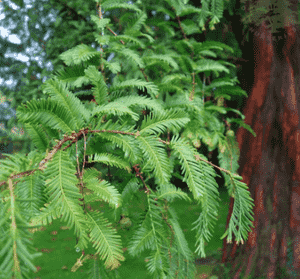
Dawn redwood (Metasequoia glyptostroboides)
Also known as: Water fir
The Dawn Redwood is a towering deciduous tree frequently utilized for landscaping in parks and public spaces. It can grow up to 30 meters tall, making it generally unsuitable for typical home gardens. Unique among conifers, this tree sheds its half-inch needles, which turn a reddish-brown hue before dropping in the fall.
In This Article
Attributes of Dawn redwood
Lifespan
Perennial
Plant Type
Tree
Plant Height
35 m
Spread
8 m to 9 m
Leaf Color
Green Yellow
Flower Size
N/A (non-flowering)
Flower Color
Green Yellow Brown
Images of Dawn redwood
Quickly Identify Dawn redwood
1
Female cones with ellipsoidal shape and puckered lip-like scales.
2
Linear, feathery leaves changing from light green to red-bronze in fall.
3
Stem reaching 2 feet (60 cm) in diameter, with opposite branching pattern.
4
Ornately fluted trunk widening at the base, with rugged, reddish-brown bark.
5
Non-showy flowers maturing into dark brown, woody cones on elongated stalks.
Scientific Classification of Dawn redwood
Phylum
Vascular plants
Class
Conifers
Order
Pines and allies
Family
Cypress
Genus
Dawn Redwoods
Species
Dawn redwood
Planting and Growing of Dawn redwood
Care Difficulty
Easy
Watering Schedule
Every 8 days
Sunlight Requirements
Full sun
Sunshine Duration
6-10 hours
Ideal Temperature
60-80℉
Soil Type
Potting Mix, Peat Mix
Soil pH
6.5-7.5
Fertilizer Type
Balanced
Pruning Season
Spring, Summer
Pruning Area
Branches, Leaves
Pruning Frequency
2 times a year
Repotting Season
Spring
Pot Type
Terracotta, Plastic
 How to Water Dawn redwood?
Metasequoia glyptostroboides requires deep and thorough watering, ensuring the soil is moist but not waterlogged. A good rule of thumb is to water until you see excess moisture beginning to drain out of the pot, approximately 500ml each time.
More About Watering Techniques→
What are the symptoms of an underwatered Dawn redwood?
›
What should I do if my Dawn redwood is not getting enough water?
›
What are the symptoms of an overwatered Dawn redwood?
›
How to save an overwatered Dawn redwood?
›
 What Are the Sunlight Requirements for Dawn redwood?
Metasequoia glyptostroboides flourishes with full sun to partial sun, which significantly fosters robust growth and vibrant green foliage. Ensuring this light range helps maintain their conical form and overall tree vigor.
More About Sunlight Requirements Techniques→
What is Metasequoia glyptostroboides' favorite light condition?
›
Solutions for optimal light conditions?
›
Benefits of ideal light conditions?
›
 What Is the Ideal Temperature Range for Dawn redwood?
The ideal temperature range for Metasequoia glyptostroboides is between 60°F and 80°F. This range supports optimal growth and health of the plant, ensuring proper metabolic processes and photosynthesis rates. Maintaining these temperatures helps the plant thrive and develop robust foliage.
 What Soil is Best for Dawn redwood?
Metasequoia glyptostroboides thrives in soils that can retain moisture. Loam and clay soils offer excellent moisture retention, which is crucial for supporting healthy root systems and ensuring the plant receives enough water during dry spells. Soils with good aeration promote healthy root growth by allowing air to reach the roots. Sandy loam provides an ideal balance of solid structure and air pockets, enhancing root oxygenation and preventing root suffocation. Nutrient-rich soil is vital for the robust growth of Metasequoia glyptostroboides. These plants benefit from a soil teeming with organic matter, which loam soils are particularly adept at providing, offering essential nutrients for sustained growth.
More About Soil→
 How to Fertilize Dawn redwood?
Metasequoia glyptostroboides, commonly known as dawn redwood, generally benefits from balanced fertilization. A well-rounded fertilizer with a ratio of 10-10-10 is often recommended. It should be applied at a rate of about one cup per inch of trunk diameter. This allows for healthy growth and development, ensuring the nutrient needs of this fast-growing tree are met efficiently.
 How to Prune Dawn redwood?
Begin by carefully cutting away any dead or diseased branches. This not only improves the tree's appearance but also helps prevent the spread of diseases and allows more air and light into the tree's canopy. Aim to shape the tree's crown to allow for balanced growth. Remove any crossing branches that may rub against each other, which can create wounds and become entry points for infections.
More About Pruning Techniques→
 How to Propagate Dawn redwood plant?
1
Harvest seeds from mature cones in autumn when they have naturally dried. Obtain viable seeds by ensuring they are fully ripened and undamaged.
2
Select healthy branches and use sterilized shears to cut segments about 6 to 8 inches long. Remove lower leaves to minimize moisture loss and prepare for rooting hormone application.
3
Plant the seeds or cuttings in well-drained soil or substrate. Maintain even moisture levels without overwatering to support root development and seed germination.
 How to Repot Dawn redwood plant?
1
Metasequoia glyptostroboides shows signs it's ready for repotting when roots begin circling the pot, or growth slows down. Best performed in spring or autumn, these seasons promote root recovery and allow the tree to establish in its new environment before harsh weather.
2
When selecting a pot, opt for one that's 2-3 inches larger in diameter than the current container. This provides ample space for root growth without overwhelming the plant. Ensure there are drainage holes, which prevent waterlogging and root rot.
3
Select a loamy, well-draining soil mix that's rich in organic matter. This soil type supports healthy root development, provides essential nutrients, and ensures proper water retention and drainage.



