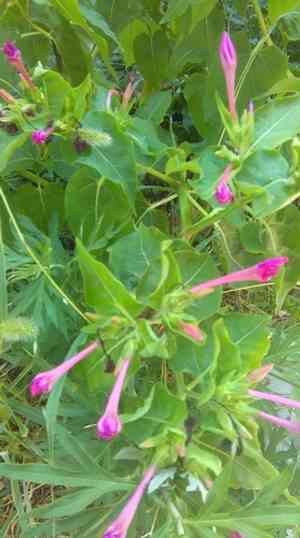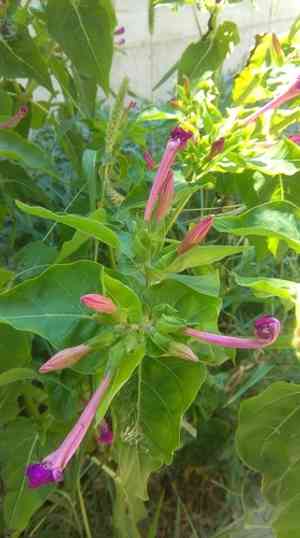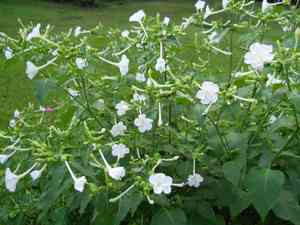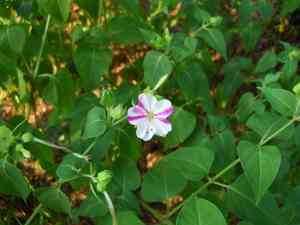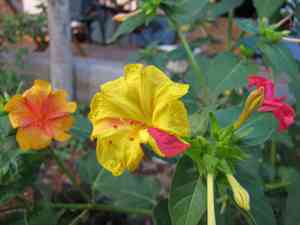
Four o'clock flower(Mirabilis jalapa)

Four o'clock flower (Mirabilis jalapa)

Also known as: False jalap

The Four O'Clock (Mirabilis jalapa), often referred to as the marvel of Peru, is a perennial, bushy herbaceous plant popular for its ornamental use. It features fragrant, vibrant flowers that remain closed during most of the day and begin to open between four and eight in the evening, which is why it earned its common name.

Attributes of Four o'clock flower

Lifespan
Perennial, Annual
Plant Type
Herb
Plant Height
60 cm to 1 m
Spread
80 cm to 1 m
Leaf Color
Green
Flower Size
2.5 cm to 3 cm
Flower Color
Yellow White Red Pink Purple Orange Gold

PlantJoy - Identify plants with a snap

Identify and diagnose plants, get toxicity alerts, and explore safety guides for all types of fungi.

Try for Free

Images of Four o'clock flower

Four o'clock flower(Mirabilis jalapa)

Quickly Identify Four o'clock flower

1
Late afternoon blooming flowers in vibrant red, white, yellow, or bicolored patterns.
2
Distinctive trumpet-shaped flowers with a 5-lobed structure, measuring 2-3 inches (5-7.5 cm) long.
3
Leathery, rounded fruit with 5 pronounced longitudinal ribs, maturing to dark brown or black.
4
Pointed oval leaves up to 3 inches (7.5 cm) long with a smooth surface.
5
Robust, semi-woody perennial reaching 2-3 feet (60-90 cm) in height with showy floral displays.

Scientific Classification of Four o'clock flower

Phylum
Vascular plants
Class
Dicotyledons
Order
Pinks, cacti, and allies
Family
Four o'clock
Genus
umbrellaworts
Species
Four o'clock flower

Planting and Growing of Four o'clock flower

Care Difficulty
Easy
Watering Schedule
Every 4 days
Sunlight Requirements
Full sun
Sunshine Duration
6-10 hours
Ideal Temperature
68-77℉
Soil Type
Potting Mix, Peat Mix
Soil pH
6.5-7.5
Fertilizer Type
Balanced
Pruning Season
Spring, Summer
Pruning Area
Branches, Leaves
Pruning Frequency
2 times a year
Repotting Season
Spring
Pot Type
Plastic, Ceramic

water icon How to Water Four o'clock flower?

For Mirabilis jalapa, aim for a moderate watering routine, approximately 500 ml per time. Ensure the soil is drenched but not waterlogged—moist enough to keep the roots hydrated yet allow excess water to drain.
What are the symptoms of an underwatered Four o'clock flower?
What should I do if my Four o'clock flower is not getting enough water?
What are the symptoms of an overwatered Four o'clock flower?
How to save an overwatered Four o'clock flower?
More About Watering Techniques

sunlight icon What Are the Sunlight Requirements for Four o'clock flower?

Sunlight Requirements: Full sun, Partial sun
Duration of light: 5 to 6 hours
Mirabilis jalapa prefers full sun to partial sun exposure. Full light conditions promote a prolific bloom and sturdier growth, ensuring the plant remains visually appealing and lively.
How much light does Mirabilis jalapa need?
Solution to provide ideal light for Mirabilis jalapa
Benefits of proper light exposure for Mirabilis jalapa
More About Sunlight Requirements Techniques

temperature icon What Is the Ideal Temperature Range for Four o'clock flower?

Ideal Temperature: 68 ~ 77℉
The ideal temperature range for Mirabilis jalapa, also known as four o'clock flower, is between 68°F and 77°F. This range supports optimal growth, ensuring that the plant thrives in a warm and steady environment. Temperatures within this range allow for proper photosynthesis and nutrient absorption, which are critical for plant health and flowering.

soil icon What Soil is Best for Four o'clock flower?

Soil type: Sandy loam, Loam
Soil PH: 6.5 ~ 7.5
Mirabilis jalapa thrives in well-draining soil to prevent waterlogging, which can cause root rot. The plant's roots need oxygen, and good drainage helps maintain an ideal moisture balance. This plant flourishes in nutrient-rich soil, which supports its vibrant growth and flowering. Ample nutrients lead to healthier plants with abundant blossoms, enhancing their ornamental appeal. Consistently moist soil without excessive wetness ensures optimal growth for Mirabilis jalapa. Proper moisture supports nutrient uptake and promotes lush foliage and beautiful blooms. More About Soil

fertilize icon How to Fertilize Four o'clock flower?

Fertilizer type: Balanced
When fertilizing Mirabilis jalapa, make sure not to overdo it. Utilize small, precise amounts—one teaspoon per square foot is usually efficient for solid fertilizers. Liquid fertilizers should be diluted to half the recommended strength to avoid overwhelming the plant. More About Fertilizing Techniques

prune icon How to Prune Four o'clock flower?

Pruning Time: Spring, Summer
To prune Mirabilis jalapa, start by removing any dead, damaged, or diseased stems. Use clean, sharp pruning shears to make clean cuts just above a leaf node or stem joint. This encourages healthier, more vigorous growth. Next, selectively reduce overgrown areas to maintain the plant's desired shape and size, ensuring better air circulation and sunlight penetration within the plant. Pruning regularly helps channel the plant’s energy towards producing more vibrant blooms. When dealing with overgrown Mirabilis jalapa, identify the longest stems and trim them back by about one-third of their length. Doing so encourages lateral branching and results in a more compact, fuller appearance. Always step back periodically during pruning to assess your work, ensuring the plant maintains a balanced form. More About Pruning Techniques

propagate icon How to Propagate Four o'clock flower plant?

Propagate Time: Spring, Late spring, Early spring
1
Plant Mirabilis jalapa seeds in a tray filled with a seed-starting mix. Cover them lightly with soil and water gently. Keep the tray in a warm location with indirect sunlight. Within 1-2 weeks, seeds should start to germinate.
2
Select a healthy stem from the parent plant and cut a 4-6 inch section using pruning shears. Remove the leaves from the lower half of the cutting. Optionally, dip the cut end in rooting hormone to encourage root development.
3
Carefully remove the plant from its pot or ground. Using a sharp knife, divide the root ball into sections, ensuring each section has stems and roots. Replant the divisions in suitable pots or garden locations promptly.
More About Propagating Techniques

repot icon How to Repot Four o'clock flower plant?

Repotting frequency: Every 1-2 years
1
You should consider repotting Mirabilis jalapa when you notice signs such as roots growing out of the drainage holes of the pot, soil drying out very quickly after watering, or if the plant has stopped growing. These indicators mean the plant has probably outgrown its pot and requires a fresh and more spacious home.
2
Select a pot that is 1-2 inches larger in diameter than the current pot and has good drainage holes. A slightly larger pot accommodates growth without overwhelming the plant, while ensuring effective water drainage prevents root rot and other water-related issues.
3
Opt for a well-draining potting mix which ideally contains a combination of perlite, peat moss, and coarse sand. This blend provides the right balance of moisture retention and aeration, preventing waterlogging while supporting healthy root development.

PlantJoy - Identify plants with a snap

Find the best spots for them to optimize their health, simply using your phone.

Try for Free

Toxicity of Four o'clock flower

Is Four o'clock flower toxic to humans?

The Four O'clock flower can lead to toxic reactions in humans upon ingestion or contact. These effects are generally mild in nature. While all sections of the plant are toxic, particular emphasis should be placed on the seeds, roots, and sap, as they pose greater risks. Consuming the plant may result in headaches, vomiting, diarrhea, and abdominal pain, whereas contact with the sap can lead to skin irritation. It is advisable to wear gloves when managing this plant in your garden, and to supervise children nearby to prevent any accidental consumption.

Is Four o'clock flower toxic to cat?

The four o'clock flower poses a toxicity risk to cats. If a cat inadvertently consumes any part of this plant—be it seeds, roots, fruits, or leaves—it can lead to exposure to its harmful compounds. After ingestion, a cat may exhibit a spectrum of distressing symptoms, which can range from mild unease to more serious health issues that necessitate veterinary intervention. Should you believe your cat has ingested four o'clock flower and may be poisoned, it is crucial to obtain prompt veterinary assistance to secure the best possible prognosis for your feline's well-being.

Is Four o'clock flower toxic to dog?

The four o'clock flower is identified as a toxic plant for dogs. If dogs consume any portion of the four o'clock flower, including its seeds, roots, fruits, and leaves, they can suffer from poisoning. This accidental ingestion often occurs when dogs have access to gardens or areas where four o'clock flowers are present. After consuming parts of this plant, dogs might show symptoms such as gastrointestinal disturbance, vomiting, diarrhea, lethargy, or in more severe cases, symptoms can worsen based on the amount ingested. It is crucial for dog owners to vigilantly supervise their pets and restrict their access to four o'clock flowers to prevent any accidental poisoning. Should a dog ingest any part of a four o'clock flower, it is imperative to obtain immediate veterinary assistance to secure the best possible outcome for the animal.

Identify toxic plants for your safety

Learn which plants are harmful to you and your pets, and make informed choices for a safer home!

Try for Free
WARNING
The judgment on toxicity and danger is for reference only. We DO NOT GUARANTEE any accuracy of such judgment. Therefore, you SHALL NOT rely on such judgment. It is IMPORTANT TO SEEK PROFESSIONAL ADVICE in advance when necessary.
More About Toxic Techniques