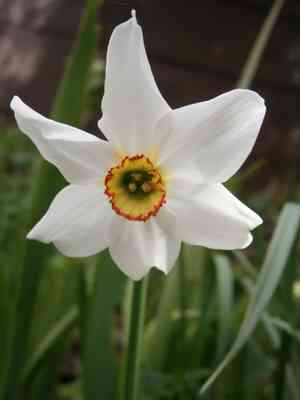
Poet's narcissus (Narcissus poeticus)
Also known as: Pheasant's eye, Findern flower
The Poet's Narcissus (Narcissus poeticus) is often considered the legendary narcissus referenced in ancient texts and celebrated in art and literature. The Greek philosopher Theophrastus mentioned a flower in his "Historia Plantarum" that many scholars believe to be the Poet's Narcissus. According to Greek mythology, this is the flower that Persephone was gathering when Hades abducted her to the underworld.
Attributes of Poet's narcissus
Images of Poet's narcissus




Quickly Identify Poet's narcissus
Scientific Classification of Poet's narcissus
Planting and Growing of Poet's narcissus
 How to Water Poet's narcissus?
 What Are the Sunlight Requirements for Poet's narcissus?
 What Is the Ideal Temperature Range for Poet's narcissus?
 What Soil is Best for Poet's narcissus?
 How to Fertilize Poet's narcissus?
 How to Prune Poet's narcissus?
 How to Propagate Poet's narcissus plant?
 How to Repot Poet's narcissus plant?
Toxicity of Poet's narcissus
Is Poet's narcissus toxic to humans?
Accidental ingestion is the most common cause of poisoning associated with poet's narcissus. While the bulbs are the most poisonous part, all other components of the plant are considered to have mild toxic effects on humans. Symptoms resulting from the consumption of poet's narcissus can include vomiting, excessive salivation, and diarrhea. Consuming large amounts of this plant may provoke more serious effects such as convulsions, hypotension, tremors, and irregular heartbeats. Additionally, one source suggests that even the aroma of this plant can trigger headaches and vomiting, particularly when it is present in substantial quantities within a confined area.
Is Poet's narcissus toxic to cat?
The Poet's narcissus is harmful to cats, presenting a notable danger if ingested. Cats are at risk of poisoning upon accidental consumption of any portion of the plant. If they ingest it, they might show signs of physical distress, including gastrointestinal issues or other indications of sickness. Prompt medical attention at a veterinary clinic is essential for a cat suspected of Poet's narcissus poisoning, to ensure proper care and treatment.
Is Poet's narcissus toxic to dog?
The poet's narcissus is a highly toxic plant for dogs, representing a serious health hazard if consumed. Any part of the plant can poison dogs, as it contains detrimental substances throughout. Signs of poisoning in dogs may manifest as gastrointestinal distress, irregular heartbeats, seizures, and even lethargy. It is vital for dog owners to keep their pets away from poet's narcissus and to observe them carefully for any indications of unease. Should a dog be suspected of having ingested poet's narcissus, prompt veterinary care is critical to secure the most favorable outcome.



