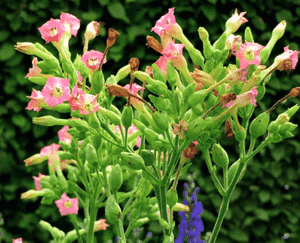
Tobacco(Nicotiana tabacum)

Tobacco (Nicotiana tabacum)

Also known as: Common Tobacco, Cultivated Tobacco

Bindweed (Convolvulus spp.) is a perennial plant that is often regarded as a weed in gardens and agricultural fields. It produces fragrant, funnel-shaped flowers that bloom during the summer months. Bees are drawn to its pleasant scent. Bindweed thrives in full sun or partial shade and prefers well-drained, fertile soil.

Attributes of Tobacco

Lifespan
Annual, Perennial
Plant Type
Herb
Plant Height
70 cm to 2 m
Spread
30 cm to 60 cm
Leaf Color
Green
Flower Size
2.5 cm to 5 cm
Flower Color
Pink

PlantJoy - Identify plants with a snap

Identify and diagnose plants, get toxicity alerts, and explore safety guides for all types of fungi.

Try for Free

Images of Tobacco

Tobacco(Nicotiana tabacum)

Quickly Identify Tobacco

1
Large, sticky leaves with ovate-lanceolate shape and visible veins, measuring 2-20 inches (5-50 cm).
2
Tubular flowers in cream, pink, or green-white, with a diameter of 0.4 inches (1 cm).
3
Dehiscent capsules, oval to round, split into two parts when mature, containing 2000-5000 seeds.
4
Night-blooming flowers exuding fragrance after dusk, arranged in branched thyrsoid panicles.
5
Prefers moist, nutrient-dense, well-draining soil, reaching impressive stature with robust lanky growth.

Scientific Classification of Tobacco

Phylum
Vascular plants
Class
Dicotyledons
Order
Solanales
Family
Nightshade
Genus
Tobacco plants
Species
Tobacco

Planting and Growing of Tobacco

Care Difficulty
Easy
Watering Schedule
Every 4 days
Sunlight Requirements
Full sun
Sunshine Duration
4-8 hours
Ideal Temperature
70-86℉
Soil Type
Potting Mix, Peat Mix
Soil pH
6.5-7.5
Fertilizer Type
Balanced
Pruning Season
Spring, Summer
Pruning Area
Branches, Leaves
Pruning Frequency
2 times a year
Repotting Season
Spring
Pot Type
Plastic, Ceramic

water icon How to Water Tobacco?

For Nicotiana tabacum, the key is to provide consistent moisture without over-saturating the soil. This means watering the plant with about 500 milliliters each time, enough to saturate the soil but not so much that it results in standing water. Ensure that any excess water is draining well to avoid root rot. Watering should aim to mimic the plant's natural environment, providing hydration to the roots without leaving them waterlogged.
What are the symptoms of an underwatered Tobacco?
What should I do if my Tobacco is not getting enough water?
What are the symptoms of an overwatered Tobacco?
How to save an overwatered Tobacco?
More About Watering Techniques

sunlight icon What Are the Sunlight Requirements for Tobacco?

Sunlight Requirements: Full sun, Partial sun
Duration of light: 6-8 hours daily
Nicotiana tabacum's ideal light range is mostly full sun, offering 6-8 hours daily. Adequate lighting enhances nicotine synthesis and supports vibrant foliage growth, while promoting robust plant development and disease resistance.
What is the ideal light for Nicotiana tabacum?
How can I provide optimal lighting?
What are the benefits of ideal lighting?
More About Sunlight Requirements Techniques

temperature icon What Is the Ideal Temperature Range for Tobacco?

Ideal Temperature: 70 ~ 86℉
For optimal growth of Nicotiana tabacum, maintaining a temperature range between 70°F and 86°F is ideal. These conditions foster robust photosynthesis, ensuring the plant receives the energy necessary for vigorous growth. This temperature range also supports enzymatic activities critical for the development of tobacco leaves.

soil icon What Soil is Best for Tobacco?

Soil type: Loam, Sandy loam
Soil PH: 6.5 ~ 7.5
Nicotiana tabacum requires soil with excellent drainage to prevent waterlogging. Well-drained soil ensures that the roots can access air, promoting healthy growth and preventing root rot. The plant thrives in nutrient-rich soil, which provides essential minerals required for its fast growth. Rich soil boosts foliage development, leading to a robust plant suitable for its intended uses. Incorporating organic matter into the soil improves its structure and nutrient content. This aids in maintaining moisture levels, crucial for the plant's growth during dry spells. More About Soil

fertilize icon How to Fertilize Tobacco?

Fertilizer type: Balanced
Nicotiana tabacum benefits from balanced fertilizer application to ensure adequate growth and leaf production. A general guideline is to use about 1 to 1.5 pounds (0.5 to 0.7 kg) of balanced fertilizer per 100 square feet (9.3 sqm) of planted area. It's important to adjust based on soil nutrient levels and plant response. More About Fertilizing Techniques

prune icon How to Prune Tobacco?

Pruning Time: Spring, Summer, Autumn
Begin by assessing the overall shape and health of your Nicotiana tabacum. Use sharp, clean pruning shears to remove any dead or diseased leaves. Trim back leggy stems to foster a busier appearance. When pruning, aim to cut just above a leaf node, which is where new branches can emerge, encouraging denser growth. Regularly pinching the tips of stems can also be effective in promoting lateral growth, resulting in a fuller plant. More About Pruning Techniques

propagate icon How to Propagate Tobacco plant?

Propagate Time: Spring,Early spring,Late spring,Summer
1
Start by filling seed trays with a quality potting mix. Lightly scatter seeds over the surface and cover them with a thin layer of soil. Water gently and keep the soil moist.
2
Select healthy stems from the parent plant. Using sterilized pruning shears, cut a 6-8 inch piece below a node and remove the lower leaves before planting.
3
Begin with sterilizing plant tissue before placing it on a nutrient-rich agar medium. Ensure a sterile environment to promote uncontaminated growth.
More About Propagating Techniques

repot icon How to Repot Tobacco plant?

Repotting frequency: Every 1-2 years
1
It's time to repot Nicotiana tabacum when you notice roots growing out of the drainage holes or if the soil dries out very quickly after watering. These signs indicate that the plant has outgrown its current pot and needs more space to thrive.
2
Select a pot that is 1-2 inches larger in diameter than the current one to allow for growth. A pot with appropriate drainage holes is essential to prevent waterlogging, which can lead to root rot and affect the plant's health.
3
Opt for a well-draining potting mix, ideally one that contains perlite or sand. This kind of soil provides ample aeration and ensures that excess water drains away, preventing the roots from becoming waterlogged and promoting healthier growth.

PlantJoy - Identify plants with a snap

Find the best spots for them to optimize their health, simply using your phone.

Try for Free

Toxicity of Tobacco

Is Tobacco toxic to humans?

Tobacco poisoning is most often a result of smoking or ingesting tobacco products, as well as inadvertently consuming the plant's flowers or leaves. These plant parts are extremely toxic and have the potential to be lethal if ingested. Consuming them can result in various symptoms including vomiting, diarrhea, a slow heartbeat, dizziness, fainting, confusion, headaches, tremors, and even respiratory failure. Additionally, humans can encounter the toxic substance nicotine through direct contact with the plant. Individuals involved in harvesting tobacco are particularly susceptible to toxicity, especially if the leaves are damp. Moreover, smoking tobacco products like cigarettes can lead to nicotine dependence, resulting in significant harmful effects on different organs due to prolonged exposure to toxins.

Is Tobacco toxic to cat?

Tobacco is harmful and toxic for cats. If a cat unintentionally consumes any portion of tobacco, it can lead to potential poisoning hazards. Upon exposure, a cat might display symptoms indicating physical distress or illness, which could be severe. Given that every part of the tobacco plant can be dangerous, cat owners must take precautions to keep these plants inaccessible. Should a cat demonstrate signs of illness after contact with tobacco, seeking prompt veterinary care is essential to ensure the animal’s well-being and safety.

Is Tobacco toxic to dog?

Tobacco is deemed harmful to dogs. When dogs consume any part of the tobacco plant, they risk poisoning due to its natural toxicity. Dogs may unintentionally ingest tobacco when they gain access to areas where the plant is cultivated or when they encounter improperly discarded tobacco products. The entire plant—comprising leaves, stems, flowers, and seeds—presents a danger if ingested by a dog. Signs of poisoning in dogs can manifest as vomiting, diarrhea, stomach pain, increased heart rate, tremors, seizures, and general weakness. It is essential for dog owners to remain alert and prevent their pets from accessing any tobacco. If a dog does ingest tobacco, it is vital to seek prompt veterinary assistance to ensure the best possible recovery for the affected animal.

Identify toxic plants for your safety

Learn which plants are harmful to you and your pets, and make informed choices for a safer home!

Try for Free
WARNING
The judgment on toxicity and danger is for reference only. We DO NOT GUARANTEE any accuracy of such judgment. Therefore, you SHALL NOT rely on such judgment. It is IMPORTANT TO SEEK PROFESSIONAL ADVICE in advance when necessary.
More About Toxic Techniques

