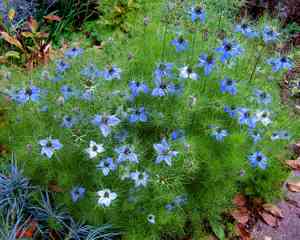
Love-in-a-mist(Nigella damascena)

Love-in-a-mist (Nigella damascena)

Also known as: Ragged lady

Love-in-a-mist, part of the buttercup family, bears resemblance to dill in its foliage. Its early summer blooms produce small black seeds at the center. These seeds are sometimes used in Middle Eastern baking, imparting a flavor akin to oregano or nutmeg. However, caution is necessary as ingesting large amounts can be toxic. Always ensure correct identification and moderate use when incorporating these seeds into culinary dishes.

Attributes of Love-in-a-mist

Lifespan
Annual, Biennial, Perennial
Plant Type
Herb
Plant Height
20 cm to 60 cm
Spread
30 cm to 45 cm
Leaf Color
Green
Flower Size
1.5 cm to 3 cm
Flower Color
Blue White Pink Purple Lavender

PlantJoy - Identify plants with a snap

Identify and diagnose plants, get toxicity alerts, and explore safety guides for all types of fungi.

Try for Free

Images of Love-in-a-mist

Love-in-a-mist(Nigella damascena)

Quickly Identify Love-in-a-mist

1
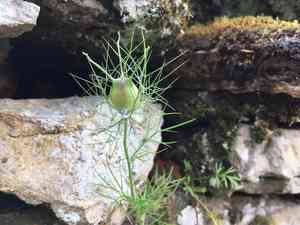
Delicate, feathery foliage with finely-cut, lacy leaves.
2
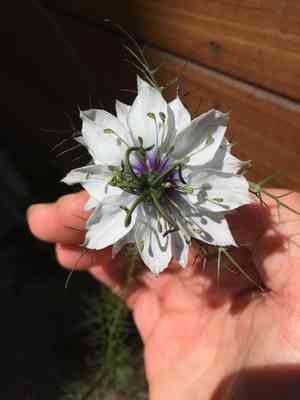
Unique blue flowers with 5-10 star-like petals, 1.5-2 inches (4-5 cm) across.
3
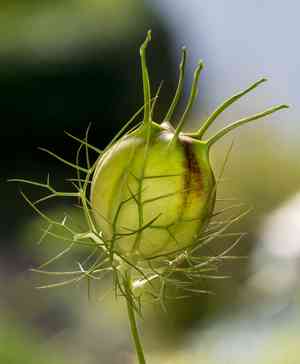
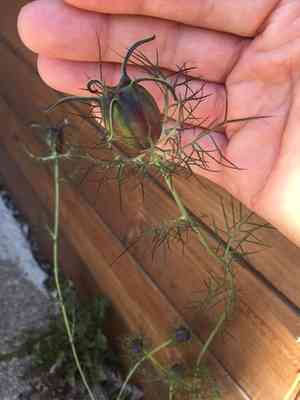
Egg-shaped fruit capsules with horn-like protrusions, 1 inch (2.54 cm) in diameter.
4
Bristled surface on mature fruit capsules, suitable for dried arrangements.
5
Intricate, lace-like flower structure with mild, sweet fragrance.

Scientific Classification of Love-in-a-mist

Phylum
Vascular plants
Class
Dicotyledons
Order
Buttercups, poppies and allies
Family
Buttercup
Genus
Love-in-a-mist
Species
Love-in-a-mist

Planting and Growing of Love-in-a-mist

Care Difficulty
Easy
Watering Schedule
Every 8 days
Sunlight Requirements
Full sun
Sunshine Duration
6-10 hours
Ideal Temperature
60-68℉
Soil Type
Potting Mix, Peat Mix
Soil pH
6.5-7.5
Fertilizer Type
Balanced
Pruning Season
Spring, Summer
Pruning Area
Branches, Leaves
Pruning Frequency
Once a year
Repotting Season
Spring
Pot Type
Plastic, Ceramic

water icon How to Water Love-in-a-mist?

For Nigella damascena, it's important to ensure the soil is evenly moist but not waterlogged. Water around 150ml each time, ensuring the top inch of soil is thoroughly wet, then let it dry slightly before the next watering.
What are the symptoms of an underwatered Love-in-a-mist?
What should I do if my Love-in-a-mist is not getting enough water?
What are the symptoms of an overwatered Love-in-a-mist?
How to save an overwatered Love-in-a-mist?
More About Watering Techniques

sunlight icon What Are the Sunlight Requirements for Love-in-a-mist?

Sunlight Requirements: Full sun, Partial sun
Duration of light: 6-8 hours daily
Ideally, Nigella damascena should be exposed to full sunlight for at least 6-8 hours daily to encourage vigorous growth and vibrant flowering. Proper light exposure supports its flowering cycle, which is crucial for its decorative appeal and botanical health.
What is the best light exposure for Nigella damascena?
Can it tolerate partial sun?
How to ensure ideal lighting for blooming?
More About Sunlight Requirements Techniques

temperature icon What Is the Ideal Temperature Range for Love-in-a-mist?

Ideal Temperature: 60 ~ 68℉
Nigella damascena thrives best within a temperature range of 60°F to 68°F. This range ensures optimal growth and flowering, providing both suitable warmth and humidity. If the temperature is maintained within this range, the plant exhibits vibrant foliage and robust blooms. Deviations from this ideal condition may lead to reduced growth rates and developmental issues.

soil icon What Soil is Best for Love-in-a-mist?

Soil type: Sandy loam, Loam
Soil PH: 6.5 ~ 7.5
Nigella damascena thrives in well-drained soil because it prevents waterlogging, which can lead to root rot. Good drainage ensures that the plant's roots are healthy and capable of absorbing essential nutrients. This plant prefers moderately fertile soil, which provides the necessary nutrients for growth without overwhelming the roots. A slightly nutrient-rich environment fosters robust flowering and healthy foliage. Nigella damascena grows best in neutral to slightly alkaline soils, with a pH range of 6.5 to 7.5. This pH range facilitates optimal nutrient availability and uptake, supporting healthy plant development. More About Soil

fertilize icon How to Fertilize Love-in-a-mist?

Fertilizer type: Balanced
For Nigella damascena, it is essential to use a balanced fertilizer to ensure healthy growth. When applying liquid fertilizer, mix it at half the recommended strength to avoid overfeeding. For slow-release granules, a light scattering around the base of the plants is sufficient. Always follow package instructions to prevent over-application. More About Fertilizing Techniques

prune icon How to Prune Love-in-a-mist?

Pruning Time: Spring, Summer
Use clean, sharp scissors or garden shears to prevent disease transmission as you trim. Begin your pruning in early spring when new growth starts, continuing through the summer to maintain plant shape and health. Always cut back to just above a leaf node to encourage bushier growth. Inspect your Nigella damascena for any dead, damaged, or diseased growth. Removing these sections not only tidies the plant but also reduces the spread of pests and diseases. Cut well below the affected area and dispose of the removed parts to maintain plant health. More About Pruning Techniques

propagate icon How to Propagate Love-in-a-mist plant?

Propagate Time: Late spring, Early summer
1
Fill the seed tray with a well-draining, peat-free seed compost. Firm the compost gently to create a level surface, ensuring good seed-to-compost contact to aid germination.
2
Sow the Nigella damascena seeds thinly on the surface of the compost. Cover them with a fine layer of compost or vermiculite, which helps maintain moisture while allowing light to reach the seeds.
3
Water the seeds gently using a spray bottle to avoid dislodging them. Keep the compost moist but not waterlogged, and place the tray in a bright location, avoiding direct sunlight.
More About Propagating Techniques

repot icon How to Repot Love-in-a-mist plant?

Repotting frequency: Once every two years
1
Nigella damascena should be repotted when you observe that the plant seems root-bound, or when growth appears stunted due to insufficient space. Ideally, repotting should be done early in the growing season, either in early spring or early autumn, so the plant has time to establish itself.
2
Choose a pot that is only slightly larger than the current container. This encourages better root growth and prevents water from stagnating. Make sure the pot has good drainage holes to prevent water retention, which can lead to root rot.
3
Opt for well-draining sandy loam soil. This soil type supports Nigella damascena by providing adequate drainage, which is crucial since overly wet soil can lead to root diseases. A light soil promotes better aeration for the roots.

PlantJoy - Identify plants with a snap

Find the best spots for them to optimize their health, simply using your phone.

Try for Free

Toxicity of Love-in-a-mist

Is Love-in-a-mist toxic to humans?

Love-in-a-mist comprises the toxin damascenine, which adversely affects the liver and nervous system upon consumption. This toxin is present in all parts of the plant, particularly in the seeds. Ingesting a significant amount can lead to intense headaches, nausea, vomiting, and diarrhea. A larger quantity of damascenine may trigger liver inflammation, resulting in lasting damage, jaundice, convulsions, weakness, and ultimately coma or fatality. It is crucial to keep young children away from this plant.

Is Love-in-a-mist toxic to cat?

Love-in-a-mist poses a toxicity risk to cats, and any contact with the plant raises concerns. If a cat inadvertently consumes any part of love-in-a-mist, it may suffer from physical distress. Although symptoms may not be explicitly outlined, they indicate illness and discomfort, necessitating swift intervention. Due to the inherent toxicity risks, it is crucial for cat owners to keep a close watch on their pets and prevent access to love-in-a-mist. Should there be any suspicion that a cat has ingested any part of this plant, it is essential to seek veterinary assistance without delay to address potential health dangers.

Is Love-in-a-mist toxic to dog?

Love-in-a-mist is recognized as toxic to dogs. Canines may unintentionally consume parts of this plant, which can lead to potential poisoning incidents. Every part of love-in-a-mist contains toxins, and ingestion can produce a range of symptoms that may compromise the health of dogs. Should a dog ingest any section of love-in-a-mist, it might display signs such as gastrointestinal distress, vomiting, diarrhea, or even more serious symptoms depending on the quantity consumed. It is essential for dog owners to remain alert and prevent their pets from reaching areas where love-in-a-mist is found. If a dog does consume love-in-a-mist, it is critical to seek prompt veterinary assistance to ensure the best possible outcome for the affected pet.

Identify toxic plants for your safety

Learn which plants are harmful to you and your pets, and make informed choices for a safer home!

Try for Free
WARNING
The judgment on toxicity and danger is for reference only. We DO NOT GUARANTEE any accuracy of such judgment. Therefore, you SHALL NOT rely on such judgment. It is IMPORTANT TO SEEK PROFESSIONAL ADVICE in advance when necessary.
More About Toxic Techniques