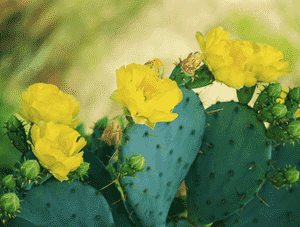
Eastern prickly pear (Opuntia humifusa)
Also known as: Devil's-tongue, Indian fig
The Eastern prickly pear (Opuntia humifusa) is a ground-hugging cactus native to eastern North America. It flourishes in hot, arid environments with abundant sunlight, as shade inhibits its growth. This cactus is typically found in sandy, rocky, or coastal scrub terrains, requiring well-drained soil to thrive.
In This Article
Attributes of Eastern prickly pear
Lifespan
Perennial
Plant Type
Succulent, Shrub
Plant Height
10 cm to 30 cm
Spread
30 cm to 60 cm
Leaf Color
Green
Flower Size
4 cm to 6 cm
Flower Color
Yellow Red
Images of Eastern prickly pear
Quickly Identify Eastern prickly pear
1
Low, sprawling growth habit with flattened, oval-to-round pads.
2
Cluster of small spines called glochids readily detaching upon touch.
3
Bright yellow flowers with 8-12 petals blooming at pad edges.
4
Unique oblong, sessile fruit ripening from green to red or purple.
5
Flattened, oval-to-round segmented stems acting as leaves, with barbed bristles.
Scientific Classification of Eastern prickly pear
Phylum
Vascular plants
Class
Dicotyledons
Order
Caryophyllales
Family
Cactuses
Genus
Prickly pear
Species
Eastern prickly pear
Planting and Growing of Eastern prickly pear
Care Difficulty
Easy
Watering Schedule
Every day
Sunlight Requirements
Full sun
Sunshine Duration
6-10 hours
Ideal Temperature
60-95℉
Soil Type
Potting Mix, Peat Mix
Soil pH
6.5-7.5
Fertilizer Type
Balanced
Pruning Season
Spring, Summer
Pruning Area
Branches, Leaves
Pruning Frequency
Once a year
Repotting Season
Spring
Pot Type
Plastic, Ceramic
 How to Water Eastern prickly pear?
For Opuntia humifusa, watering should be done with care to mimic its natural desert habitat. Watering should be thorough but infrequent, ensuring water penetrates deep into the soil. Allow the soil to dry out completely between watering sessions to prevent root rot.
More About Watering Techniques→
What are the symptoms of an underwatered Eastern prickly pear?
›
What should I do if my Eastern prickly pear is not getting enough water?
›
What are the symptoms of an overwatered Eastern prickly pear?
›
How to save an overwatered Eastern prickly pear?
›
 What Are the Sunlight Requirements for Eastern prickly pear?
Opuntia humifusa flourishes under conditions of full day sunlight, needing approximately 6 to 8 hours daily. This light range ensures optimal growth, vigor, and flowering potential.
More About Sunlight Requirements Techniques→
Optimal Sun Exposure
›
Solution to Acquire Ideal Lighting
›
Benefits of Ideal Light Access
›
 What Is the Ideal Temperature Range for Eastern prickly pear?
The ideal temperature range for Opuntia humifusa is between 60°F and 95°F. Within this range, the plant thrives, exhibiting optimal growth and health. This range ensures that the cactus can photosynthesize efficiently and maintain its cellular metabolism. Growing in this range helps the plant show vibrant colors and resilient growth patterns.
 What Soil is Best for Eastern prickly pear?
Opuntia humifusa thrives in well-drained soil, as it prevents waterlogging, which can lead to root rot. The ability to drain water efficiently helps the plant remain healthy and supports optimal growth. While Opuntia humifusa can survive in less fertile soil, it benefits from soil enriched with organic matter or slow-release fertilizers, promoting better growth and resilience against environmental stress. Opuntia humifusa prefers a slightly alkaline soil, which helps in the absorption of essential nutrients such as calcium and magnesium, thereby fostering stronger plant development.
More About Soil→
 How to Fertilize Eastern prickly pear?
Opuntia humifusa plants require a balanced approach to fertilization. When using liquid fertilizer, apply a half-strength balanced cactus fertilizer to avoid over-fertilization. Slow-release fertilizers should be used sparingly, focusing on balanced products with lower nitrogen levels to prevent rapid growth that can weaken the plant.
 How to Prune Eastern prickly pear?
Inspect the cactus for any damaged, diseased, or shriveled pads. Using your pruning shears, cut them off at the joint where they connect to the main body, taking care not to damage surrounding healthy pads. This helps redirect the plant's energy to healthier parts. If your Opuntia humifusa is growing in an undesired direction, carefully remove pads to guide its shape. Begin at the outer edges and make cuts at joints, shaping the plant to your preference while maintaining a natural appearance.
 How to Propagate Eastern prickly pear plant?
1
To propagate by seed, collect Opuntia humifusa seeds from a mature fruit. Clean them thoroughly to remove pulp and allow them to dry, which increases the chances of successful germination.
2
Select a healthy Opuntia humifusa pad and slice it with a sterile knife. Allow the cut end to dry and callus before planting, which can take several days.
3
Once calloused, plant the cutting upright into the potting mix. Ensure the cut end is buried, and water sparingly until roots begin to form.
 How to Repot Eastern prickly pear plant?
1
Look for signs such as roots growing out of the drainage holes, the plant becoming top-heavy, or the soil not drying out as quickly. These indicate it's time for a fresh pot.
2
Select a pot that is slightly larger than the current one for Opuntia humifusa. Opt for a clay pot with drainage holes, as it provides good aeration and prevents waterlogging. This ensures the cactus has room to grow while preventing root rot.
3
Choose a well-draining cactus soil mix. This type of soil prevents excess moisture retention, which is crucial for Opuntia humifusa health. The right soil keeps roots from rotting and supports healthy growth.



