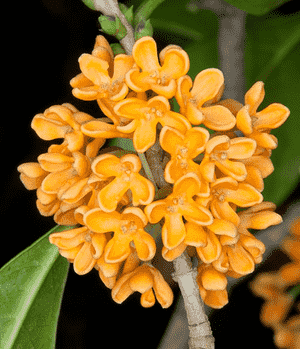
Sweet osmanthus (Osmanthus fragrans)
Also known as: Fragrant olive
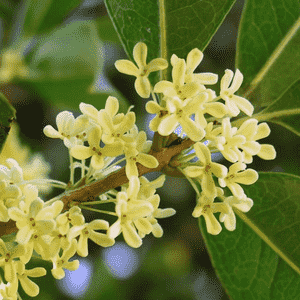
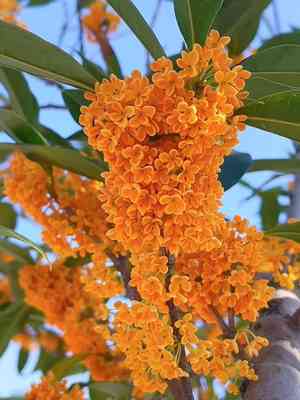
The Osmanthus fragrans, or Sweet Osmanthus, is a sizeable evergreen shrub renowned for its aromatic small white and orange flowers that emit an apricot-like scent. This species is also commonly known as the Fragrant Tea Olive.
In This Article
Attributes of Sweet osmanthus
Lifespan
Perennial
Plant Type
Tree, Shrub
Plant Height
3 m to 18 m
Spread
3 m to 4 m
Leaf Color
Green
Flower Size
2.5 cm
Flower Color
White Orange
Images of Sweet osmanthus
Quickly Identify Sweet osmanthus
1
Evergreen shrub or small tree, 10 feet (3 meters) tall with glossy oval leaves.
2
Highly fragrant, cream-white flowers, 1/4 inch (0.6 cm) wide, blooming year-round.
3
Distinctive purple-black drupe fruits, 0.5-1 inch (1.27-2.54 cm) in diameter with velvety texture.
4
Dark green, leathery leaves, 2-5 inches (5-12 cm) long, opposite and elliptic in shape.
5
Fruit evokes apricot scent, flowers symmetrically arranged in cymes forming clusters in leaf axils.
Scientific Classification of Sweet osmanthus
Phylum
Vascular plants
Class
Dicotyledons
Order
Mints plantains olives and allies
Family
Olive
Genus
Osmanthus
Species
Sweet osmanthus
Planting and Growing of Sweet osmanthus
Care Difficulty
Easy
Watering Schedule
Every 4 days
Sunlight Requirements
Full sun
Sunshine Duration
4-8 hours
Ideal Temperature
60-77℉
Soil Type
Potting Mix, Peat Mix
Soil pH
6.5-7.5
Fertilizer Type
Balanced
Pruning Season
Spring, Summer
Pruning Area
Branches, Leaves
Pruning Frequency
2 times a year
Repotting Season
Spring
Pot Type
Plastic, Ceramic
 How to Water Sweet osmanthus?
For Osmanthus fragrans, it is crucial to maintain evenly moist soil without letting it become soggy. Use around 500 ml of water per session to provide sufficient moisture while avoiding over-saturation. Water until it starts to seep out of the drainage holes.
More About Watering Techniques→
What are the symptoms of an underwatered Sweet osmanthus?
›
What should I do if my Sweet osmanthus is not getting enough water?
›
What are the symptoms of an overwatered Sweet osmanthus?
›
How to save an overwatered Sweet osmanthus?
›
 What Are the Sunlight Requirements for Sweet osmanthus?
Osmanthus fragrans thrives under full to partial sun, ideally receiving 4 to 6 hours of direct sunlight. This range promotes healthy growth and enhances the fragrance and blooming capacity of the plant.
More About Sunlight Requirements Techniques→
 What Is the Ideal Temperature Range for Sweet osmanthus?
For optimal growth, Osmanthus fragrans thrives in temperatures between 60°F and 77°F. This range provides adequate warmth to encourage nutrient uptake and photosynthesis while preventing stress from excessive heat. Maintaining this range supports flowering and leaf development.
 What Soil is Best for Sweet osmanthus?
Osmanthus fragrans thrives in well-drained soil that prevents waterlogging, which can lead to root rot. Proper drainage allows the plant to access necessary oxygen and nutrients, promoting robust growth and fragrant blooms. While well-drained, the soil should also retain adequate moisture to support Osmanthus fragrans' need for consistent hydration, especially during dry spells. It ensures the plant remains vibrant and flourishing. This species benefits from soil enriched with organic matter that provides essential nutrients for its growth. A fertile layer boosts its resilience against adverse conditions and supports lush foliage.
More About Soil→
 How to Fertilize Sweet osmanthus?
Osmanthus fragrans thrives with balanced fertilization. Typically, you should use a liquid fertilizer diluted to half-strength about 2 teaspoons per gallon of water. For slow-release granular fertilizers, use 1 to 2 tablespoons per plant. Adjust the amount based on plant size and soil condition.
More About Fertilizing Techniques→
 How to Prune Sweet osmanthus?
Begin by removing any dead, damaged, or diseased branches. This step is crucial as it prevents the spread of infection and helps in maintaining overall plant health. Cut back to healthy wood or the base of the branch. Trim to create a balanced, rounded shape, ensuring that the center of the plant is open to air and light. Remove any overlapping or inward-growing branches to foster openness in the plant structure. Osmanthus fragrans can grow vigorously. Remove up to one-third of the oldest or longest branches each season to manage its size and encourage the growth of new, more productive shoots.
More About Pruning Techniques→
 How to Propagate Sweet osmanthus plant?
1
Collect seeds from a healthy Osmanthus fragrans plant. Clean and dry them thoroughly to prevent mold, and store them in a cool, dry place until you're ready to sow.
2
Select semi-hardwood cuttings of about 6 inches in length. Remove lower leaves and dip the cut end in rooting hormone to stimulate root growth.
3
Choose a flexible branch for layering. Bury a part of it under a soil mound, ensuring that the area where roots are to develop is well-covered and moist.
 How to Repot Sweet osmanthus plant?
1
Osmanthus fragrans typically needs repotting when you notice roots growing out of the drainage holes or if the plant growth has slowed despite adequate care. Spring and autumn are ideal seasons for this process as the moderate temperatures help reduce stress on the plant. Repotting during these times ensures that the plant can establish new roots without being exposed to extreme weather conditions.
2
Select a pot that is approximately 2-3 inches larger in diameter than the current one. This provides adequate space for root expansion while ensuring that the soil mass isn't too large, which could lead to excessive moisture retention. A pot with good drainage holes is crucial to prevent waterlogging, as Osmanthus fragrans prefers slightly moist, well-drained conditions.
3
Opt for a well-draining organic mix that retains some moisture but doesn't become waterlogged. A mix of peat, perlite, and a bit of sand is excellent, as it provides necessary nutrients while ensuring proper aeration. This type of soil mix supports healthy root development and reduces the risk of root rot.



