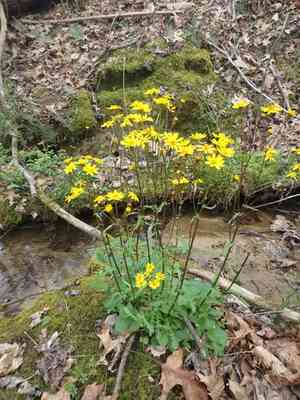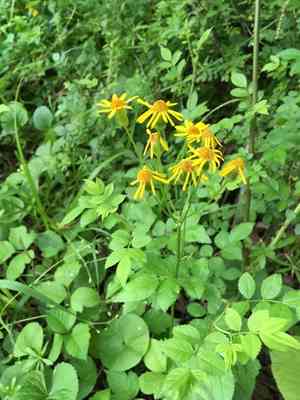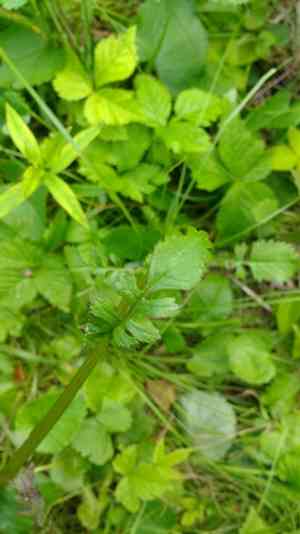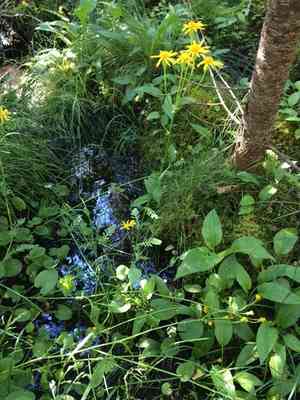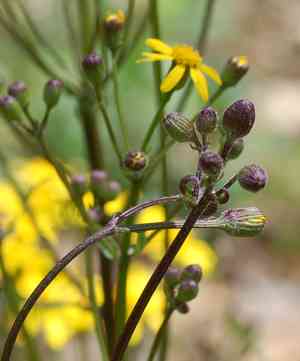
Golden ragwort(Packera aurea)

Golden ragwort (Packera aurea)

Also known as: Squaw weed

Golden ragwort (Packera aurea), part of the aster family, is a vibrant perennial wildflower. This hardy plant flourishes in moist to wet soils and can grow in both full sun and partial shade. Ideal for naturalized garden settings, it produces bright yellow flowers in the spring and attracts various small bees and other pollinators.

Attributes of Golden ragwort

Lifespan
Perennial
Plant Type
Herb
Plant Height
30 cm to 60 cm
Spread
15 cm to 45 cm
Leaf Color
Green
Flower Size
2.5 cm
Flower Color
Yellow

PlantJoy - Identify plants with a snap

Identify and diagnose plants, get toxicity alerts, and explore safety guides for all types of fungi.

Try for Free

Images of Golden ragwort

Golden ragwort(Packera aurea)

Quickly Identify Golden ragwort

1
Heart-shaped basal leaves with reddish purple undersides, measuring 2 to 4 inches (5 to 10 cm) long.
2
Bright yellow daisy-like flowers, 1 inch (2.5 cm) in diameter, forming flat corymb clusters.
3
Slender stems, unbranched or sparsely branched, up to 2 feet (60 cm) tall with a slightly shiny surface.
4
Upper lance-shaped leaves sometimes clasping the stem, smaller than basal leaves, contributing to a distinctive appearance.
5
Late spring blooming contributing a splash of color to moist environments, attracting birds with seeds.

Scientific Classification of Golden ragwort

Phylum
Vascular plants
Class
Dicotyledons
Order
Asterales
Family
Daisy
Genus
Packera
Species
Golden ragwort

Planting and Growing of Golden ragwort

Care Difficulty
Easy
Watering Schedule
Every 3 days
Sunlight Requirements
Partial sun
Sunshine Duration
4-8 hours
Ideal Temperature
60-75℉
Soil Type
Potting Mix, Peat Mix
Soil pH
6.5-7.5
Fertilizer Type
Balanced
Pruning Season
Spring, Summer
Pruning Area
Branches, Leaves
Pruning Frequency
2 times a year
Repotting Season
Spring
Pot Type
Plastic, Ceramic

water icon How to Water Golden ragwort?

For Packera aurea, the watering amount should be generous to ensure that the soil remains consistently moist. This typically means using about 500 ml of water per session, ensuring that water reaches the roots but doesn’t sit in a puddle, as excessive standing water can lead to root rot.
What are the symptoms of an underwatered Golden ragwort?
What should I do if my Golden ragwort is not getting enough water?
What are the symptoms of an overwatered Golden ragwort?
How to save an overwatered Golden ragwort?

sunlight icon What Are the Sunlight Requirements for Golden ragwort?

Sunlight Requirements: Partial sun, Full shade
Duration of light: Two to six hours
Packera aurea achieves optimal growth under partial sun, benefiting from two to six hours of daily light. This encourages healthy foliage and vibrant flowers by providing enough energy for growth while preventing stress.
What is the best light condition for Packera aurea?
How can I ensure ideal lighting for Packera aurea?
What benefits arise when Packera aurea receives ideal light?

temperature icon What Is the Ideal Temperature Range for Golden ragwort?

Ideal Temperature: 60 ~ 75℉
Packera aurea thrives best in a temperature range of 60°F to 75°F. This range provides the right warmth for its cellular processes, ensuring good growth and vibrant foliage. Maintaining this ideal range helps the plant to photosynthesize effectively without the risk of heat or cold stress.

soil icon What Soil is Best for Golden ragwort?

Soil type: Loam, Sandy loam
Soil PH: 6.5 ~ 7.5
Packera aurea thrives in nutrient-rich soil, which provides essential minerals and support for vigorous growth. Such soil enhances the plant's flowering potential and ensures a lush, vibrant foliage throughout the growing season. Moist soil is crucial for Packera aurea as it helps maintain a consistent water supply to the roots, preventing drought stress and promoting healthy tissue development. This moisture consistency is vital for the plant's overall health and vitality. While moisture is important, well-draining soil prevents waterlogging, which can lead to root rot. This balance ensures that the roots have adequate access to oxygen and reduces the risk of disease, contributing to robust plant health.

fertilize icon How to Fertilize Golden ragwort?

Fertilizer type: Balanced
For Packera aurea, it's crucial to control the fertilization amount as excess can lead to root burn. During the growing season, utilize a balanced liquid fertilizer diluted to half strength. For slow-release fertilizers, apply sparingly, following the package directions to avoid over-fertilizing.

prune icon How to Prune Golden ragwort?

Pruning Time: Spring, Autumn
Start by removing any dead, damaged, or diseased stems. Look for discoloration or brittleness as indicators. Clearing these out helps direct energy to healthier parts of the plant. Trim back the spent flowering stems to encourage bushier growth. Cut just above the leaf node to stimulate new branches and improve overall appearance. Gently shape Packera aurea by cutting back any excessively long or unruly stems. This not only maintains its aesthetic appeal but also improves air circulation to deter pest infestations.

propagate icon How to Propagate Golden ragwort plant?

Propagate Time: Spring, Early spring
1
Seeds from Packera aurea should be collected after the flowering period in late summer when the seed heads have dried. Be careful to choose fully matured seeds and clean them for storage or immediate sowing.
2
Mixing soil should be well-drained with an appropriate balance of peat, sand, and vermiculite. This mix promotes safe seed germination and provides necessary nutrients throughout the early plant stages.
3
When using division propagation, uproot the plant gently during early spring. Clean roots free of soil and use a sterilized knife to divide them, ensuring each section has roots and shoots, which are then transplanted.

repot icon How to Repot Golden ragwort plant?

Repotting frequency: Every 2-3 years
1
Repot Packera aurea when its roots start to circle the pot's bottom or emerge from drainage holes. This plant typically needs repotting every two to three years, preferably during its active growth periods in spring or autumn. Check for soil compaction or poor drainage as additional indicators.
2
Select a pot that's one size larger than the current one, with ample drainage holes. The material should provide good airflow—terracotta is an excellent choice. A well-sized pot fosters root expansion and nutrient uptake without causing waterlogging issues, promoting robust growth.
3
Opt for a rich, moist, and well-drained soil mix. Incorporate organic matter like peat moss or perlite to enhance aeration and drainage. This type of soil retains enough moisture for Packera aurea's needs while ensuring excess water drains away, preventing root rot.

PlantJoy - Identify plants with a snap

Find the best spots for them to optimize their health, simply using your phone.

Try for Free

Toxicity of Golden ragwort

Is Golden ragwort toxic to humans?

Golden ragwort is considered a mildly toxic plant when consumed. Each part of the plant, comprising both the leaves and flowers, is poisonous, though a significant quantity must be ingested before any symptoms manifest. This plant contains pyrrolizidine alkaloids, which may lead to liver damage; however, no cases have been documented in humans. Symptoms associated with poisoning may include lethargy, confusion, and jaundice. To potentially cause liver damage, an individual would need to consume several large plants daily over a period of at least two weeks. As such, encountering golden ragwort poisoning is exceedingly unlikely.

Is Golden ragwort toxic to cat?

Golden ragwort presents a mild toxic risk to cats. When felines ingest substantial quantities of the plant's foliage, they may experience poisoning symptoms. Direct interaction with golden ragwort can cause cats to exhibit general signs of discomfort or illness. It is vital for cat owners to observe their pets for any signs of distress and to obtain prompt veterinary assistance if any negative reactions occur. Timely and professional intervention is critical for the well-being of the affected cat.

Is Golden ragwort toxic to dog?

Golden ragwort presents a mild toxicity hazard to dogs. These animals may experience poisoning if they consume significant quantities of the plant, especially its leaves, which are recognized for their toxic properties. Pet owners must remain alert and discourage their dogs from eating large amounts of golden ragwort. In instances where a dog does consume this plant, possible symptoms of poisoning may manifest as gastrointestinal disturbances like vomiting or diarrhea, along with lethargy or other subtle signs of discomfort. It is crucial for dog owners to respond promptly and seek immediate professional veterinary assistance if they suspect their dog has ingested golden ragwort. Quick intervention can help secure the best possible prognosis for the affected pet.

Identify toxic plants for your safety

Learn which plants are harmful to you and your pets, and make informed choices for a safer home!

Try for Free
WARNING
The judgment on toxicity and danger is for reference only. We DO NOT GUARANTEE any accuracy of such judgment. Therefore, you SHALL NOT rely on such judgment. It is IMPORTANT TO SEEK PROFESSIONAL ADVICE in advance when necessary.