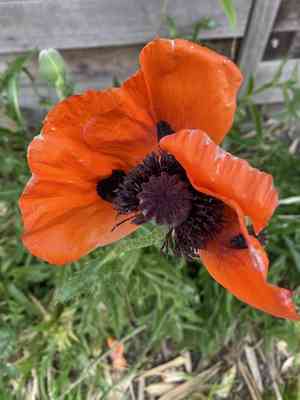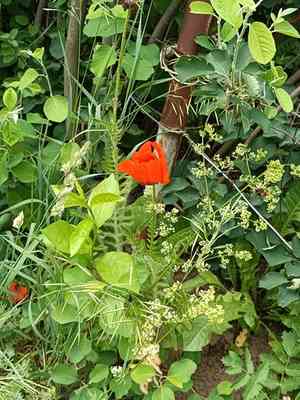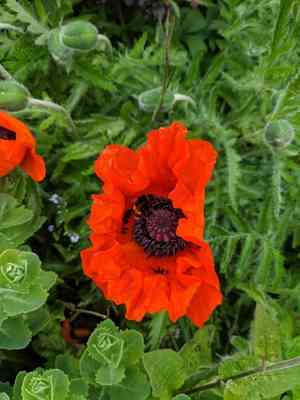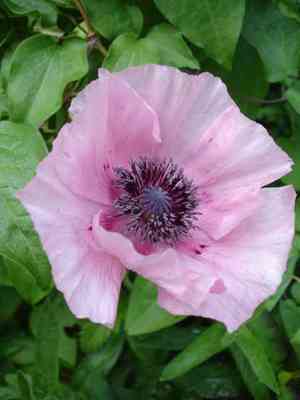
Oriental poppy(Papaver orientale)

Oriental poppy (Papaver orientale)

Also known as: Oriental Poppy

The Geum is a perennial, herbaceous plant that forms clumps and features slightly hairy stems and leaves. While it is often recognized for its vibrant scarlet flowers, cultivars of Geum also bloom in a variety of colors, including orange, pink, white, and plum.

Attributes of Oriental poppy

Lifespan
Perennial, Annual
Plant Type
Herb
Plant Height
60 cm to 1 m
Spread
45 cm to 60 cm
Leaf Color
Green Gray Silver
Flower Size
10 cm to 15 cm
Flower Color
Red White Pink Orange Purple Black Violet Burgundy

PlantJoy - Identify plants with a snap

Identify and diagnose plants, get toxicity alerts, and explore safety guides for all types of fungi.

Try for Free

Images of Oriental poppy

Oriental poppy(Papaver orientale)

Quickly Identify Oriental poppy

1
Large, cup-shaped blossoms up to 6 inches (15 cm) in vibrant orange, red, and pink hues.
2
Distinctive black or purple center in 4-6 inch (10-15 cm) silky-smooth flowers.
3
Dry, papery capsule with dark seeds, 1-2 inches (2.5-5 cm) long, contrasting with bright blooms.
4
Gray-green, pinnately dissected leaves with hairy texture, 4-12 inches (10-30 cm) long.
5
Basal rosette of persisting leaves after flowering, reaching 2-3 feet (60-90 cm) in height.

Scientific Classification of Oriental poppy

Phylum
Vascular plants
Class
Dicotyledons
Order
Ranunculales
Family
Poppy
Genus
Poppies
Species
Oriental poppy

Planting and Growing of Oriental poppy

Care Difficulty
Easy
Watering Schedule
Every 4 days
Sunlight Requirements
Full sun
Sunshine Duration
6-10 hours
Ideal Temperature
60-75℉
Soil Type
Potting Mix, Peat Mix
Soil pH
6.5-7.5
Fertilizer Type
Balanced
Pruning Season
Spring, Summer
Pruning Area
Branches, Leaves
Pruning Frequency
2 times a year
Repotting Season
Spring
Pot Type
Plastic, Ceramic

water icon How to Water Oriental poppy?

For Papaver orientale, it's important to ensure that the soil is thoroughly moistened but never waterlogged. A good rule of thumb is to water until you see some excess draining from the bottom of the pot. Typically, around 500 milliliters per watering session is sufficient, but this may vary depending on your specific climate and soil conditions.
What are the symptoms of an underwatered Oriental poppy?
What should I do if my Oriental poppy is not getting enough water?
What are the symptoms of an overwatered Oriental poppy?
How to save an overwatered Oriental poppy?
More About Watering Techniques

sunlight icon What Are the Sunlight Requirements for Oriental poppy?

Sunlight Requirements: Full sun
Duration of light: 6 to 8 hours
Papaver orientale requires full sun, meaning at least 6-8 hours of direct sunlight daily, which significantly aids in its vibrant flower production and robust growth.
How much sunlight does it require?
What happens if it doesn't get enough sunlight?
How to achieve ideal lighting conditions?
More About Sunlight Requirements Techniques

temperature icon What Is the Ideal Temperature Range for Oriental poppy?

Ideal Temperature: 60 ~ 75℉
Papaver orientale thrives best in a temperature range of 60°F to 75°F. This range provides optimal conditions for photosynthesis and growth, as it aligns with the plant's natural habitat conditions. Maintaining this temperature range ensures the plant's physiological processes operate efficiently, leading to vibrant blooms and healthy foliage.

soil icon What Soil is Best for Oriental poppy?

Soil type: Loam, Sandy loam
Soil PH: 6.5 ~ 7.5
Papaver orientale thrives in soil with good drainage. This prevents waterlogging, which could lead to root rot and ensures the plant receives the right amount of moisture. A rich, loamy soil provides the necessary nutrients for the vibrant blooms of Papaver orientale. Regularly replenishing soil nutrients supports robust plant growth. Maintaining a soil pH between 6.5 and 7.5 is crucial for the optimal absorption of nutrients, ensuring healthy growth and abundant flowering. More About Soil

fertilize icon How to Fertilize Oriental poppy?

Fertilizer type: Balanced
When fertilizing Papaver orientale, it is crucial to use a balanced fertilizer with a ratio around 10-10-10, applying approximately one tablespoon per square foot. This ensures adequate nutrient supply without overwhelming the plant. Using too much can lead to fertilizer burn, so it is always best to start with smaller quantities and adjust as needed based on the plant's response. More About Fertilizing Techniques

prune icon How to Prune Oriental poppy?

Pruning Time: Spring, Summer, Autumn
When pruning in early spring, take care to preserve new growth. This fresh growth is vital for the plant's flowering cycle and should not be cut. Over-pruning can overly stimulate unwanted growth. Limit cuts to no more than one-third of the total plant to maintain a robust structural form. More About Pruning Techniques

propagate icon How to Propagate Oriental poppy plant?

Propagate Time: Early spring, Late summer, Early autumn
1
Scatter seeds thinly on a seed tray filled with seed-starting medium. Lightly cover them with soil and keep the tray moist but not waterlogged. Germination typically occurs within 2-3 weeks.
2
In early spring or late summer, carefully dig up the parent plant. Use a sharp tool to divide the root ball into several sections, ensuring each new section has adequate roots and shoots for regrowth.
3
Take root cuttings in early autumn by cutting healthy root sections 2-3 inches long. Plant them vertically in a container with rooting medium, ensuring part of the root remains above the soil level.
More About Propagating Techniques

repot icon How to Repot Oriental poppy plant?

Repotting frequency: Every 2-3 years
1
Papaver orientale needs repotting when its roots start to outgrow the pot or water isn't draining properly. This usually occurs every couple of years. Look for roots peeking out of the drainage holes and stagnant water at the surface after watering. These are signals that your oriental poppy requires more space and fresh soil.
2
Selecting the right pot for Papaver orientale is crucial for its health. Opt for one size larger than the current pot with ample drainage holes. This ensures proper water discharge and allows the roots enough space to expand, preventing root rot and encouraging vibrant growth.
3
Oriental poppies thrive in loamy, nutrient-rich soils with excellent drainage. Choose a well-draining mix to keep water from saturating the roots. A mix with sand, silt, and organic matter will provide the necessary nutrients while preventing root rot and ensuring healthy plant development.

PlantJoy - Identify plants with a snap

Find the best spots for them to optimize their health, simply using your phone.

Try for Free

Toxicity of Oriental poppy

Is Oriental poppy toxic to humans?

To date, no verified incidents of poisoning have been linked to the oriental poppy; nonetheless, numerous other plants within the same genus are deemed extremely poisonous to humans. It is believed that Oriental poppies may harbor similar toxins, particularly if any part of the plant is consumed. Symptoms of potential poisoning could manifest as shallow breathing, stupor, reduced circulation, and even coma. Be cautious not to confuse these poppies with other varieties whose seeds are utilized as culinary spices.

Is Oriental poppy toxic to cat?

The Oriental poppy is recognized as a toxic plant for cats, as every part of it—including flowers, fruits, leaves, roots, seeds, stems, and bark—presents potential risks. Cats might inadvertently ingest parts of the Oriental poppy, which could result in poisoning episodes. Following ingestion, a cat may exhibit general signs of discomfort or illness. While the exact toxic components of the Oriental poppy are not specified, pet owners should exercise caution and monitor their cats for any unusual health changes. It is crucial to obtain prompt veterinary assistance if poisoning is suspected to safeguard the well-being of the affected cat.

Is Oriental poppy toxic to dog?

The oriental poppy is known to be toxic to dogs. Canines may unintentionally consume various parts of this plant, including its flowers, fruits, leaves, roots, seeds, stems, or bark. Following the ingestion of the oriental poppy, a dog may show symptoms that indicate poisoning. Such symptoms can include gastrointestinal distress, lethargy, excessive drooling, vomiting, and diarrhea. It is essential for dog owners to closely observe their pets and prevent their access to oriental poppy to avoid any accidental consumption. If a dog does ingest any part of the oriental poppy, it is vital to seek prompt veterinary assistance to ensure the best possible outcome for the pet.

Identify toxic plants for your safety

Learn which plants are harmful to you and your pets, and make informed choices for a safer home!

Try for Free
WARNING
The judgment on toxicity and danger is for reference only. We DO NOT GUARANTEE any accuracy of such judgment. Therefore, you SHALL NOT rely on such judgment. It is IMPORTANT TO SEEK PROFESSIONAL ADVICE in advance when necessary.
More About Toxic Techniques