Corn poppy(Papaver rhoeas)

Corn poppy (Papaver rhoeas)

Also known as: Field poppy, Red poppy, Cornfield poppy

The corn poppy (Papaver rhoeas) is an annual plant that holds significant symbolic value in various cultures. During World War One, it was commonly seen growing between the trenches in France and Belgium. After the war, it emerged as a global emblem of fallen soldiers. Notably, this type of poppy does not produce opium.

Attributes of Corn poppy

Lifespan
Annual, Perennial, Biennial
Plant Type
Herb
Plant Height
25 cm to 90 cm
Spread
30 cm to 90 cm
Leaf Color
Green
Flower Size
2.5 cm to 4.5 cm
Flower Color
Red White Pink Orange Burgundy

PlantJoy - Identify plants with a snap

Identify and diagnose plants, get toxicity alerts, and explore safety guides for all types of fungi.

Try for Free

Images of Corn poppy

Corn poppy(Papaver rhoeas)

Quickly Identify Corn poppy

1
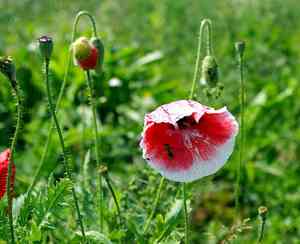
Bright red flowers with black spots at base, 3-4 inches (7-10 cm) in diameter.
2
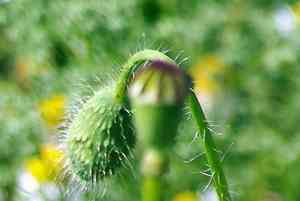
Hair-covered stems can reach 28 inches (70 cm), supporting finely divided, grey-green leaves.
3
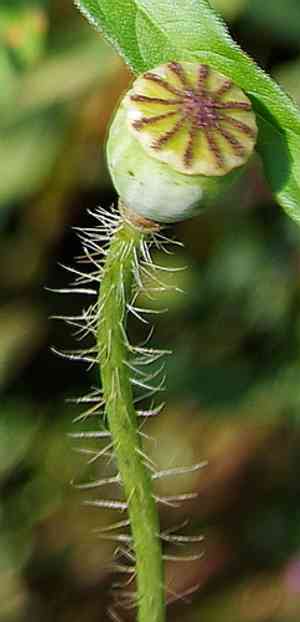
Distinctive round fruit capsule, 0.5-1 inch (1.3-2.5 cm) with disc shape top.
4
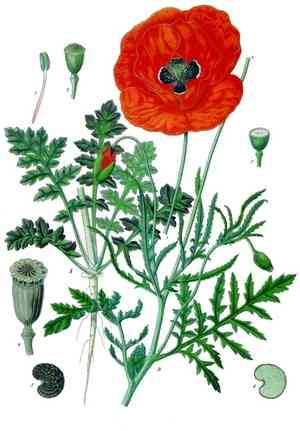
Coarsely toothed, pinnately lobed leaves with hairy surface and prominent veins, reaching 6 inches (15 cm) in length.
5
Slender green stem exuding white to yellowish latex, reaching up to 3 feet (90 cm) in height.

Scientific Classification of Corn poppy

Phylum
Vascular plants
Class
Dicotyledons
Order
Buttercups, poppies and allies
Family
Poppy
Genus
Poppies
Species
Corn poppy

Planting and Growing of Corn poppy

Care Difficulty
Easy
Watering Schedule
Every 4 days
Sunlight Requirements
Full sun
Sunshine Duration
4-8 hours
Ideal Temperature
60-77℉
Soil Type
Potting Mix, Peat Mix
Soil pH
6.5-7.5
Fertilizer Type
Balanced
Pruning Season
Spring, Summer
Pruning Area
Branches, Leaves
Pruning Frequency
2 times a year
Repotting Season
Spring
Pot Type
Terracotta, Plastic

water icon How to Water Corn poppy?

Papaver rhoeas prefers a moderate amount of water, ensuring the soil is consistently moist but not waterlogged. A good rule of thumb is to water thoroughly until the soil feels damp about 2 inches deep, but make sure the excess water can drain away.
What are the symptoms of an underwatered Corn poppy?
What should I do if my Corn poppy is not getting enough water?
What are the symptoms of an overwatered Corn poppy?
How to save an overwatered Corn poppy?
More About Watering Techniques

sunlight icon What Are the Sunlight Requirements for Corn poppy?

Sunlight Requirements: Full sun
Duration of light: 4 to 8 hours
Papaver rhoeas flourish in full sun conditions. Ideal light conditions promote vigorous growth, robust foliage, and exuberant flowering, enhancing the plant's decorative and ecological value significantly.
Best lighting setup for Papaver rhoeas
How to achieve ideal lighting
Benefits of optimal lighting
More About Sunlight Requirements Techniques

temperature icon What Is the Ideal Temperature Range for Corn poppy?

Ideal Temperature: 60 ~ 77℉
The ideal temperature range for Papaver rhoeas is between 60°F and 77°F. In this temperature range, the plant experiences optimal growth conditions including vigorous flowering and healthy foliage development. When grown within these temperatures, the stress on the plants is minimized, promoting a robust and resilient plant structure.

soil icon What Soil is Best for Corn poppy?

Soil type: Sandy soil, Loam, Sandy loam
Soil PH: 6.5 ~ 7.5
Papaver rhoeas thrive in soils that offer excellent drainage. This condition helps prevent water-logging, which can lead to root rot. By ensuring the soil is well-drained, you greatly enhance the plant's growth and vitality. Rich soil provides the nutrients Papaver rhoeas need for vibrant blooms. A soil abundant in organic matter helps supply essential nutrients, supporting healthy growth and stunning flower displays. Soil that retains just the right amount of moisture is ideal for Papaver rhoeas. This balance prevents drought stress while avoiding overly wet conditions, thereby ensuring optimal growth conditions. More About Soil

fertilize icon How to Fertilize Corn poppy?

Fertilizer type: Balanced
For Papaver rhoeas, moderate fertilization is paramount. Use a balanced liquid fertilizer diluted to half-strength, providing about 10-20 mL per liter of water. Avoid excessive nutrient loads, as this species thrives better in nutrient-poor substrates. Additionally, for solid fertilizers, apply sparingly, using only 5-10 grams per square meter, ensuring not to oversaturate the soil's nutrient balance. More About Fertilizing Techniques

prune icon How to Prune Corn poppy?

Pruning Time: Spring, Summer
Always use sharp and clean pruning shears when cutting back your Papaver rhoeas. This avoids crushing the stems, which can lead to tissue damage and increase susceptibility to disease. When pruning, be cautious not to cut too close to the base of the plant. Leaving some foliage helps ensure the plant can continue photosynthesis, vital for its overall health and growth. More About Pruning Techniques

propagate icon How to Propagate Corn poppy plant?

Propagate Time: Spring, Early spring
1
Choose high-quality seeds for successful propagation. Check the date on seed packets to ensure freshness, as older seeds may have lower germination rates. It's essential to examine seeds for uniformity and absence of any diseases or pests.
2
Fill a seed tray with sterile seed-starting mix and evenly distribute the seeds over the surface. Cover them lightly with a thin layer of soil to promote germination. Provide indirect sunlight and keep the soil consistently moist.
3
Once seedlings have developed a few true leaves, carefully transplant them to individual pots. Handle seedlings gently to avoid damaging the roots, and ensure pots have adequate drainage to prevent root rot.
More About Propagating Techniques

repot icon How to Repot Corn poppy plant?

Repotting frequency: Annually or biannually
1
Papaver rhoeas, or the common poppy, signals its need for repotting when you see roots crowding the pot's drainage holes or a noticeable slowdown in growth. Spring is the ideal season because the plant is naturally inclined to grow, making it easy to adapt to the new environment.
2
When selecting a new pot for Papaver rhoeas, opt for one that is just a couple of inches larger in diameter than the current one. This helps prevent waterlogging by ensuring proper soil aeration and drainage. Additionally, select pots made from breathable materials to promote healthy root development.
3
For Papaver rhoeas, a well-draining potting mix is essential. This type of soil prevents root rot by allowing excess water to drain readily, while still holding sufficient moisture for the plant's needs. Look for mixes containing perlite or sand.

PlantJoy - Identify plants with a snap

Find the best spots for them to optimize their health, simply using your phone.

Try for Free

Toxicity of Corn poppy

Is Corn poppy toxic to humans?

The corn poppy exhibits mild toxicity in humans. Consuming its leaves or flowers, which hold the compound rhoeadine, can lead to subtle sedative effects. While instances of vomiting, nausea, and confusion may arise, they are infrequent. Serious cases are exceptionally rare. Corn poppies are widely cherished for ornamental purposes and are also prevalent as agricultural weeds. Despite frequent human interactions with this plant, corn poppy poisoning occurrences are remarkably uncommon. This species lacks any closely resembling edible counterparts.

Is Corn poppy toxic to cat?

The corn poppy is a poisonous plant for cats, especially its seeds, which can be particularly dangerous if ingested. Cats may inadvertently consume portions of the corn poppy, resulting in a range of symptoms that signal physical distress. In case of poisoning, it is essential to act quickly and obtain immediate veterinary assistance, as prompt treatment is crucial for a cat's recovery. When interacting with this plant, it is advisable to exercise caution to prevent your feline companions from ingesting or coming into contact with its seeds.

Is Corn poppy toxic to dog?

The corn poppy is recognized as toxic to dogs. If a dog accidentally consumes this plant, it can become poisoned, with the seeds posing a particularly high level of toxicity. Upon ingesting any portion of the corn poppy, a dog might display symptoms such as gastrointestinal distress, lethargy, or even more severe clinical manifestations depending on the quantity eaten. Thus, it is essential for dog owners to keep a close eye on their pets and prevent them from having access to corn poppy plants. If a dog does ingest any part of the corn poppy, especially the seeds, it is crucial to seek immediate veterinary assistance to secure the best possible outcome for the pet.

Identify toxic plants for your safety

Learn which plants are harmful to you and your pets, and make informed choices for a safer home!

Try for Free
WARNING
The judgment on toxicity and danger is for reference only. We DO NOT GUARANTEE any accuracy of such judgment. Therefore, you SHALL NOT rely on such judgment. It is IMPORTANT TO SEEK PROFESSIONAL ADVICE in advance when necessary.
More About Toxic Techniques