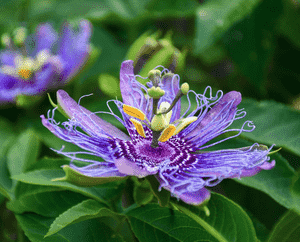
Maypop(Passiflora incarnata)

Maypop (Passiflora incarnata)

Also known as: Wild apricot, True passionflower

When planting Maypop (Passiflora incarnata) near residential spaces, consider these key precautions:

1. **Invasive Growth:** Maypop can rapidly spread. Use root barriers or plant in pots to control its expansion.
2. **Structural Support:** Ensure you provide robust trellises or fences, as the vine can be heavy and needs solid support.
3. **Fire Safety:** Avoid planting near homes in wildfire-prone areas, as the plant is highly flammable.
4. **Sun Exposure:** Plant in areas with full to partial sunlight for healthy growth.
5. **Distance from Structures:** Keep a safe distance from buildings and walkways to prevent obstruction and potential damage.
6. **Attracts Wildlife:** Maypop attracts pollinators like bees and butterflies, which could be a concern for those with allergies.
7. **Child and Pet Safety:** Ensure that children and pets do not ingest plant parts to avoid digestive issues.
8. **Regular Maintenance:** Prune regularly to manage growth and maintain an orderly appearance.

Attributes of Maypop

Lifespan
Perennial
Plant Type
Vine, Herb
Plant Height
1.8 m to 6 m
Spread
90 cm to 1.8 m
Leaf Color
Green
Flower Size
6 cm to 8 cm
Flower Color
Purple White Pink Blue

PlantJoy - Identify plants with a snap

Identify and diagnose plants, get toxicity alerts, and explore safety guides for all types of fungi.

Try for Free

Images of Maypop

Maypop(Passiflora incarnata)

Quickly Identify Maypop

1
Distinct three-lobed leaves measuring 3-6 inches (7.5-15 cm) in length.
2
Fragrant white flowers with purple crown and 3-inch (7.5 cm) diameter.
3
Egg-shaped fleshy berries up to 3 inches (7.5 cm) emitting a 'pop' when compressed.
4
Dark green trunk with smooth texture in young stages, transitioning to vibrant green as it matures.
5
Flowers with intricate radial filament arrangement and lavender sepals and petals.

Scientific Classification of Maypop

Phylum
Vascular plants
Class
Dicotyledons
Order
Malpighiales
Family
Passionflowers
Genus
Passion flowers
Species
Maypop

Planting and Growing of Maypop

Care Difficulty
Easy
Watering Schedule
Every 8 days
Sunlight Requirements
Full sun
Sunshine Duration
6-10 hours
Ideal Temperature
70-85℉
Soil Type
Potting Mix, Peat Mix
Soil pH
5.5-7.5
Fertilizer Type
Balanced
Pruning Season
Spring, Summer
Pruning Area
Branches, Leaves
Pruning Frequency
2 times a year
Repotting Season
Spring
Pot Type
Terracotta, Plastic

water icon How to Water Maypop?

For Passiflora incarnata, ensure to water thoroughly until the soil is evenly moist but not waterlogged. The recommended amount is around 500 ml per watering session, maintaining consistent moisture while avoiding excess saturation.
What are the symptoms of an underwatered Maypop?
What should I do if my Maypop is not getting enough water?
What are the symptoms of an overwatered Maypop?
How to save an overwatered Maypop?
More About Watering Techniques

sunlight icon What Are the Sunlight Requirements for Maypop?

Sunlight Requirements: Full sun, Partial sun
Duration of light: 6 to 8 hours
Passiflora incarnata prospers in full to partial sun environments. Ideal lighting facilitates vigorous growth and abundant flowering, highlighting the plant's vibrant floral displays and ensuring the maintenance of its overall health.
What kind of sunlight does Passiflora incarnata thrive in?
How can I ensure my Passiflora incarnata gets ideal lighting indoors?
What benefits does Passiflora incarnata gain from ideal lighting?
More About Sunlight Requirements Techniques

temperature icon What Is the Ideal Temperature Range for Maypop?

Ideal Temperature: 70 ~ 85℉
For optimal growth of Passiflora incarnata, an ideal temperature range between 70°F and 85°F is recommended. This range ensures that the metabolic processes vital for plant growth and bloom development are maintained efficiently. Consistent temperatures within this bracket provide the necessary warmth for vigorous flowering and fruiting while avoiding stress caused by excessive heat or cold.

soil icon What Soil is Best for Maypop?

Soil type: Loam, Sandy loam
Soil PH: 5.5 ~ 7.5
Passiflora incarnata thrives in well-drained soils that prevent waterlogging. Such soil allows oxygen to reach the roots, promoting healthier root systems and reducing the risk of root rot. This plant benefits from soils rich in organic matter and nutrients, supporting vigorous growth and abundant flowering. Fertile soils ensure the plant gets the essential minerals for its metabolic processes. Consistent soil moisture is crucial, as it helps maintain plant vigor. Soil that retains some moisture without becoming waterlogged provides a stable environment for root development and nutrient intake. More About Soil

fertilize icon How to Fertilize Maypop?

Fertilizer type: Balanced
For Passiflora incarnata, a balanced fertilizer with an N-P-K ratio of 10-10-10 is ideal. For liquid fertilizers, apply about 1 tablespoon per gallon of water, while slow-release granules can be scattered sparingly around the root zone. Be careful not to exceed recommended doses, as this could lead to nutrient burn. More About Fertilizing Techniques

prune icon How to Prune Maypop?

Pruning Time: Spring, Summer, Autumn, Winter
Begin by inspecting the plant for any dead, diseased, or damaged stems and remove these first to ensure that energy is not wasted on unhealthy growth. Use pruning shears to cut these back to the source or just above a healthy bud or leaf node. If you intend to train Passiflora incarnata on a support structure, selectively prune the vines to guide them in the desired direction. Remove any wayward growth that detracts from the aesthetic or functional direction you have chosen for the plant's growth pattern. Trim back any excessively long or stray shoots to maintain the desired shape of your plant. This encourages the plant to become bushier and results in a more compact and full appearance, which is particularly desirable if the plant is grown for ornamental purposes. More About Pruning Techniques

propagate icon How to Propagate Maypop plant?

Propagate Time: Spring, Early spring, Late spring, Summer
1
Before planting, soak the seeds in warm water for 24 hours to soften the seed coat, which improves germination rates.
2
Choose a healthy, non-flowering stem and cut a section approximately 6 inches long. Remove the lower leaves before planting in the substrate.
3
Carefully dig up the parent plant and separate the roots to ensure each division has enough roots and shoots for successful transplantation.
More About Propagating Techniques

repot icon How to Repot Maypop plant?

Repotting frequency: Every two years
1
Repotting Passiflora incarnata becomes necessary when you notice roots protruding from the drainage holes of its current pot. Additionally, if the soil seems compacted or the plant's growth appears stunted, it's an indicator that repotting is due. The ideal time for repotting is during the active growth phases in spring and summer, as the plant can quickly recover and adapt to its new environment during these seasons.
2
Selecting the correct pot for your Passiflora incarnata is crucial. Opt for a container that is one size larger than the current pot but not overly large. This encourages the roots to establish quickly without being overwhelmed by excessive soil. Ensure the pot has adequate drainage holes to prevent water stagnation, which can lead to root rot, keeping your passionflower healthy and thriving.
3
For optimal growth, choose a well-draining potting mix tailored for Passiflora incarnata. A balance of peat, perlite, or sand will provide the necessary drainage and aeration. This soil composition helps prevent waterlogging and allows roots to access oxygen more effectively, thereby promoting healthier plant growth and reducing the risk of rot.
More About Repotting Techniques

PlantJoy - Identify plants with a snap

Find the best spots for them to optimize their health, simply using your phone.

Try for Free

Toxicity of Maypop

Is Maypop toxic to cat?

Maypop is harmful to cats. Should a cat consume any part of the maypop plant, especially the stems, it may result in poisoning. Cats can encounter this threat either by unintentionally eating the plant, which poses a risk both indoors and outdoors when maypop is accessible. After ingestion, the cat might show symptoms of distress or health issues. If you believe your cat has ingested any part of the maypop, it is crucial to obtain prompt veterinary assistance to safeguard their well-being.

Is Maypop toxic to dog?

The maypop plant is regarded as toxic to dogs. If ingested inadvertently, particularly the stems, which harbor harmful substances, dogs can become poisoned by this vegetation. Following the ingestion of maypop, a dog might display symptoms including gastrointestinal distress, vomiting, diarrhea, or more severe manifestations depending on the quantity consumed. It is essential for dog owners to keep a vigilant eye on their pets and prevent any access to maypop to mitigate the risk of unintentional consumption. Should there be a suspicion that a dog has been poisoned by maypop, seeking immediate veterinary assistance is vital to ensure swift treatment and the most favorable outcome for the affected pet.

Identify toxic plants for your safety

Learn which plants are harmful to you and your pets, and make informed choices for a safer home!

Try for Free
WARNING
The judgment on toxicity and danger is for reference only. We DO NOT GUARANTEE any accuracy of such judgment. Therefore, you SHALL NOT rely on such judgment. It is IMPORTANT TO SEEK PROFESSIONAL ADVICE in advance when necessary.
More About Toxic Techniques