
Creeping phlox (Phlox subulata)
Also known as: Moss pink, Britton's phlox
A native flowering plant in the United States that fits your description is the "Creeping Phlox" (Phlox subulata). Its name, Phlox subulata, translates to needle-shaped, indicative of its leaves. This plant can occasionally be mistaken for marijuana because of its similar scent.
In This Article
Attributes of Creeping phlox
Lifespan
Perennial, Annual
Plant Type
Herb
Plant Height
13 cm
Spread
50 cm
Leaf Color
Green
Flower Size
2 cm
Flower Color
White Pink Blue Purple Red Lavender Violet
Images of Creeping phlox


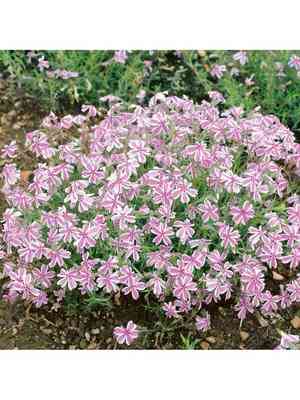

Quickly Identify Creeping phlox
1
Mat-forming growth up to 6 inches (15 cm) tall and 2-3 feet (60-90 cm) wide.
2
Vibrant tubular flowers, 3/4 inch (2 cm) across, in pink, lavender, white, or reddish-purple.
3
Opposite leaves, 1/4-3/4 inch (6-19 mm) long, awl-shaped with white-hairy edges.
4
Light green to reddish-purple woody stems with prostrate growth and hairy texture.
5
Inconspicuous oval seed capsules, around 4 mm (0.16 inches) long, for effective reseeding.
Scientific Classification of Creeping phlox
Phylum
Vascular plants
Class
Dicotyledons
Order
Heathers and allies
Family
Phlox
Genus
Phloxes
Species
Creeping phlox
Planting and Growing of Creeping phlox
Care Difficulty
Easy
Watering Schedule
Every 2 days
Sunlight Requirements
Full sun
Sunshine Duration
4-8 hours
Ideal Temperature
60-75℉
Soil Type
Potting Mix, Peat Mix
Soil pH
6.5-7.5
Fertilizer Type
Balanced
Pruning Season
Spring, Summer
Pruning Area
Branches, Leaves
Pruning Frequency
2 times a year
Repotting Season
Spring
Pot Type
Plastic, Ceramic
 How to Water Creeping phlox?
For Phlox subulata, the watering should be thorough but not excessive. Aim to moisten the soil to about six inches deep without waterlogging it. This helps in promoting deep root growth essential for a healthy plant. It's best to water until the top layer of the soil is visibly moist, but avoid leaving the plant in standing water.
More About Watering Techniques→
What are the symptoms of an underwatered Creeping phlox?
›
What should I do if my Creeping phlox is not getting enough water?
›
What are the symptoms of an overwatered Creeping phlox?
›
How to save an overwatered Creeping phlox?
›
 What Are the Sunlight Requirements for Creeping phlox?
Phlox subulata prefers full to partial sun for robust growth and flowering. Ideal light conditions boost blooms and strengthen overall plant health, ensuring its stunning ground coverage effect in gardens.
More About Sunlight Requirements Techniques→
What is the ideal light exposure for Phlox subulata?
›
How can you ensure adequate light exposure for Phlox subulata?
›
What are the benefits of ideal light exposure for Phlox subulata?
›
 What Is the Ideal Temperature Range for Creeping phlox?
Phlox subulata thrives best in temperatures between 60°F and 75°F. This range provides optimal conditions for photosynthesis and growth, ensuring the plant maintains its bright blooms and vibrant foliage. These temperatures support metabolic activities, enabling the plant to flourish during its growing season. Consistent temperatures within this range minimize stress and promote healthy development.
 What Soil is Best for Creeping phlox?
Phlox subulata thrives best in well-draining soil which prevents waterlogging. This type of soil ensures that the roots are not sitting in water which can lead to rot. The plant prefers moderately fertile soils where nutrients are available without being excessively rich, supporting healthy growth without fostering diseases. Preferring a pH range of 6.5 to 7.5, Phlox subulata can absorb nutrients more efficiently, promoting vibrant blooms and healthy foliage.
More About Soil→
 How to Fertilize Creeping phlox?
Phlox subulata, commonly known as moss phlox, requires careful attention to fertilization to ensure optimal growth. During the growing season, employ a balanced liquid fertilizer at a diluted ratio of approximately 1/4 of the recommended strength. This light feeding is necessary to encourage healthy blooms without overwhelming the plant's root system. For granular slow-release fertilizers, sprinkle about 1 to 1.5 ounces per square foot in the spring, dispersing the granules evenly across the plant's base.
More About Fertilizing Techniques→
 How to Prune Creeping phlox?
After the Phlox subulata has finished its spring bloom, use sharp shears to trim back the stems by about one-third. This encourages bushier growth and can lead to a second flush of flowers later in the season. As flowers fade, remove spent blooms by pinching or cutting them off just above the growing point. This not only tidies the plant but also stimulates additional blooming and prevents seed formation.
More About Pruning Techniques→
 How to Propagate Creeping phlox plant?
1
Collect seeds from mature Phlox subulata plants in late spring. Let the seed heads dry on the plant, then break them open to gather the seeds. Store seeds in a dry, cool place until you're ready to plant.
2
To propagate by cuttings, select healthy plants and use a sharp knife to cut non-flowering stems. Each cutting should be about 4 to 6 inches long. Remove the lower leaves before planting.
3
Divide Phlox subulata in early spring. Carefully dig up the plant and separate the clumps. Each division should have its own roots and shoots. Replant the divisions in the garden immediately.
 How to Repot Creeping phlox plant?
1
Look for signs such as roots emerging from drainage holes or slowed growth. Spring and autumn are ideal as the plant reduces stress during mild temperatures. Ensure the plant is not in bloom to focus on root recovery.
2
Opt for a pot with excellent drainage, slightly larger than the current one. This helps prevent root rot and allows roots to expand comfortably. A ceramic or clay pot is beneficial as it regulates moisture better than plastic.
3
Select a sandy, well-draining soil mix to mimic its natural conditions. This ensures proper aeration and prevents waterlogging, which can lead to root rot. Adding perlite or vermiculite enhances drainage and support.



