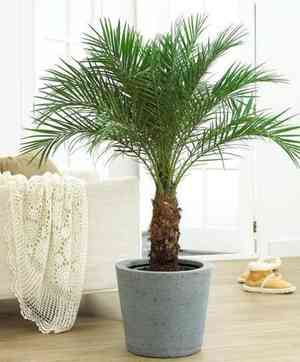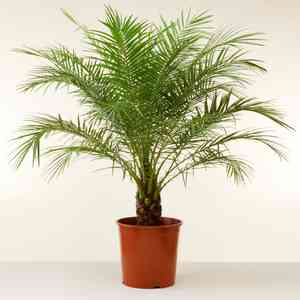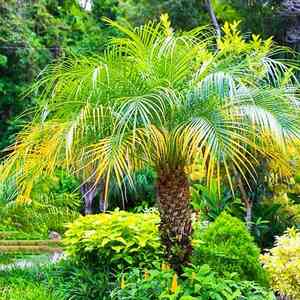
Pygmy date palm(Phoenix roebelenii)

Pygmy date palm (Phoenix roebelenii)

Also known as: Dwarf date palm, Robellini

The pygmy date palm (Phoenix roebelenii) originates from Southeast Asia, specifically Laos and Vietnam. It is often grown as an indoor ornamental plant due to its manageable size and attractive appearance.

**Natural Habitat:**
- **Regions:** Found in Southeast Asia, especially in Laos and Vietnam.
- **Environment:** Typically grows along riverbanks in tropical and subtropical climates.
- **Light:** Thrives in partial shade to full sunlight.
- **Soil:** Prefers well-draining soils in its natural habitat.

**Indoor Conditions:**
- **Lighting:** Prefers bright, indirect light but can handle lower light levels.
- **Temperature:** Best kept in warm settings between 65-75°F (18-24°C).
- **Humidity:** Benefits from higher humidity but tolerates standard indoor humidity.
- **Soil:** Needs a well-draining potting mix.
- **Watering:** Should be watered regularly, allowing the soil to dry out slightly between waterings to avoid root rot.

These conditions help ensure the pygmy date palm thrives both indoors and in its natural environment.

Attributes of Pygmy date palm

Lifespan
Perennial
Plant Type
Palm
Plant Height
1 m to 3 m
Spread
1.8 m to 2.5 m
Leaf Color
Green
Flower Size
30 cm
Flower Color
Yellow Cream

PlantJoy - Identify plants with a snap

Identify and diagnose plants, get toxicity alerts, and explore safety guides for all types of fungi.

Try for Free

Images of Pygmy date palm

Pygmy date palm(Phoenix roebelenii)

Quickly Identify Pygmy date palm

1
Slender trunk reaching 6-10 feet (1.8-3 meters) with a rounded crown and long pinnate leaves.
2
Cream-colored flowers on separate trees, appearing in spring on interfoliar 1-foot-long (30 cm) panicles.
3
Small ellipsoidal drupe fruit, 1/2 inch (about 1.3 cm), transitioning from red-brown to dark purple.
4
Odd pinnately compound leaves, 24-45 inches (61-114 cm) with linear-lanceolate leaflets and gray-green color.
5
Slender stem clustered with gray to brown color, widening towards the crown, reaching 6 inches (15 cm) diameter.

Scientific Classification of Pygmy date palm

Phylum
Vascular plants
Class
Monocotyledons
Order
Palms, bullanocks, and allies
Family
Palm
Genus
Date palms
Species
Pygmy date palm

Planting and Growing of Pygmy date palm

Care Difficulty
Easy
Watering Schedule
Every 6 days
Sunlight Requirements
Partial sun
Sunshine Duration
4-8 hours
Ideal Temperature
65-85℉
Soil Type
Potting Mix, Peat Mix
Soil pH
6.5-7.5
Fertilizer Type
Balanced
Pruning Season
Spring, Summer
Pruning Area
Branches, Leaves
Pruning Frequency
2 times a year
Repotting Season
Spring
Pot Type
Plastic, Ceramic

water icon How to Water Pygmy date palm?

When watering Phoenix roebelenii, ensure the soil is thoroughly soaked but never waterlogged. Aim for approximately 250 ml per watering session, ensuring the excess drains away to prevent waterlogging. Water sufficiently to allow the moisture to reach the deeper root zones, but don't let it sit in a saucer of water.
What are the symptoms of an underwatered Pygmy date palm?
What should I do if my Pygmy date palm is not getting enough water?
What are the symptoms of an overwatered Pygmy date palm?
How to save an overwatered Pygmy date palm?

sunlight icon What Are the Sunlight Requirements for Pygmy date palm?

Sunlight Requirements: Partial sun
Duration of light: 4-6 hours of sun
Phoenix roebelenii prefers partial sunlight, ideally with filtered morning light. This condition supports gradual growth while maintaining vibrant green foliage, leading to robust health without stress-related symptoms.
Why is Partial Sun Ideal?
How to Achieve Ideal Lighting?
Benefits of Ideal Light

temperature icon What Is the Ideal Temperature Range for Pygmy date palm?

Ideal Temperature: 65 ~ 85℉
Phoenix roebelenii, also known as the pygmy date palm, ideally grows at temperatures between 65°F and 85°F. This range provides the warmth needed for its metabolism and physiological processes without inducing heat stress. Maintaining this temperature allows optimal absorption of nutrients and water, supporting robust growth and a healthy, vibrant look.

soil icon What Soil is Best for Pygmy date palm?

Soil type: Sandy loam, Loam
Soil PH: 6.5 ~ 7.5
Phoenix roebelenii thrives in soil that is well-drained to prevent root rot. This ensures roots have access to essential air pockets and nutrients, allowing the plant to develop a healthy root system and robust growth. Incorporating organic matter such as compost helps improve soil structure and fertility, providing vital nutrients to Phoenix roebelenii. This enriches growth and enhances its lush, graceful foliage. A soil rich in humus retains moisture well, which is beneficial for Phoenix roebelenii, ensuring it remains hydrated without becoming waterlogged. This creates a balanced environment for steady growth.

fertilize icon How to Fertilize Pygmy date palm?

Fertilizer type: Balanced
For Phoenix roebelenii, also known as the Pygmy Date Palm, use a balanced fertilizer such as a 10-10-10 or 14-14-14. Apply liquid fertilizer at half the recommended strength every two weeks during the growing season for optimal nutrition.

prune icon How to Prune Pygmy date palm?

Pruning Time: Spring, Summer, Autumn, Winter
Begin by assessing the palm and identifying any yellowing, brown, or dead fronds. Use a pair of sharp pruning shears or a saw, depending on the thickness of the frond, and cut close to the trunk without injuring it. Be careful to only remove outer fronds that are yellow or brown; do not cut green fronds unnecessarily as they contribute to photosynthesis and overall plant health. Dispose of the removed fronds properly to avoid pest infestations.

propagate icon How to Propagate Pygmy date palm plant?

Propagate Time: Spring, Early summer
1
Collect ripe seeds from a healthy Phoenix roebelenii plant. Clean the seeds thoroughly to remove any pulp or debris, which can harbor mold or bacteria. Soaking the seeds in water for 24 hours can help soften the outer shell and improve germination rates.
2
Fill a seed tray or pot with the potting mix and sow the seeds at a depth of approximately one inch. Space the seeds about one to two inches apart to provide adequate room for growth. Cover the seeds lightly with soil and mist with water to maintain moisture levels.
3
Place the seed tray or pots in a warm and humid environment, ideally with temperatures around 70-85°F (21-29°C). Using a humidity dome or plastic cover can help maintain humidity levels, which is crucial for successful germination.

repot icon How to Repot Pygmy date palm plant?

Repotting frequency: Every two to three years
1
Look for signs such as roots growing out of the drainage holes or the plant appearing top-heavy. These indicators mean it's time for Phoenix roebelenii to be repotted. Observe the plant in early spring or summer for these signals.
2
Select a pot that is one size larger than the current pot and features ample drainage holes. A slightly bigger pot prevents waterlogging while accommodating root growth, promoting healthy development in Phoenix roebelenii.
3
Opt for a well-draining soil mix comprising peat, pine bark, and perlite. This blend allows effective water drainage, preventing root rot and ensuring Phoenix roebelenii receives balanced moisture and airflow around the roots.

PlantJoy - Identify plants with a snap

Find the best spots for them to optimize their health, simply using your phone.

Try for Free