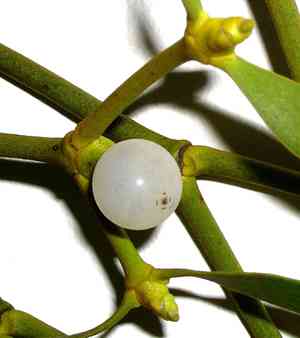
American mistletoe (Phoradendron leucarpum)
Also known as: Oak mistletoe, Hairy mistletoe
According to tradition, when two people find themselves under the American mistletoe, they are supposed to share a kiss. The mistletoe, scientifically known as Phoradendron leucarpum, is a plant native to North America that produces small white berries, which are toxic to humans but can be consumed by certain birds and animals.
Attributes of American mistletoe
Images of American mistletoe
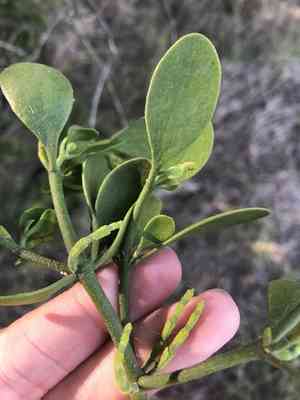
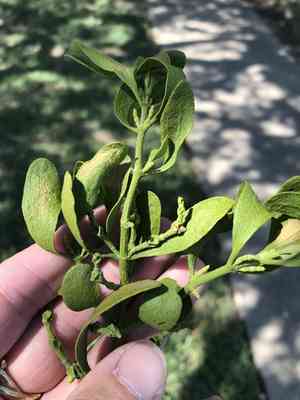
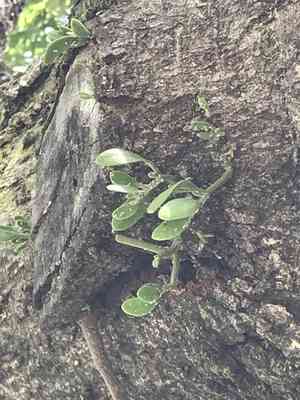
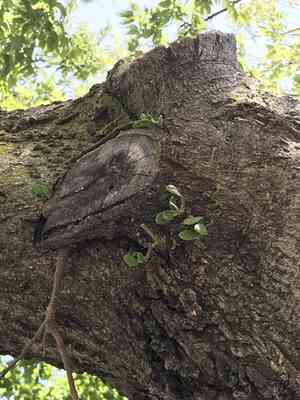
Quickly Identify American mistletoe
Scientific Classification of American mistletoe
Planting and Growing of American mistletoe
 How to Water American mistletoe?
 What Are the Sunlight Requirements for American mistletoe?
 What Is the Ideal Temperature Range for American mistletoe?
 What Soil is Best for American mistletoe?
 How to Fertilize American mistletoe?
 How to Prune American mistletoe?
 How to Propagate American mistletoe plant?
 How to Repot American mistletoe plant?
Toxicity of American mistletoe
Is American mistletoe toxic to humans?
Consuming substantial quantities of American mistletoe can lead to adverse effects in humans. The resulting symptoms typically vary from mild to moderate in severity. The presence of phoratoxins in the berries renders them dangerous when ingested in significant amounts. Additionally, the leaves may pose a risk as well. Symptoms caused by the berries and leaves encompass stomach discomfort, diarrhea, vomiting, a slowed heart rate, and constricted air passages. Given that these seasonal plants are frequently used for home decoration, they may readily be accessible to children who are attracted to the vibrant berries.



