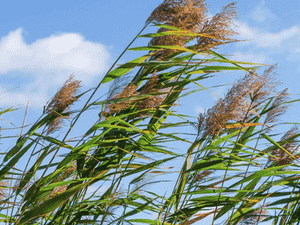
Common reed(Phragmites australis)

Common reed (Phragmites australis)

Also known as: Common Reed

The common reed (Phragmites australis) is a perennial grass known for its invasive nature. This tall grass features a robust root system with extensive rhizomes that spread underground, facilitating its rapid expansion. Each plant can produce a large number of seeds, contributing to its quick proliferation.

**Characteristics:**
- **Perennial Grass:** Tall and robust.
- **Root System:** Extensive rhizomes for spreading.
- **Seed Production:** High seed output.

**Ecological Impacts:**
- **Native Species:** Outcompetes and displaces native plants, reducing biodiversity.
- **Habitats:** Alters and degrades natural habitats.
- **Wildlife:** Negatively affects wildlife by reducing the availability of diverse food and shelter.
- **Fire Risk:** Dense growth can increase the risk of wildfires.

Phragmites australis significantly disrupts natural ecosystems, making it a major concern in many habitats where it becomes established.

Attributes of Common reed

Lifespan
Perennial
Plant Type
Grass
Plant Height
1 m to 3 m
Spread
3 m
Leaf Color
Green Blue Brown
Flower Size
10 cm
Flower Color
Purple Red Brown Black

PlantJoy - Identify plants with a snap

Identify and diagnose plants, get toxicity alerts, and explore safety guides for all types of fungi.

Try for Free

Images of Common reed

Common reed(Phragmites australis)

Quickly Identify Common reed

1
Tall perennial grass reaching 6-13 feet (1.8-4 meters) with erect, sturdy stems.
2
Broad, lance-shaped leaves up to 1.5 inches (3.8 cm) wide, grey-green in color.
3
Feathery flower spikes in late summer, purplish turning tan or beige.
4
Vigorous rhizome system forming dense stands in soggy soils or standing water.
5
Distinctive fluffy seedheads with gray fruits dispersed by wind and water.

Scientific Classification of Common reed

Phylum
Vascular plants
Class
Monocotyledons
Order
Grasses, sedges and allies
Family
Grass
Genus
Reeds
Species
Common reed

Planting and Growing of Common reed

Care Difficulty
Easy
Watering Schedule
Every 8 days
Sunlight Requirements
Full sun
Sunshine Duration
4-8 hours
Ideal Temperature
68-77℉
Soil Type
Potting Mix, Peat Mix
Soil pH
6.5-8.5
Fertilizer Type
Balanced
Pruning Season
Spring, Summer
Pruning Area
Branches, Leaves
Pruning Frequency
2 times a year
Repotting Season
Spring
Pot Type
Plastic, Ceramic

water icon How to Water Common reed?

Phragmites australis, or the common reed, thrives in wetland areas, and thus requires substantial watering. Aim to keep the soil consistently moist but avoid waterlogging. Approximately 500 ml per watering session ensures the roots remain adequately hydrated without being submerged.
What are the symptoms of an underwatered Common reed?
What should I do if my Common reed is not getting enough water?
What are the symptoms of an overwatered Common reed?
How to save an overwatered Common reed?

sunlight icon What Are the Sunlight Requirements for Common reed?

Sunlight Requirements: Full sun, Partial sun
Duration of light: 6 to 8 hours daily
Full sun to partial sun exposure ensures optimal photosynthesis and growth, maximizing health, vigor, and foliage density.
What is the ideal lighting for Phragmites australis?
How can I achieve the ideal lighting conditions for this plant?
What are the benefits of providing ideal lighting conditions to Phragmites australis?

temperature icon What Is the Ideal Temperature Range for Common reed?

Ideal Temperature: 68 ~ 77℉
The ideal temperature range for Phragmites australis is between 68°F and 77°F. During these temperatures, the plant exhibits optimal growth and metabolic activity, ensuring its health and vitality. Consistently maintaining these temperatures supports the photosynthesis process and nutrient uptake mechanisms.

soil icon What Soil is Best for Common reed?

Soil type: Sandy soil, Loam, Clay soil, Sandy loam
Soil PH: 6.5 ~ 8.5
Phragmites australis thrives in soil that is rich in organic matter. A well-nourished substrate ensures vigorous growth and supports dense foliage, contributing to effective habitat formation. This plant flourishes best in soils that retain moisture well. Such soils support the plant's natural habitat settings, allowing it to develop robust root systems that help prevent erosion and enable water purification. Despite liking moisture, this plant prefers soils that drain adequately to avoid issues from standing water. Proper drainage prevents root rot and ensures balanced growth, especially when water tables rise and fall.

fertilize icon How to Fertilize Common reed?

Fertilizer type: Balanced
Phragmites australis, commonly known as the common reed, is not particularly picky about fertilization but does benefit from occasional nutrient boosts. Use a balanced liquid fertilizer at half the recommended strength, applying it twice per month during the growing season for optimal growth and health.

prune icon How to Prune Common reed?

Pruning Time: Spring, Summer, Autumn, Winter
To effectively prune Phragmites australis, ensure you have sharp shears. Begin by cutting back the old and dead canes close to the ground during late winter or early spring. This allows new shoots to emerge more vigorously. Be careful not to cut the new green shoots that have just appeared. In mid-summer, trim any excessively long or lanky stems to maintain the shape and manage the height of the plant.

propagate icon How to Propagate Common reed plant?

Propagate Time: Spring, Late spring
1
Collect ripe seeds from mature Phragmites australis plants in late summer or early autumn. Ensure seeds are dry before storing them in a cool, dark place to avoid premature germination or mold.
2
Before planting, prepare the soil by loosening it and adding organic matter to improve soil fertility and drainage. A neutral to slightly acidic pH is ideal for optimum growth.
3
For seeds, plant them at a shallow depth and cover lightly with soil. For cuttings, insert them into the soil at a depth that allows at least two nodes to be covered. Water thoroughly after planting.
More About Propagating Techniques

repot icon How to Repot Common reed plant?

Repotting frequency: Every 2-3 years
1
Look for signs such as roots growing through drainage holes, soil compacted or depleted, or a drop in plant vitality. These signals often indicate it's time to repot Phragmites australis to rejuvenate its growth.
2
Select a pot one size larger with substantial drainage. The increased space allows roots to spread and access adequate nutrients while good drainage prevents waterlogging, crucial for healthy root development.
3
Choose a loamy, sand-based mix to replicate the plant’s natural habitat, which ensures proper aeration and drainage. Such soil supports healthy growth by mimicking the conditions Phragmites australis thrives in naturally.

PlantJoy - Identify plants with a snap

Find the best spots for them to optimize their health, simply using your phone.

Try for Free

