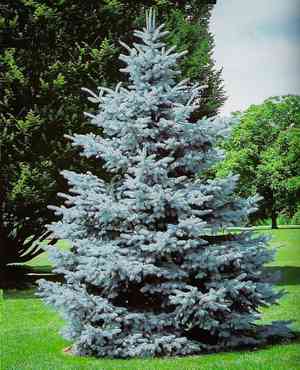
White spruce (Picea glauca)
Also known as: Canadian spruce
The White spruce (Picea glauca) is indigenous to North America, particularly prevalent across Alaska and Canada. It holds symbolic significance as the provincial tree of Manitoba and the state tree of South Dakota. Its wood is commercially valuable, often utilized in the production of paper and various construction materials. Additionally, the White spruce can be cultivated as a bonsai.
In This Article
Attributes of White spruce
Lifespan
Perennial
Plant Type
Tree
Plant Height
15 m to 40 m
Spread
1.5 m to 2.5 m
Leaf Color
Green Blue
Flower Size
4 cm to 6 cm
Flower Color
Red Yellow Green Brown Orange Burgundy Gold
Images of White spruce
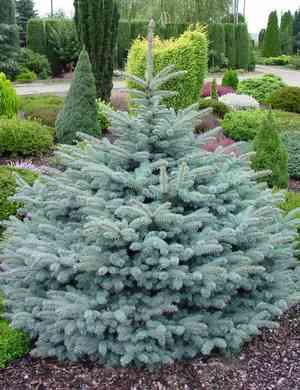
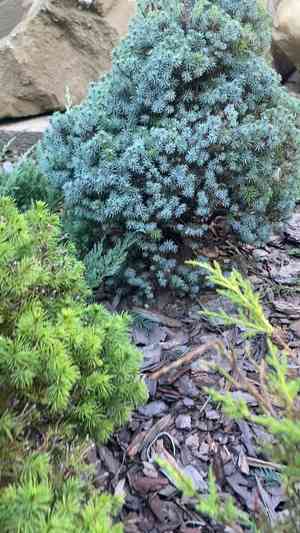

Quickly Identify White spruce
1
4-sided needles, blue-green above and blue-white below, 0.5-1 inch (1.3-2.5 cm) long.
2
Distinctive odor when disturbed, resembling skunk or cat urine.
3
Inconspicuous male flowers are reddish, female flowers greenish, 0.4-1 inch (1-2.5 cm).
4
Thin, scaly trunk bark peels in circular plates, 2-4 inches (5-10 cm) in diameter.
5
Needles have a fine texture, firm and needle-like, contributing to the overall aesthetic appeal.
Scientific Classification of White spruce
Phylum
Vascular plants
Class
Conifers
Order
Pinales
Family
Pine
Genus
Spruces
Species
White spruce
Planting and Growing of White spruce
Care Difficulty
Easy
Watering Schedule
Every 2 days
Sunlight Requirements
Full sun
Sunshine Duration
6-10 hours
Ideal Temperature
50-77℉
Soil Type
Potting Mix, Peat Mix
Soil pH
4-7.5
Fertilizer Type
Balanced
Pruning Season
Spring, Summer
Pruning Area
Branches, Leaves
Pruning Frequency
2 times a year
Repotting Season
Spring
Pot Type
Plastic, Ceramic
 How to Water White spruce?
For Picea glauca, it is important to water deeply but infrequently, mimicking its natural environment. Water until the soil is moist to a depth of at least 8 inches, allowing the roots to absorb what they need without waterlogging the plant.
More About Watering Techniques→
What are the symptoms of an underwatered White spruce?
›
What should I do if my White spruce is not getting enough water?
›
What are the symptoms of an overwatered White spruce?
›
How to save an overwatered White spruce?
›
 What Are the Sunlight Requirements for White spruce?
Picea glauca thrives in full sun to partial sun settings which aid in optimal growth, enhancing its resilience and overall vigor through sustained photosynthesis.
More About Sunlight Requirements Techniques→
How much sun does Picea glauca need?
›
Solutions for achieving ideal light conditions
›
Benefits of ideal sunlight for Picea glauca
›
 What Is the Ideal Temperature Range for White spruce?
The ideal temperature range for growing Picea glauca, commonly known as the white spruce, is between 50°F and 77°F. Within this range, the plant can perform photosynthesis efficiently, grow robustly, and maintain healthy foliage. Temperature stability within these boundaries aids in minimizing stress on the plant, ensuring optimal development and resistance to disease.
 What Soil is Best for White spruce?
Picea glauca thrives in well-drained soil because it prevents waterlogging, reducing the risk of root rot. Well-drained conditions ensure oxygen availability to roots, fostering healthier growth. A nutrient-rich soil provides Picea glauca with the essential minerals needed for vigorous growth. High organic matter content enhances soil fertility, promoting robust foliage and strong root systems. Consistent moisture without prolonged wetness is ideal for Picea glauca. It ensures the plant receives enough water without causing stress or disease due to overly soggy conditions.
More About Soil→
 How to Fertilize White spruce?
For Picea glauca, it's recommended to apply liquid fertilizer at a rate of 1/4 teaspoon per gallon of water. Slow-release fertilizers should be applied at a rate of 1 pound per 100 square feet or as per product instructions. Avoid excessive application to prevent nutrient burn.
 How to Prune White spruce?
Begin by observing the natural shape of your Picea glauca. Consider how you can enhance its conical structure by lightly trimming overgrown branches. This preserves its natural beauty while keeping it manageable. Look for branches that are clearly dead, diseased, or damaged. Using clean, sharp tools, prune these branches as close to the main trunk as possible, without cutting into the main wood, to prevent disease. To improve air circulation and reduce the risk of fungal diseases, selectively thin dense areas within the tree. Remove smaller branches that criss-cross or grow inward, maintaining the tree's natural spacing.
More About Pruning Techniques→
 How to Propagate White spruce plant?
1
Collect seeds from mature cones of Picea glauca. Ensure seeds are clean and dry before storage. They can be stored in a cool, dry place until ready for planting. Stratifying seeds by chilling them may help to enhance germination rates.
2
In early spring, take cuttings from healthy branches of the tree, ensuring each piece is about 6 to 8 inches long. Remove all lower needles from the cut end to promote root development. Alternatively, use softwood cuttings in early summer for best results.
3
Place seeds in seed trays filled with a potting mix or transplant cuttings into pots with a well-draining soil mix. Ensure the proper depth and spacing to allow adequate growth and root development. Keep the soil consistently moist but not waterlogged, and maintain an ambient temperature suitable for growth.
 How to Repot White spruce plant?
1
Look for signals such as roots growing out of the pot's drainage holes or the plant looking stressed and overcrowded. Spring and autumn are ideal, as the plant is not experiencing extreme heat or cold, which could further stress it.
2
Select a container that is one size larger than the current one, ensuring it has good drainage holes. This prevents waterlogging and root rot, allowing the roots of Picea glauca to spread comfortably and continue growing healthily.
3
Opt for a well-draining, acidic potting mix designed for conifers. This choice helps maintain the necessary acidity for nutrient absorption and prevents root diseases common in overly damp soils.



