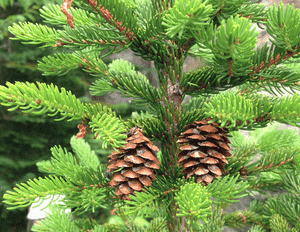
Red spruce (Picea rubens)
Also known as: Eastern spruce, He-balsam
The red spruce (*Picea rubens*), also referred to as eastern spruce or yellow spruce in English, is known to French Canadians as “épinette rouge.” The name "red spruce" is derived from its reddish bark.
In This Article
Attributes of Red spruce
Lifespan
Perennial
Plant Type
Tree
Plant Height
18 m to 21 m
Spread
3 m to 5 m
Leaf Color
Green Yellow Gold
Flower Size
3 cm to 5 cm
Flower Color
Gold
Images of Red spruce
Quickly Identify Red spruce
1
Dark yellow-green, shiny needles with a spiral arrangement and slight twist for identification.
2
Distinctive bark with dark gray-brown to reddish-brown hue, textured scales, and reddish inner bark.
3
Conifer cones maturing from green to purple, then reddish-brown, 1.25 to 2 inches (3.18 to 5.08 cm).
4
Vertical growth stems, yellow-brown color, sturdy build, with short, right-angled lateral branches.
5
Narrowly conical shape, vibrant yellow-green foliage, 150 feet (45 meters) tall in humid conditions.
Scientific Classification of Red spruce
Phylum
Vascular plants
Class
Conifers
Order
Pinales
Family
Pine
Genus
Spruces
Species
Red spruce
Planting and Growing of Red spruce
Care Difficulty
Moderate
Watering Schedule
Every 4 days
Sunlight Requirements
Full sun
Sunshine Duration
4-6 hours
Ideal Temperature
60-70℉
Soil Type
Potting Mix, Peat Mix
Soil pH
4-6
Fertilizer Type
Balanced
Pruning Season
Spring, Summer
Pruning Area
Branches, Leaves
Pruning Frequency
2 times a year
Repotting Season
Spring
Pot Type
Plastic, Ceramic
 How to Water Red spruce?
The red spruce (Picea rubens) prefers consistent moisture, but not waterlogged soil. Each watering session should aim to thoroughly moisten the soil without leaving standing water. A general guide is to provide about 500 ml of water per session, ensuring the water penetrates down to the roots but does not saturate the soil.
What are the symptoms of an underwatered Red spruce?
›
What should I do if my Red spruce is not getting enough water?
›
What are the symptoms of an overwatered Red spruce?
›
How to save an overwatered Red spruce?
›
 What Are the Sunlight Requirements for Red spruce?
Partial to full sunlight provides Picea rubens with energy for healthy growth. Ideal sunlight helps maintain vibrant needle color, robust growth, and resilience against environmental stresses.
More About Sunlight Requirements Techniques→
What amount of sunlight is ideal for Picea rubens?
›
How can I ensure my Picea rubens gets optimal sunlight?
›
What are the benefits of ideal sunlight exposure for Picea rubens?
›
 What Is the Ideal Temperature Range for Red spruce?
The ideal temperature range for Picea rubens, also known as Red Spruce, is between 60°F and 70°F. These temperatures mimic the moderate climatic conditions found in its native habitat, consisting of cool summers and mild winters. Thriving within this range ensures optimal photosynthesis and growth rates, enhancing the overall vigor and resilience of the plant.
 What Soil is Best for Red spruce?
Picea rubens flourishes in well-drained soil that prevents root rot and ensures healthy growth. The drainage facilitates adequate air circulation and retains sufficient moisture for the spruce to thrive. Rich, organic soil is a key requirement for Picea rubens. The addition of organic matter, such as compost, improves soil fertility, structure, and overall plant health by providing essential nutrients. While Picea rubens prefers well-drained areas, it requires consistent moisture to maintain its vigor. Providing mulch can help retain soil moisture, reducing the need for frequent watering.
 How to Fertilize Red spruce?
For Picea rubens, maintaining a balanced approach in nutrient delivery is key. Aim for around 50 grams of well-balanced fertilizer, such as a 10-10-10 formula, per square meter of the tree's base area. Remember, it's better to err on the side of less than too much, as these trees are accustomed to nutrient-poor soils.
 How to Prune Red spruce?
Before you start pruning Picea rubens, make sure you have the right tools, including sharp pruning shears, loppers, and a pruning saw. Sterilize your tools to prevent the spread of disease between plants. Evaluate the tree from all angles to decide which branches need to be cut. Begin by removing any dead, damaged, or diseased branches to maintain the tree’s health. For shaping, trim back to a side branch to encourage a more appealing natural shape. Avoid cutting into the main trunk as this can disrupt the tree’s growth and appearance. The goal is to keep a conical shape for aesthetic appeal.
More About Pruning Techniques→
 How to Propagate Red spruce plant?
1
Collect seeds from mature cones, typically in late spring. Promptly remove seeds from cones and soak them in water overnight to start the germination process. This soaking helps in identifying viable seeds, which will sink to the bottom.
2
Choose healthy, disease-free semi-hardwood cuttings in early summer. Cuttings should be approximately 6-8 inches in length and should include at least two or three nodes for new growth potential.
3
Prepare a well-draining propagation medium using a mix of sand, peat, and perlite. This medium provides the necessary aeration and moisture retention needed for successful rooting of cuttings.
 How to Repot Red spruce plant?
1
Repot Picea rubens when you observe roots emerging from the drainage holes of the current pot or if the growth of the tree seems stunted. Early spring, just as the tree begins to awaken from its winter dormancy, is the ideal time for repotting. This timing allows the plant to quickly establish itself before vigorous growth resumes.
2
Select a pot that is one size larger than the current one, with ample drainage holes to prevent waterlogging. A sturdy clay or ceramic pot is preferred for better stability, especially as the tree grows larger. The stability will help prevent tipping and potential root damage.
3
Select an acidic, well-draining soil mix enriched with organic matter and peat to simulate the tree's natural montane environment. This type of soil helps maintain optimal moisture levels while preventing root rot, promoting healthy root development and overall plant vigor.



