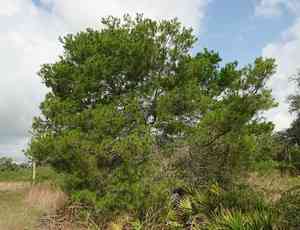
Sand pine (Pinus clausa)
Also known as: Alabama pine
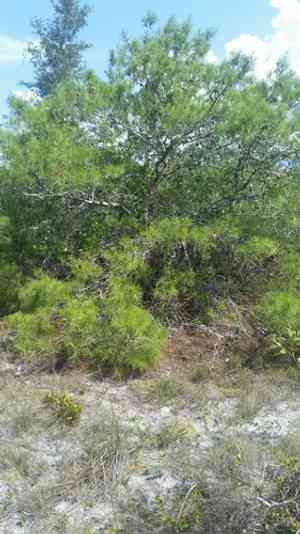
The Sand Pine (Pinus clausa) is native to the southeastern United States. It thrives in hot, sandy environments with little maintenance and is used in Florida for ecological conservation. This tree offers a safe habitat for small lizards in Florida.
In This Article
Attributes of Sand pine
Lifespan
Perennial
Plant Type
Tree
Plant Height
5 m to 21 m
Spread
6 m to 8 m
Leaf Color
Green
Flower Size
2.5 cm to 5 cm
Flower Color
Yellow Green Purple Lavender Gold
Images of Sand pine
Quickly Identify Sand pine
1
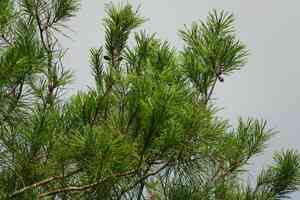
Needles are 2-4 inch (5-10 cm) yellow-green, twisted with serrated edges.
2
Unique stem transitions from purple to red-brown to gray.
3
Distinct red-brown seed cones with stout prickles, 2-3.5 inches long.
4
Branches spread widely, some shooting upwards, poor self-pruning.
5
Bark starts smooth, turns scaly, then furrowed with red-brown platy texture.
Scientific Classification of Sand pine
Phylum
Vascular plants
Class
Conifers
Order
Pinales
Family
Pine
Genus
Pines
Species
Sand pine
Planting and Growing of Sand pine
Care Difficulty
Easy
Watering Schedule
Every 2 days
Sunlight Requirements
Full sun
Sunshine Duration
6-12 hours
Ideal Temperature
68-86℉
Soil Type
Potting Mix, Peat Mix
Soil pH
4.5-6.5
Fertilizer Type
Balanced
Pruning Season
Spring, Summer
Pruning Area
Branches, Leaves
Pruning Frequency
2 times a year
Repotting Season
Spring
Pot Type
Plastic, Ceramic
 How to Water Sand pine?
When watering Pinus clausa, aim for around 500 milliliters to provide adequate soil moisture. Ensure the water seeps well into the soil, wetting it deeply but not so much that it pools on the surface, which helps foster deep root growth.
What are the symptoms of an underwatered Sand pine?
›
What should I do if my Sand pine is not getting enough water?
›
What are the symptoms of an overwatered Sand pine?
›
How to save an overwatered Sand pine?
›
 What Are the Sunlight Requirements for Sand pine?
Pinus clausa thrives ideally with a full day of sun, receiving 6 to 8 hours of sunlight. Such exposure promotes optimal photosynthesis, contributing to robust growth and resilience.
More About Sunlight Requirements Techniques→
What is the ideal lighting condition for Pinus clausa?
›
How can I ensure Pinus clausa receives its ideal light conditions?
›
What benefits does Pinus clausa gain from receiving ideal lighting?
›
 What Is the Ideal Temperature Range for Sand pine?
The ideal temperature range for Pinus clausa is critical for its growth and overall health. This species thrives best in temperatures between 68°F to 86°F. Within this range, the plant performs optimally in photosynthesis, nutrient uptake, and overall growth. Maintaining this temperature fosters robust health and resistance to pests and diseases, ensuring the plant flourishes in its environment.
 What Soil is Best for Sand pine?
Pinus clausa thrives in well-draining soil, preventing waterlogging that can lead to root rot. The fast drainage ensures that the roots get the necessary oxygen, which is vital for their growth and health. An acidic environment with a pH ranging from 4.5 to 6.5 is ideal for Pinus clausa. This pH range promotes optimal nutrient absorption, which is crucial for its development, vibrant foliage, and overall resilience. While Pinus clausa doesn't demand fertile soils, having a lean, nutrient-rich environment supports its minimal nutritional needs, sustaining its growth without the risk of over-fertilization.
 How to Fertilize Sand pine?
For Pinus clausa, you should use a balanced fertilizer at half-strength for young trees. Mature trees might only need a small amount annually. Ensuring you don't apply too much nitrogen is crucial as it can affect growth and health negatively.
 How to Prune Sand pine?
Over-pruning can lead to stress and vulnerability to pests. Pinus clausa requires careful attention to ensure key branches and foliage are maintained for optimal growth and protection. To prevent disease transmission, disinfect tools with alcohol or bleach solution before and after pruning. This is crucial to maintain the health of your Pinus clausa. Understand that Pinus clausa has a natural growth habit. Keeping heavy pruning to a minimum helps preserve its distinct character and structural integrity.
More About Pruning Techniques→
 How to Propagate Sand pine plant?
1
Collect mature cones from healthy Pinus clausa trees and extract the seeds. Ensure the cones are completely dried to facilitate seed removal. Handle gently to prevent damage.
2
Place the seeds in a moist paper towel and keep them in the refrigerator for 30-60 days. This cold stratification process breaks seed dormancy and enhances germination rates.
3
After stratification, sow the seeds in prepared seed trays filled with soil mix. Cover lightly with additional soil mix and maintain consistent moisture levels without waterlogging.
 How to Repot Sand pine plant?
1
You’ll know it’s time to repot Pinus clausa when the roots start to escape from the drainage holes at the bottom of the pot or the plant looks visibly cramped. This often occurs every 3-4 years, especially if the plant exhibits stunted growth or if the water runs through the pot too quickly, indicating root-bound issues.
2
Select a pot that is one size larger than the current one. Make sure it has adequate drainage holes to prevent waterlogging, which can lead to root rot. A clay or terracotta pot is ideal as it can help with moisture regulation, providing a breathable environment for the roots.
3
Opt for a well-draining sandy soil mixed with some organic matter. This ensures that the roots receive ample oxygen and moisture levels are controlled, which is crucial for the health of Pinus clausa. The sandy texture mimics its natural habitat, promoting better growth.



