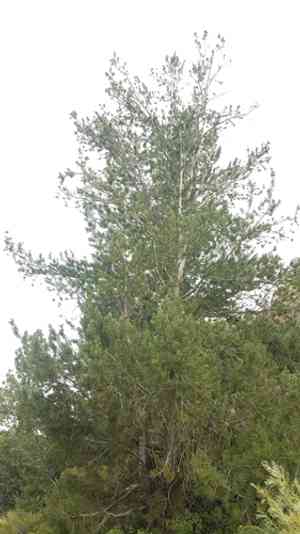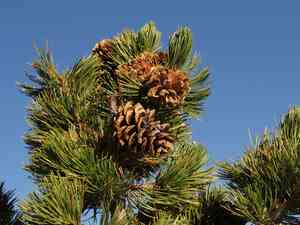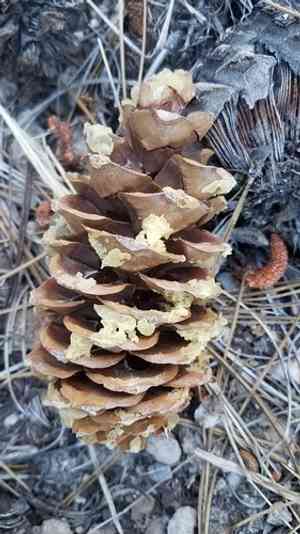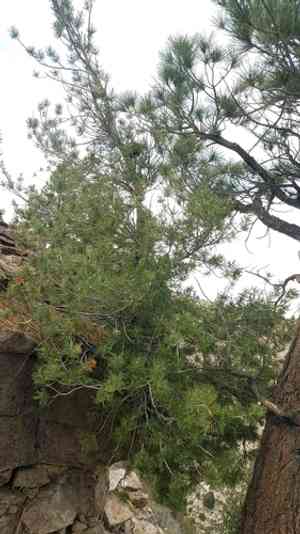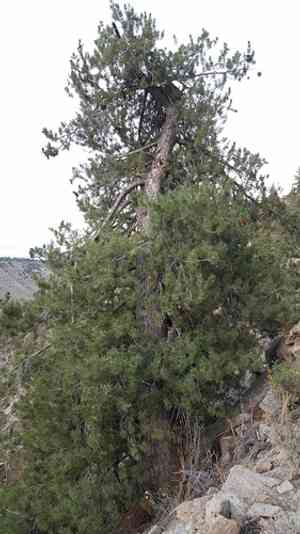
Limber pine(Pinus flexilis)

Limber pine (Pinus flexilis)

Also known as: Limbertwig

The limber pine (Pinus flexilis) is a resilient conifer, well-suited to alpine environments due to several distinctive traits:

1. **Flexible Branches:** Its branches are notably pliable, which helps them withstand the heavy snow loads typical in high-altitude areas.
2. **Thick, Furrowed Bark:** The tree's bark is thick and deeply grooved, offering protection against extreme cold and reducing water loss.
3. **Slender Needles:** The needles, arranged in bundles, are narrow and waxy, minimizing water loss and damage from cold winds.
4. **Hardy Cones:** Limber pine produces sturdy cones that can endure harsh conditions.
5. **Soil Versatility:** This tree can grow in a range of soil types, from rocky to sandy, often forming pure stands or integrating with other alpine species.

These adaptations enable the limber pine to survive and flourish in the demanding conditions of high-altitude environments.

Attributes of Limber pine

Lifespan
Perennial
Plant Type
Tree
Plant Height
9 m to 18 m
Spread
4.5 m to 11 m
Leaf Color
Green
Flower Size
8 cm to 15 cm
Flower Color
Not applicable, as Pinus flexilis does not produce flowers

PlantJoy - Identify plants with a snap

Identify and diagnose plants, get toxicity alerts, and explore safety guides for all types of fungi.

Try for Free

Images of Limber pine

Limber pine(Pinus flexilis)

Quickly Identify Limber pine

1
Dark bluish-green needles in bundles of five, 2-3.5 inches (5-9 cm) long with 3-4 white lines.
2
Male cones small, yellow, 1-3 inches (2.5-7.6 cm). Female cones light brown, 3-6 inches (7.6-15.2 cm).
3
Smooth, tough stem, 1-2 inches (2.5-5 cm) in diameter. Greyish-brown bark, flexible with graceful form.
4
Compact, pyramid-like shape maturing to open form. Long-lasting needles, flexible shoots resistant to snapping.
5
Light gray bark transitions to rich brown with cross-checkered pattern. Gradual thickening for protection with age.

Scientific Classification of Limber pine

Phylum
Vascular plants
Class
Conifers
Order
Pinales
Family
Pine
Genus
Pines
Species
Limber pine

Planting and Growing of Limber pine

Care Difficulty
Easy
Watering Schedule
Every day
Sunlight Requirements
Full sun
Sunshine Duration
6-10 hours
Ideal Temperature
60-75℉
Soil Type
Potting Mix, Peat Mix
Soil pH
6.5-7.5
Fertilizer Type
Balanced
Pruning Season
Spring, Summer
Pruning Area
Branches, Leaves
Pruning Frequency
2 times a year
Repotting Season
Spring
Pot Type
Plastic, Ceramic

water icon How to Water Limber pine?

For Pinus flexilis, it's essential to water deeply. This means saturating the soil to a depth of about one foot during watering. This approach encourages deep root growth which increases drought resistance and overall plant health. Always allow the soil to dry out between waterings to prevent root rot.
What are the symptoms of an underwatered Limber pine?
What should I do if my Limber pine is not getting enough water?
What are the symptoms of an overwatered Limber pine?
How to save an overwatered Limber pine?

sunlight icon What Are the Sunlight Requirements for Limber pine?

Sunlight Requirements: Full sun, Partial sun
Duration of light: 6 to 8 hours daily
Pinus flexilis ideally requires full sun to partial sun exposure. It thrives best when provided with consistent sunlight, promoting strong photosynthetic activity and resilience to environmental stresses.
Optimal Location
Balancing Sunlight
Monitoring and Adjustment

temperature icon What Is the Ideal Temperature Range for Limber pine?

Ideal Temperature: 60 ~ 75℉
The ideal temperature range for Pinus flexilis, or limber pine, is between 60°F to 75°F. This range provides optimal conditions for growth and ensures that the plant can photosynthesize efficiently while maintaining healthy respiration rates.

soil icon What Soil is Best for Limber pine?

Soil type: Sandy soil, Loam, Sandy loam
Soil PH: 6.5 ~ 7.5
Pinus flexilis thrives best in well-drained soil, which prevents water from stagnating around its roots. Good drainage helps prevent root rot and allows the tree to access crucial nutrients efficiently. This pine prefers soil with moderate nutrient levels, ensuring it has enough nourishment to grow steadily without promoting unwanted, overly vigorous growth that can lead to weak limbs. The tree flourishes in a pH range from 6.5 to 7.5, as this helps maintain nutrient availability while avoiding toxicity from certain minerals at the root level.

fertilize icon How to Fertilize Limber pine?

Fertilizer type: Balanced
For Pinus flexilis, it's advisable to use a balanced fertilizer with a nitrogen-phosphorus-potassium (N-P-K) ratio of around 10-10-10 or 16-16-16. Approximately 1 to 2 pounds of fertilizer per 100 square feet should suffice, ensuring even coverage over the root zone.

prune icon How to Prune Limber pine?

Pruning Time: Spring, Summer, Autumn
Begin pruning by carefully identifying and removing dead, damaged, or diseased branches. This helps in preventing the spread of pests and diseases and allows the tree's energy to focus on healthy growth. Pinus flexilis has a natural, picturesque shape. Follow its form while pruning to maintain its aesthetic appeal. Removing too many branches can ruin its natural, rugged beauty. Use thinning cuts to remove branches at the point of origin. This method opens the canopy for more light penetration and reduces wind resistance without ruining the tree's natural appearance.

propagate icon How to Propagate Limber pine plant?

Propagate Time: Spring,Late spring
1
Before sowing, limber pine seeds require a cold stratification period to break dormancy. Place seeds in a moist medium in the refrigerator for 30-60 days.
2
After stratification, sow seeds in a prepared seed tray filled with sterile potting mix, covering them lightly with soil. Maintain consistent moisture for proper germination.
3
Once seedlings have developed a few true leaves, transplant them into larger pots or directly into the ground while ensuring minimal root disturbance.

repot icon How to Repot Limber pine plant?

Repotting frequency: Every two to three years
1
Pinus flexilis needs repotting when you notice roots emerging from the drainage holes or if the growth becomes stunted. These are cues that the roots need more space. Spring or early summer is ideal since the plant can establish itself in the new pot.
2
Choose a pot that's 2 to 4 inches larger in diameter than the current one. Clay pots are beneficial as they allow soil to dry out quickly, preventing root rot. Ensure it has adequate drainage holes; otherwise, excess moisture can accumulate, leading to a soggy environment.
3
Opt for a mix that combines sand, pine bark, and perlite to ensure good drainage. This type of soil mimics its natural rocky habitats, providing the roots with necessary aeration and preventing waterlogging, which is crucial for healthy growth.

PlantJoy - Identify plants with a snap

Find the best spots for them to optimize their health, simply using your phone.

Try for Free