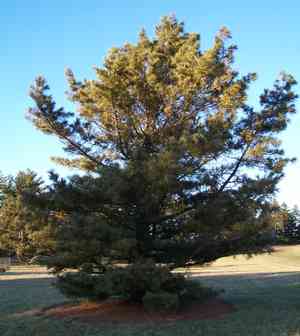
Korean pine (Pinus koraiensis)
Also known as: White pine, Japanese blood grass, Cogon grass
The Korean pine (Pinus koraiensis) is a versatile and adaptable tree suited to various environments, including urban areas. Its seeds, known as pine nuts, are nutritious and commercially available for consumption. The tree's wood is prized for its durability and is commonly used in furniture crafting, construction projects, and even in making railroads and bridges. Additionally, it plays a role in paper production.
In This Article
Attributes of Korean pine
Lifespan
Perennial
Plant Type
Tree
Plant Height
9 m to 12 m
Spread
4.5 m to 6 m
Leaf Color
Green Blue White
Flower Size
8 cm to 15 cm
Flower Color
Yellow Green Brown
Images of Korean pine
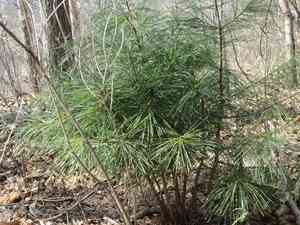
Quickly Identify Korean pine
1
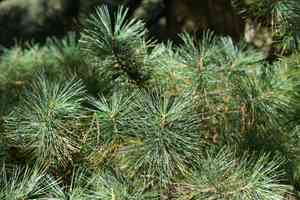
Distinct blue-green needles, 3.5-4.5 inches (9-12 cm), glossy on top, blue-white underside.
2
Branches forming distinct layers with lush, densely packed needles sweeping horizontally.
3
Male flowers yellowish and elongated, female flowers more rounded and greenish, inconspicuous.
4
Transitioning stem covered in reddish-brown pubescence to smooth brown with age.
5
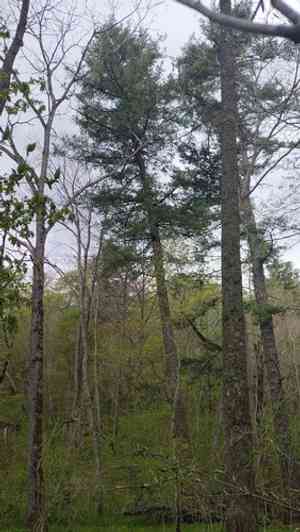
Robust trunk with flaky bark peeling to reveal reddish-brown inner bark, becoming deeply furrowed.
Scientific Classification of Korean pine
Phylum
Vascular plants
Class
Conifers
Order
Pines and allies
Family
Pine
Genus
Pines
Species
Korean pine
Planting and Growing of Korean pine
Care Difficulty
Moderate
Watering Schedule
Every 2 days
Sunlight Requirements
Full sun
Sunshine Duration
4-8 hours
Ideal Temperature
50-77℉
Soil Type
Potting Mix, Peat Mix
Soil pH
4.5-6.5
Fertilizer Type
Balanced
Pruning Season
Spring, Summer
Pruning Area
Branches, Leaves
Pruning Frequency
2 times a year
Repotting Season
Spring
Pot Type
Plastic, Ceramic
 How to Water Korean pine?
Ensure you provide about 500 ml of water each time, making sure the soil is adequately moist without being waterlogged. The water should seep into the soil and reach the roots, but avoid leaving standing water.
What are the symptoms of an underwatered Korean pine?
›
What should I do if my Korean pine is not getting enough water?
›
What are the symptoms of an overwatered Korean pine?
›
How to save an overwatered Korean pine?
›
 What Are the Sunlight Requirements for Korean pine?
Pinus koraiensis ideally benefits from partial to full sun exposure. Such light conditions are favorable as they support photosynthesis, promote stronger structural development, and improve its adaptability to various climates and temperatures.
More About Sunlight Requirements Techniques→
What is the best lighting condition for Pinus koraiensis?
›
How can I ensure Pinus koraiensis receives ideal light?
›
What are the benefits of ideal light for Pinus koraiensis?
›
 What Is the Ideal Temperature Range for Korean pine?
Pinus koraiensis thrives best between 50°F and 77°F. Within this range, the tree's cellular functions, such as photosynthesis and nutrient uptake, operate optimally. This temperature also helps maintain the soil's health and moisture levels, which are crucial for healthy root development.
 What Soil is Best for Korean pine?
Pinus koraiensis thrives best in soils with good drainage. This ensures that excess water doesn't accumulate around the roots, preventing root rot and ensuring the pine receives adequate oxygen and nutrients. Rich organic matter in the soil provides necessary nutrients and improves soil structure. It aids in moisture retention while still allowing sufficient aeration, enhancing the tree's growth and resilience. This species prefers slightly acidic soil conditions. Acidic soils help in the uptake of essential nutrients like iron and phosphorus, critical for the plant's healthy leaf and root development.
 How to Fertilize Korean pine?
Pinus koraiensis, commonly known as the Korean pine, requires balanced nutrient intake for optimal growth. Typically, a diluted liquid fertilizer with a balanced NPK ratio (such as 10-10-10) applied bi-monthly during the growing season is beneficial. For slow-release fertilizers, using a small handful evenly spread around the base, ensuring even distribution, is often sufficient.
 How to Prune Korean pine?
Begin by evaluating the shape and size you desire for your Pinus koraiensis. This involves determining the structure you find most aesthetically pleasing while ensuring it supports the health of the plant. Planning helps ensure that each cut you make is beneficial for growth. Using clean, sharp pruning shears, start by eliminating any branches that appear dead or show signs of disease. This not only improves the tree's appearance but also prevents the spread of disease to healthy sections. Carefully trim back branches selectively to maintain an even, symmetrical shape. Focus on thinning out overcrowded areas to allow light penetration and air circulation, crucial for preventing disease.
More About Pruning Techniques→
 How to Propagate Korean pine plant?
1
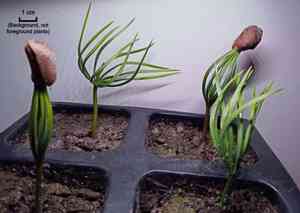
Soak the seeds in water for 24 hours to soften the seed coat and encourage germination. After soaking, stratify the seeds by placing them in a moistened medium and keeping them in a refrigerated environment for about 60 days.
2
Sow the stratified seeds in a seed tray filled with a well-drained potting mix. Plant them at a depth of about twice their diameter. Keep the medium consistently moist and place the tray in a location with indirect sunlight.
3
Select a healthy rootstock and scion of similar diameter. Make a slanting cut on both. Join them together firmly and secure with grafting tape. Place the grafted plant in a shaded, protected area until the graft union has healed.
 How to Repot Korean pine plant?
1
Pinus koraiensis should be repotted when you notice roots poking through drainage holes or the soil surface indicating root-bound conditions. Also, if the tree exhibits stunted growth or water drains too quickly, it's time to consider repotting.
2
Select a pot that's slightly larger than the current one to avoid excessive root spread, ensuring proper drainage and aeration. A pot with good depth helps accommodate the root ball, promoting healthier growth without waterlogging.
3
Opt for well-draining sandy loam soil mix providing the right balance of moisture retention and drainage. This type of soil prevents root rot while supporting the tree's stability, thus promoting healthy development.



