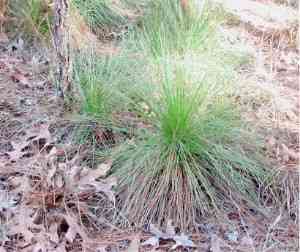
Longleaf pine (Pinus palustris)
Also known as: Georgia pine, Hill pine, Heart pine
In its initial development phase, lasting 5-12 years, a longleaf pine resembles a grass-like clump rather than a typical tree. This phase, known as the "grass stage," allows the tree to survive wildfires as its growth bud remains protected at ground level. The longleaf pine takes about 100-150 years to reach full maturity and can live up to 500 years. Its dark green, needle-like leaves are distinctive, often twisted, and measure 20 to 46 cm in length.
In This Article
Attributes of Longleaf pine
Lifespan
Perennial
Plant Type
Tree
Plant Height
18 m to 37 m
Spread
9 m to 12 m
Leaf Color
Green White Silver
Flower Size
N/A (barely noticeable reproductive structures)
Flower Color
Yellow Purple Green Red Lavender Burgundy Gold
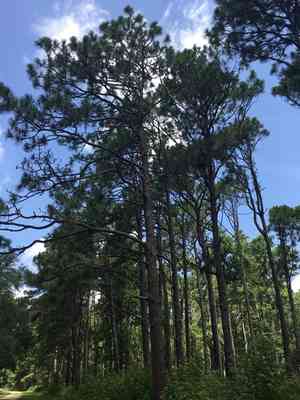
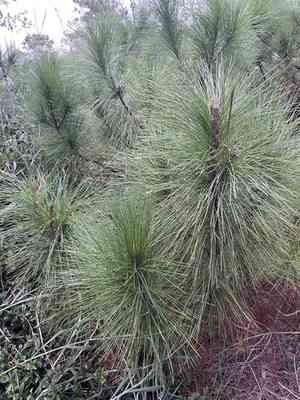
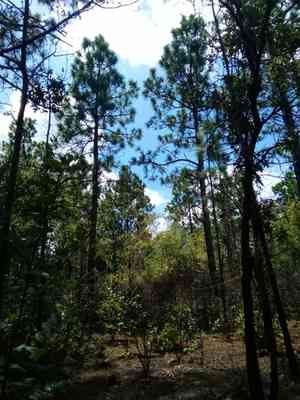
Images of Longleaf pine
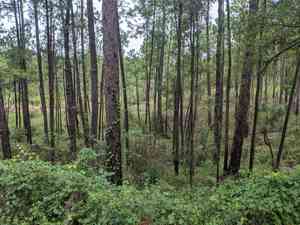
Quickly Identify Longleaf pine
1
Needles arranged in clusters of three, measuring 6-12 inches (15-30 cm) in length, with serrulate margins.
2
Distinctive orange-brown to reddish-brown bark with thick texture, irregular scales, and scaly appearance.
3
Open, irregular crown with short, stout branches and sparse foliage creating a unique silhouette.
4
Large sexual dimorphic cones; male cones purple-blue, female cones dark purple, notably oversized in eastern North America.
5
Gnarled, twisted stem with rugged texture, starting orange-brown and aging to deeper brown.
Scientific Classification of Longleaf pine
Phylum
Vascular plants
Class
Conifers
Order
Pinales
Family
Pine
Genus
Pines
Species
Longleaf pine
Planting and Growing of Longleaf pine
Care Difficulty
Hard
Watering Schedule
Every 2 days
Sunlight Requirements
Full sun
Sunshine Duration
6-12 hours
Ideal Temperature
60-75℉
Soil Type
Potting Mix, Peat Mix
Soil pH
4.5-7.5
Fertilizer Type
Balanced
Pruning Season
Spring, Summer
Pruning Area
Branches, Leaves
Pruning Frequency
2 times a year
Repotting Season
Spring
Pot Type
Plastic, Ceramic
 How to Water Longleaf pine?
Pinus palustris, commonly known as the longleaf pine, thrives in well-drained, sandy soils. When watering, ensure the soil is moist but not soggy, allowing the top inch to dry out between each watering session. Test soil moisture with your finger or a moisture meter to avoid waterlogging.
What are the symptoms of an underwatered Longleaf pine?
›
What should I do if my Longleaf pine is not getting enough water?
›
What are the symptoms of an overwatered Longleaf pine?
›
How to save an overwatered Longleaf pine?
›
 What Are the Sunlight Requirements for Longleaf pine?
Pinus palustris thrives in full sun environments, ideally receiving more than six hours of direct sunlight daily. This lighting condition supports robust growth, improved photosynthesis, and a stronger resistance to environmental stresses.
More About Sunlight Requirements Techniques→
What is the ideal lighting for Pinus palustris?
›
How can we ensure ideal lighting conditions for Pinus palustris?
›
What are the benefits of ideal lighting for Pinus palustris?
›
 What Is the Ideal Temperature Range for Longleaf pine?
The ideal temperature range for Pinus palustris lies between 60°F to 75°F. This range ensures optimal growth by providing the necessary warmth without risking overheating.
 What Soil is Best for Longleaf pine?
Pinus palustris loves sandy soil due to its excellent drainage. In natural habitats, sandy soil prevents waterlogging, which can be detrimental to the roots. This preference aids in minimizing root rot risk and ensures the tree continues to thrive. Thriving in a slightly acidic environment, Pinus palustris benefits from increased nutrient availability. Acidic soil promotes better root function and nutrient uptake, which helps in robust growth and overall health of the tree. Pinus palustris can tolerate moderately low pH soils, which prevents competition from many other plants that prefer neutral pH. This ability allows it to maintain dominance in its native ecosystem, making it an excellent choice for areas with slightly acidic conditions.
 How to Fertilize Longleaf pine?
Longleaf pine (Pinus palustris) generally requires a balanced nutrient supply with a complete fertilizer that includes nitrogen (N), phosphorus (P), and potassium (K) in the ratio of approximately 3:1:1. For example, applying 10 grams of nitrogen per square meter annually can support healthy growth without leading to over-fertilization.
 How to Prune Longleaf pine?
Start by examining the tree from top to bottom. Focus on removing dead, broken, or diseased branches. Make cuts at a slight angle just outside the branch collar to promote better healing. Additionally, avoid over-pruning, which might stress the tree. To maintain the tree's symmetrical shape, prune selectively. Thin out crowded branches to enable light and air to penetrate deeply into the canopy. This will stimulate vigorous growth and result in a more aesthetically pleasing appearance.
More About Pruning Techniques→
 How to Propagate Longleaf pine plant?
1
Begin by obtaining fresh seeds of Pinus palustris. Seeds should be stratified by storing them in a cool, moist environment for a couple of weeks to break dormancy and improve germination rates.
2
Fill seed trays with a well-draining soil mix. Sow the seeds at a depth of about 1/4 inch and cover them lightly with soil. Keep the soil consistently moist to encourage germination.
3
Once seedlings have grown to a sturdy size with multiple sets of true leaves, they can be transplanted into larger pots or directly into the ground. Be careful to avoid damaging the roots during this process.
 How to Repot Longleaf pine plant?
1
Pinus palustris, also known as the longleaf pine, typically indicates the need for repotting when its roots begin to circle the pot or protrude from the drainage holes. Additionally, if you observe that the tree's growth has significantly slowed despite optimal care, it might be time to consider a repot. Ideally, aim to repot this tree during the milder seasons like spring or autumn to minimize stress caused by extreme temperatures.
2
Selecting the correct pot for Pinus palustris is crucial. Choose a pot that is slightly larger than the current one, allowing just enough room for new root growth, yet not too spacious as to encourage overly wet soil conditions. A well-draining pot is a must, preferably with multiple drainage holes, as it helps prevent root rot by allowing excess water to escape efficiently. Opt for a pot made of breathable materials like terracotta to facilitate airflow around the roots, promoting healthier root systems.
3
The soil mix for repotting Pinus palustris should mimic its natural habitat conditions, which favors sandy, well-draining compositions. A mix containing sand, organic matter, and a bit of Perlite or small bark pieces enhances drainage while retaining essential nutrients. Such a soil structure ensures that the roots have ample aeration, preventing waterlogging and providing an environment conducive to robust growth.



