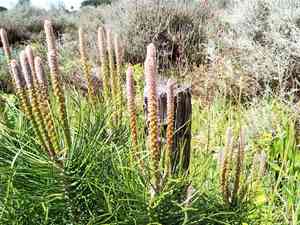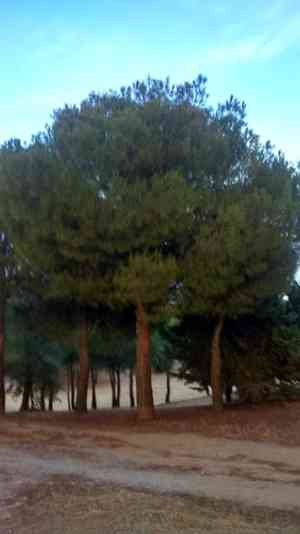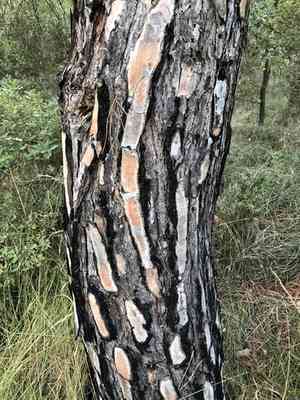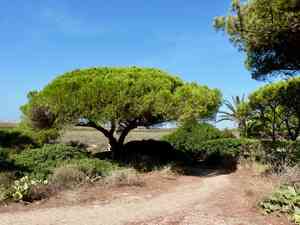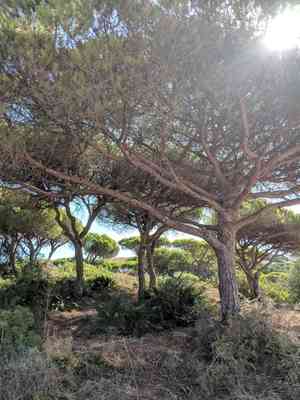
Italian stone pine(Pinus pinea)

Italian stone pine (Pinus pinea)

Also known as: Stone Pine, Italian Stone Pine, Umbrella Pine

The Italian Stone Pine (Pinus pinea) is an evergreen tree known for its distinctive, rounded, umbrella-shaped canopy that offers ample shade. It flourishes in full sunlight and is highly drought-resistant. This tree produces pine cones that yield sought-after and tasty pine nuts, a nutritious food source that can be harvested, dried, and enjoyed.

Attributes of Italian stone pine

Lifespan
Perennial
Plant Type
Tree
Plant Height
12 m to 25 m
Spread
12 m to 18 m
Leaf Color
Green
Flower Size
Not applicable
Flower Color
Yellow Green

PlantJoy - Identify plants with a snap

Identify and diagnose plants, get toxicity alerts, and explore safety guides for all types of fungi.

Try for Free

Images of Italian stone pine

Italian stone pine(Pinus pinea)

Quickly Identify Italian stone pine

1
Umbrella-like crown
2
Needle-like leaves with waxy coating
3
Distinctive orange to red-brown bark
4
Male cones release pollen in spring
5
Cream-colored, egg-shaped edible seeds

Scientific Classification of Italian stone pine

Phylum
Vascular plants
Class
Conifers
Order
Pinales
Family
Pine
Genus
Pines
Species
Italian stone pine

Planting and Growing of Italian stone pine

Care Difficulty
Easy
Watering Schedule
Every 2 days
Sunlight Requirements
Full sun
Sunshine Duration
4-8 hours
Ideal Temperature
60-77℉
Soil Type
Potting Mix, Peat Mix
Soil pH
6.5-7.5
Fertilizer Type
Balanced
Pruning Season
Spring, Summer
Pruning Area
Branches, Leaves
Pruning Frequency
2 times a year
Repotting Season
Spring
Pot Type
Plastic, Ceramic

water icon How to Water Italian stone pine?

Pinus pinea, commonly known as the stone pine, requires deep watering, ensuring the soil is moistened to a depth of 30-40 cm. This allows the roots to absorb adequate moisture while preventing waterlogging. Always check soil moisture levels before watering.
What are the symptoms of an underwatered Italian stone pine?
What should I do if my Italian stone pine is not getting enough water?
What are the symptoms of an overwatered Italian stone pine?
How to save an overwatered Italian stone pine?

sunlight icon What Are the Sunlight Requirements for Italian stone pine?

Sunlight Requirements: Full sun, Partial sun
Duration of light: 6 to 8 hours
Pinus pinea thrives best with full sun to partial sun exposure, ideally receiving 6 to 8 hours of light daily. Proper light improves photosynthesis, supports healthy growth, and enhances the plant’s resistance to disease.
What are the best lighting conditions for Pinus pinea?
How can you ensure ideal lighting for this plant?
What are the benefits of providing ideal lighting?

temperature icon What Is the Ideal Temperature Range for Italian stone pine?

Ideal Temperature: 60 ~ 77℉
The ideal temperature range for Pinus pinea is between 60°F and 77°F. This range ensures optimal metabolic activity and growth. Within this range, the tree can effectively carry out photosynthesis and take up nutrients, leading to healthy development. Maintaining this temperature range allows the tree to thrive without experiencing environmental stress.

soil icon What Soil is Best for Italian stone pine?

Soil type: Sandy soil, Loam, Calcareous soil
Soil PH: 6.5 ~ 7.5
Pinus pinea thrives best in well-drained soils. This minimizes the risk of root rot from excessive moisture, ensuring healthy growth. Proper drainage allows the roots to breathe and receive the necessary nutrients. The ideal soil for Pinus pinea should be nutrient-rich to support its robust growth. An adequate supply of nutrients facilitates healthy foliage and ensures the tree can withstand environmental stressors better. While drainage is crucial, the soil should retain sufficient moisture to support the pine's needs. A balance between moisture retention and drainage helps in maintaining consistent soil moisture levels, crucial for the plant's development.

fertilize icon How to Fertilize Italian stone pine?

Fertilizer type: Balanced
For Pinus pinea, it is best to use a balanced fertilizer with equal parts of nitrogen, phosphorus, and potassium. Apply liquid fertilizer at a rate of 10-20 milliliters per gallon of water. For solid fertilizers, scatter 1-2 pounds evenly around the base of the tree depending on its size.

prune icon How to Prune Italian stone pine?

Pruning Time: Spring, Summer
Begin by removing any dead, diseased, or damaged branches. This should be your first step as it helps prevent the spread of disease and promotes healthier growth overall. Cut back to the nearest healthy side branch or the main trunk. Pinus pinea, commonly known as the stone pine, benefits from regular shaping to improve its structure. Focus on ensuring balanced growth, and consider the natural umbrella-like shape of mature trees when making cuts. Prune selectively to maintain this characteristic form. Less is often more when it comes to pruning stone pines. Over-pruning can stunt growth and cause stress. Aim to remove no more than 20% of the tree’s volume in one session to keep it healthy and resilient.

propagate icon How to Propagate Italian stone pine plant?

Propagate Time: Spring,Late spring,Early spring
1
To begin, soak the seeds of Pinus pinea in water for a day to help soften the seed coat and enhance germination. This pre-treatment step is critical as it prepares the seeds for planting and improves their likelihood of successful sprouting.
2
After pre-treatment, plant the seeds in a well-draining soil mix within seed starter trays. Ensure they are planted at an appropriate depth, usually about 1 inch, to provide them with the best chances of emerging as seedlings.
3
Maintain consistent moisture in the soil and keep it at an optimal temperature using a soil thermometer. This involves regular watering and possibly using a heat mat if the external temperature is too low to promote healthy germination.

repot icon How to Repot Italian stone pine plant?

Repotting frequency: Every 3-4 years
1
Pinus pinea shows signs of needing repotting when its roots start to encircle the base of the pot or push through the drainage holes. This usually occurs as the plant outgrows its container, restricting its growth and nutrient intake. Ensure repotting in spring to maximize root growth and establishment.
2
Select a pot that is 2-3 inches larger in diameter than the current one. Ensure it has ample drainage holes at the bottom. A good pot offers stability, prevents root rot, and encourages the healthy development of root systems, providing an ideal home for Pinus pinea.
3
Opt for a well-draining sandy mix rich in organic matter. This soil ensures proper drainage and aeration, preventing waterlogging which can be detrimental to Pinus pinea. It also supports the pine's nutritional needs while maintaining structural integrity over time.

PlantJoy - Identify plants with a snap

Find the best spots for them to optimize their health, simply using your phone.

Try for Free

Toxicity of Italian stone pine

Is Italian stone pine toxic to humans?

The Italian stone pine presents a relatively mild toxicity risk to humans, primarily associated with skin contact or inadvertent ingestion. The plant as a whole is regarded as toxic and may induce allergic reactions. Upon contact, individuals could experience skin irritation or allergic dermatitis. In cases of ingestion, the mild toxicity of the Italian stone pine may result in gastrointestinal distress, including symptoms such as nausea, vomiting, and diarrhea. It is crucial for individuals to manage Italian stone pine with caution to prevent these negative effects, while also being aware of the possibility of unintentional ingestion, particularly in contexts where it is not intended for consumption.

Is Italian stone pine toxic to cat?

The Italian stone pine poses a slight toxicity hazard to cats. Inquisitive felines might accidentally touch or ingest portions of the Italian stone pine, which is deemed toxic throughout its entirety. This exposure may result in physical discomfort or various symptoms of illness in cats. If a cat has had any interaction with the Italian stone pine, it is crucial to monitor them for any atypical behaviors or signs of distress. Cat owners must recognize that even low-level toxicity can result in negative effects, and immediate veterinary intervention is critical in addressing any potential poisoning situation.

Is Italian stone pine toxic to dog?

The Italian stone pine species is recognized for its mild toxicity towards dogs. Canines can suffer poisoning from italian stone pine via direct contact or accidental ingestion. If dogs come into contact with the entire plant, which is deemed toxic, they may show a variety of symptoms related to poisoning. It is crucial for dog owners to carefully monitor their pets and restrict their access to italian stone pine, since even mild toxicity can result in health complications. If a dog exhibits signs of distress after encountering or ingesting any part of the italian stone pine, such as gastrointestinal distress, skin irritation, or other unusual symptoms, it is vital to seek immediate veterinary assistance to ensure timely and appropriate care.

Identify toxic plants for your safety

Learn which plants are harmful to you and your pets, and make informed choices for a safer home!

Try for Free
WARNING
The judgment on toxicity and danger is for reference only. We DO NOT GUARANTEE any accuracy of such judgment. Therefore, you SHALL NOT rely on such judgment. It is IMPORTANT TO SEEK PROFESSIONAL ADVICE in advance when necessary.