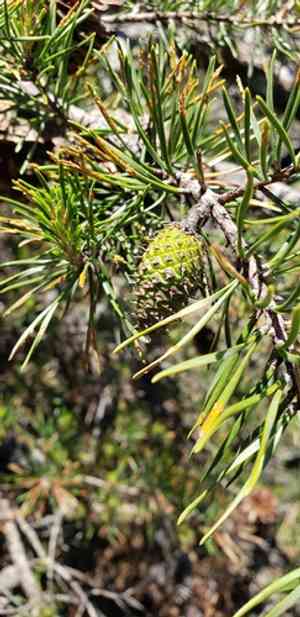
Table mountain pine (Pinus pungens)
Also known as: Tabel mountain pine, Mountain Pine
The lodgepole pine is a hardy evergreen conifer, recognized by its short, twisted needles that come in pairs. Its rugged bark and durable cones highlight its ability to thrive in rocky, nutrient-poor soils. Preferring high-elevation environments, the lodgepole pine grows slowly and forms dense forests, providing essential habitat and resources for various wildlife species.
In This Article
Attributes of Table mountain pine
Lifespan
Perennial
Plant Type
Tree
Plant Height
6 m to 12 m
Spread
11 m
Leaf Color
Green Blue Yellow Gold
Flower Size
Not applicable; Pinus pungens does not produce typical flowers
Flower Color
Yellow
Images of Table mountain pine
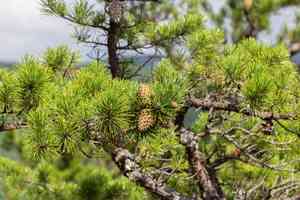
Quickly Identify Table mountain pine
1
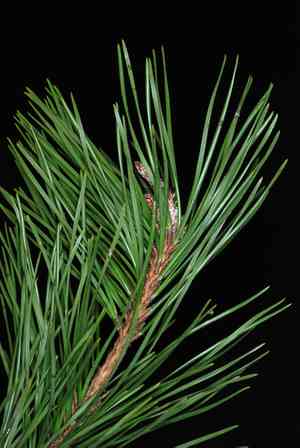
Twisted, yellow-green needles in bundles of two, 1.5-2.5 inches (4-6.5 cm) long.
2
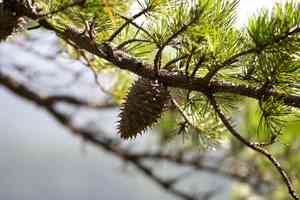
Stout, light brown cones with knobby surface, 2.5-3 inches (6.3-7.6 cm) long.
3
Orange-brown resinous stem with slender, rough twigs and ovoid, sticky buds.
4
Dark-brown bark with rugged plates, red-tinged scales, and thick, furrowed texture.
5
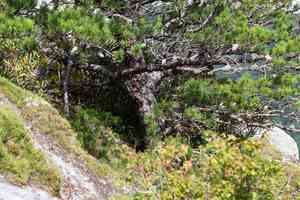
Ability to produce cones young, solitary stance, thriving on dry rocky slopes.
Scientific Classification of Table mountain pine
Phylum
Vascular plants
Class
Conifers
Order
Pinales
Family
Pine
Genus
Pines
Species
Table mountain pine
Planting and Growing of Table mountain pine
Care Difficulty
Easy
Watering Schedule
Every 2 days
Sunlight Requirements
Full sun
Sunshine Duration
6-8 hours
Ideal Temperature
45-75℉
Soil Type
Potting Mix, Peat Mix
Soil pH
6.5-7.5
Fertilizer Type
Balanced
Pruning Season
Spring, Summer
Pruning Area
Branches, Leaves
Pruning Frequency
2 times a year
Repotting Season
Spring
Pot Type
Plastic, Ceramic
 How to Water Table mountain pine?
Pinus pungens, commonly known as Table Mountain Pine, requires a moderate watering schedule. The goal is to moisten the soil evenly without waterlogging. Water until the moisture reaches the deeper roots, but avoid keeping the surface overly wet.
What are the symptoms of an underwatered Table mountain pine?
›
What should I do if my Table mountain pine is not getting enough water?
›
What are the symptoms of an overwatered Table mountain pine?
›
How to save an overwatered Table mountain pine?
›
 What Are the Sunlight Requirements for Table mountain pine?
Pinus pungens prefers full sun environments. The ideal light promotes its natural growth pattern, ensuring dense foliage and a healthier lifespan with an improved ability to ward off threats.
More About Sunlight Requirements Techniques→
How much sunlight does Pinus pungens need?
›
What happens if Pinus pungens gets ideal sunlight?
›
How can I provide ideal lighting for Pinus pungens?
›
 What Is the Ideal Temperature Range for Table mountain pine?
The ideal temperature range for Pinus pungens is between 45°F and 75°F. These temperatures provide the optimal conditions for growth and photosynthesis. Within this range, the plant can effectively perform all its physiological processes, leading to healthy growth and development.
 What Soil is Best for Table mountain pine?
Pinus pungens thrives best in well-drained soils. Good drainage prevents root rot and enables the tree to establish a robust root system. This adaptability ensures the tree's survival in varied weather conditions. The soil should have moderate nutrient content to support healthy growth. Overly rich soil may lead to rapid growth but weakened structure, while low nutrient soil can stunt growth. Pinus pungens requires a slightly acidic to neutral pH, which allows for better nutrient uptake. This pH range supports enzymatic activities critical for the pine's health and growth.
 How to Fertilize Table mountain pine?
Pinus pungens, commonly known as Table Mountain pine, does not require heavy fertilization. Use a balanced fertilizer with an N-P-K ratio like 10-10-10. For liquid fertilizers, apply at a concentration of 1/4 strength. Slow-release fertilizers should be used sparingly, following the manufacturer's recommendations for pine trees.
 How to Prune Table mountain pine?
Start with clean, sharp pruning shears or a small handsaw for larger branches. Sterilize your cutting tools with alcohol before and after use to prevent disease spread. This ensures a clean cut that heals quickly, maintaining the health of your Pinus pungens. Look for dead, damaged, or crossing branches. These should be your primary targets for removal. Additionally, identify any branches that are growing inwards or too densely, as thinning these out improves air circulation and light penetration. When pruning, cut branches where they meet the trunk or a larger branch. Make your cut at a slight angle to prevent water accumulation on the cut surface. Avoid cutting too close to the trunk to protect the branch collar for quicker healing.
More About Pruning Techniques→
 How to Propagate Table mountain pine plant?
1
Collect mature Pinus pungens cones that have fully opened. Extract seeds and stratify them by placing in a moist substrate at a low temperature for several weeks to break dormancy.
2
Sow the prepared seeds in seed trays filled with a sandy, well-draining mix. Cover them lightly with soil and moisten gently. Ensure the seeds are spaced adequately apart to prevent overcrowding.
3
Once seedlings develop a robust root system and several needle pairs, transplant them into individual pots. Use a mix that's tailored to conifer growth, ensuring proper nourishment and space for root expansion.
 How to Repot Table mountain pine plant?
1
Pinus pungens should be repotted when you notice roots growing out of the drainage holes or when its growth slows down noticeably. These signs indicate that the tree needs more space for its roots to expand and nutrients to continue thriving. The best time to repot is in early spring or autumn, as these seasons allow the plant to recover from any potential shock.
2
Select a pot that is one size larger than the current one, providing ample room for root expansion. The pot should have good drainage holes to prevent water from accumulating at the bottom. Using a clay or ceramic pot can be advantageous as they help regulate soil moisture better than plastic pots.
3
Opt for a well-draining, sandy soil mixture that mimics the plant's natural habitat. This type of soil prevents root rot by ensuring excess water drains away quickly while maintaining adequate moisture for healthy growth. Adding perlite or pumice can improve aeration and drainage, which is crucial for the plant's root health.



