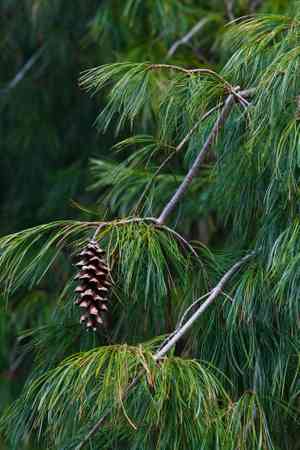
Eastern white pine (Pinus strobus)
Also known as: Soft pine, Weymouth pine
The Tulip Tree (Liriodendron tulipifera) is a prominent deciduous tree found in mixed forests of temperate zones in eastern North America. Renowned for its impressive height, it stands among the tallest trees in its native region. Its wood is lightweight and straight-grained, making it valuable for various uses.
In This Article
Attributes of Eastern white pine
Lifespan
Perennial
Plant Type
Tree
Plant Height
30 m to 67 m
Spread
6 m to 12 m
Leaf Color
Green Blue
Flower Size
No conspicuous flowers; it is a gymnosperm
Flower Color
Yellow Green Red
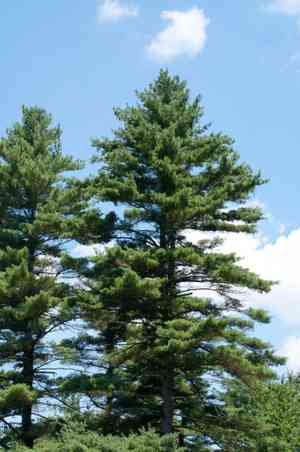
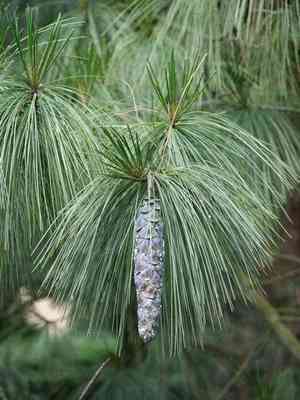
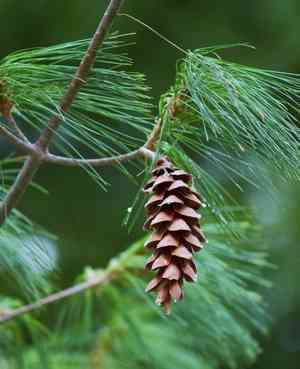
Images of Eastern white pine
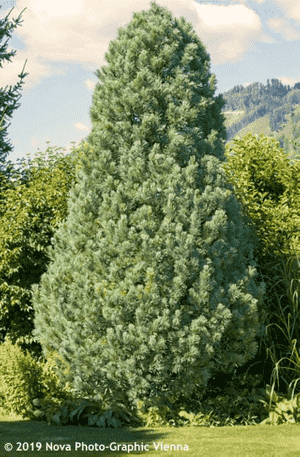
Quickly Identify Eastern white pine
1
Bluish-green needles in clusters of five, measuring 3 to 5 inches (7.6 to 12.7 cm) long.
2
Whorled branching pattern with slender stem, 1-2 inches (2.5-5 cm) in diameter.
3
Distinct reddish-brown oval buds on branches.
4
Cylindrical cones 4 to 8 inches (10 to 20 cm) long with whitened tips.
5
Mature height of 50 to 80 feet (15 to 24 meters) with widths of 20 to 40 feet (6 to 12 meters).
Scientific Classification of Eastern white pine
Phylum
Vascular plants
Class
Conifers
Order
Pinales
Family
Pine
Genus
Pines
Species
Eastern white pine
Planting and Growing of Eastern white pine
Care Difficulty
Easy
Watering Schedule
Every 2 days
Sunlight Requirements
Full sun
Sunshine Duration
6-10 hours
Ideal Temperature
60-75℉
Soil Type
Potting Mix, Peat Mix
Soil pH
4.5-6
Fertilizer Type
Balanced
Pruning Season
Spring, Summer
Pruning Area
Branches, Leaves
Pruning Frequency
2 times a year
Repotting Season
Spring
Pot Type
Plastic, Ceramic
 How to Water Eastern white pine?
When watering Pinus strobus, aim for about 1000ml per session. This ensures the soil is adequately moist without being waterlogged. Water until you see moisture evenly reaching about 6 to 8 inches deep in the soil. This depth ensures the roots have enough access to water, preventing stress and promoting healthy growth.
More About Watering Techniques→
What are the symptoms of an underwatered Eastern white pine?
›
What should I do if my Eastern white pine is not getting enough water?
›
What are the symptoms of an overwatered Eastern white pine?
›
How to save an overwatered Eastern white pine?
›
 What Are the Sunlight Requirements for Eastern white pine?
Eastern White Pine thrives in full sun to partial shade. Ideal lighting fosters stronger, healthier growth with dense, vibrant green needles, increasing its resilience to environmental stresses.
More About Sunlight Requirements Techniques→
What is the best light exposure for Pinus strobus?
›
How to achieve the ideal lighting for Pinus strobus?
›
Benefits of ideal lighting for Pinus strobus
›
 What Is the Ideal Temperature Range for Eastern white pine?
The ideal temperature range for Pinus strobus, commonly known as Eastern White Pine, is between 60°F to 75°F. This range ensures optimal growth conditions. Temperatures in this range allow the tree to effectively complete photosynthesis and maintain its metabolic processes. Outside of this range, growth might be slower and stress factors could become more pronounced.
 What Soil is Best for Eastern white pine?
Pinus strobus thrives in well-drained soil, preventing root rot. This soil type ensures air circulation around roots, vital for nutrient uptake and growth. By maintaining proper drainage, the tree can grow strong and healthy. Consistent soil moisture is vital. Using mulches and organic matter helps conserve moisture. This prevents the soil from drying out, ensuring nutrient transportation and optimal growth conditions for Pinus strobus. Providing nutrient-rich soil ensures strong growth. Incorporating organic materials like compost supplements the soil's nutrient content, supporting the biological processes essential for Pinus strobus’ health and vitality.
More About Soil→
 How to Fertilize Eastern white pine?
When fertilizing Pinus strobus, known as the Eastern White Pine, use a balanced fertilizer like a 10-10-10 NPK ratio. Apply at a rate of 4 pounds per 1,000 square feet to ensure nutrients are absorbed effectively. The fertilizer should be well-distributed around the root zone to avoid nutrient burn.
 How to Prune Eastern white pine?
Identify and prune dead, diseased, or broken branches to promote airflow and sunlight penetration, reducing the risk of pest infestations and infections. Do not top the tree as it can lead to weak regrowth and make the tree more susceptible to diseases. Instead, focus on subtle shaping by trimming excess growth. Prune mainly during the dormant seasons like late winter or early spring to minimize sap flow and reduce the attraction of pests and diseases.
More About Pruning Techniques→
 How to Propagate Eastern white pine plant?
1
Collect seeds from mature cones in autumn and store them for stratification over winter. Sow them in seed trays filled with a well-draining mix in early spring for optimal germination.
2
Take cuttings from the current year’s growth during spring. Cut the branch into segments of about 6-8 inches, ensuring each has a few leaf nodes. Strip the lower needles off the cuttings.
3
Select a healthy rootstock and scion. Make a diagonal cut on both, aligning their cambium layers. Secure the graft with grafting tape and keep the union moist and protected until growth resumes.
 How to Repot Eastern white pine plant?
1
Look for signs your Pinus strobus needs repotting including roots growing out of the drainage holes, slowed growth, or the plant becoming top-heavy. Ideally, repot during spring or autumn when the plant is actively growing and can adjust well to the new conditions.
2
Choose a pot that is slightly larger than the current one, with excellent drainage. A pot that is too large can retain too much moisture, which can lead to root rot. The right size will allow your pine to grow comfortably and ensure proper hydration.
3
Opt for a well-draining, sandy soil that mimics its natural environment. Such soil prevents water from sitting around the roots, reducing the risk of rot and fostering healthy root growth. It's ideal for a pine that does not like 'wet feet'.



