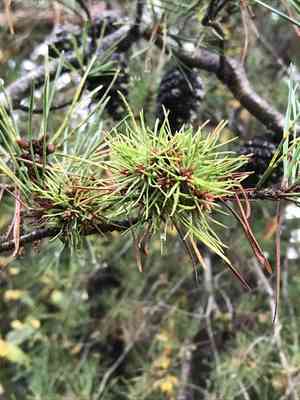
Virginia pine (Pinus virginiana)
Also known as: Spruce pine
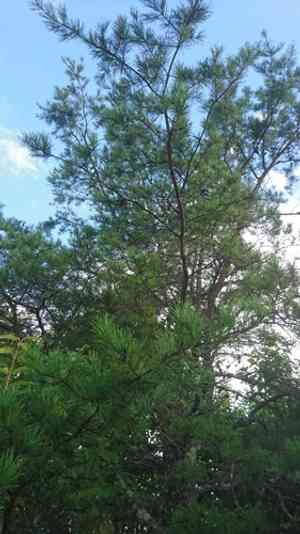
Virginia pine (Pinus virginiana) is a hardy evergreen tree that thrives in full sunlight and well-drained, acidic soils. It is drought-tolerant and often found in dry, sandy, or rocky areas. This species is well-suited for covering barren or disturbed sites and tends to grow most effectively in pure stands rather than mixed with other tree species.
In This Article
Attributes of Virginia pine
Lifespan
Perennial
Plant Type
Tree
Plant Height
9 m to 18 m
Spread
6 m
Leaf Color
Green Blue Yellow Gold
Flower Size
N/A
Flower Color
Yellow Green Gold
Images of Virginia pine
Quickly Identify Virginia pine
1
Yellow male pollen cones, 1 inch (2.5 cm) long, densely packed on branches.
2
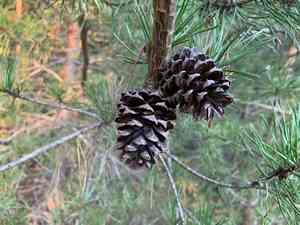
Reddish-brown cones, 1.5-3 inches (3.8-7.6 cm) long, with yellow to red curved prickles.
3
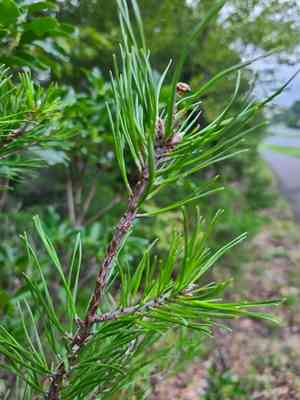
Needles clustered in pairs on dwarf shoots, twisted shape, sharp-pointed apex.
4
Pale, glaucous young twigs with axillary fascicles of needles and rough, scaly texture.
5
Orange-brown bark on young trunks matures into thin, scaly plates, 2-4 feet (60-120 cm) wide.
Scientific Classification of Virginia pine
Phylum
Vascular plants
Class
Conifers
Order
Pinales
Family
Pine
Genus
Pines
Species
Virginia pine
Planting and Growing of Virginia pine
Care Difficulty
Easy
Watering Schedule
Every 2 days
Sunlight Requirements
Full sun
Sunshine Duration
6-8 hours
Ideal Temperature
60-75℉
Soil Type
Potting Mix, Peat Mix
Soil pH
4.5-6.5
Fertilizer Type
Balanced
Pruning Season
Spring, Summer
Pruning Area
Branches, Leaves
Pruning Frequency
2 times a year
Repotting Season
Spring
Pot Type
Plastic, Ceramic
 How to Water Virginia pine?
The watering amount for Pinus virginiana should be around 200 milliliters per session. It's important to water deeply yet infrequently, allowing the water to reach the roots. Ensure the soil is moist to a depth of at least 6 inches to promote robust root development.
What are the symptoms of an underwatered Virginia pine?
›
What should I do if my Virginia pine is not getting enough water?
›
What are the symptoms of an overwatered Virginia pine?
›
How to save an overwatered Virginia pine?
›
 What Are the Sunlight Requirements for Virginia pine?
The ideal light range for Pinus virginiana involves 6-8 hours of direct or partial sun exposure. Sufficient sunlight ensures robust photosynthesis, promoting optimal growth and a well-developed, healthy structure.
More About Sunlight Requirements Techniques→
Optimal Sun Exposure
›
Balanced Light Distribution
›
Seasonal Light Considerations
›
 What Is the Ideal Temperature Range for Virginia pine?
The ideal temperature range for Pinus virginiana, also known as Virginia pine, is between 60°F and 75°F. This temperature range provides optimal conditions for healthy growth, ensuring the plant can efficiently photosynthesize, metabolize, and develop sturdy structures. Consistent temperatures within this range help maintain the plant's physiological processes, essential for vigor and growth.
 What Soil is Best for Virginia pine?
Pinus virginiana thrives best in well-drained soils as it helps avoid issues like root rot. This requirement ensures that excess water does not suffocate the roots, maintaining healthy growth. This species prefers soils with a slightly acidic pH to facilitate nutrient availability. An acidic environment allows better uptake of essential nutrients, promoting robust development. Pinus virginiana can tolerate soils with low nutritional profiles. This ability makes it ideal for less fertile landscapes, providing greenery and ecological value where other plants might struggle.
 How to Fertilize Virginia pine?
When fertilizing Pinus virginiana, it's crucial to use just enough to maintain its growth without overwhelming it. Typically, using 0.1 to 0.2 pounds of nitrogen per year per inch of trunk diameter is adequate. Adjust based on soil quality and plant health.
 How to Prune Virginia pine?
Begin by inspecting the tree for any branches that appear dead, diseased, or damaged. These should be removed first to ensure the tree's overall health. After removing any unhealthy branches, focus on shaping the tree. Cut back any overly long branches to maintain a balanced, attractive form without compromising the tree's natural structure. Always cut just above a lateral bud or branch and at an angle to promote optimal healing and new growth. This technique helps the tree recover quickly and continue to thrive.
More About Pruning Techniques→
 How to Propagate Virginia pine plant?
1
Collect Pinus virginiana seeds from mature cones in late autumn. Ensure that the cones are fully opened and the seeds have a dark color indicative of full maturation.
2
Prepare seedling trays or pots with a well-draining soil mixture. Plant seeds approximately half an inch deep, keeping the soil consistently moist until germination occurs.
3
Grafting is typically done during the late dormant season. Select healthy scion wood and rootstock; employ the cleft graft method for strong, compatible fusions.
 How to Repot Virginia pine plant?
1
The best indication that a Pinus virginiana needs repotting is when you observe roots growing out of the drainage holes. This tree likes to have enough space, so repotting every few years as it grows ensures healthy development. Additionally, if the soil becomes compacted or waterlogged, it's time to refresh and provide a better growing medium.
2
Selecting the right pot is vital for the health of your Pinus virginiana. Look for a pot that is 2-3 inches larger in diameter than the current one. Ensure it has ample drainage holes to prevent water from stagnating. Clay pots are a good choice as they allow for air circulation. The size and material help maintain proper moisture levels and encourage healthy root development.
3
Using a sandy, well-draining soil mix is crucial for Pinus virginiana. This species thrives in a substrate that mimics its natural rocky and sandy habitat. The right soil prevents root rot and compaction while providing adequate nutrients. Incorporating some organic matter like peat helps retain necessary moisture without waterlogging.



