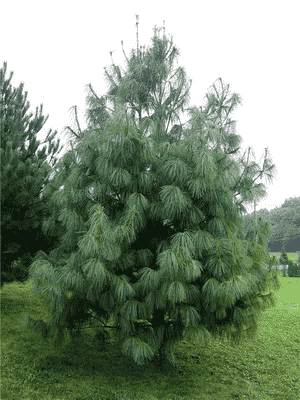
Himalayan pine (Pinus wallichiana)
Also known as: Blue pine, Wallich's pine
The Himalayan Pine is a conifer often seen in large gardens and parks. It stands out due to its distinctive look and its resilience to high levels of air pollution. Commonly found in rocky mountain regions and near glaciers, it also provides high-quality turpentine.
In This Article
Attributes of Himalayan pine
Lifespan
Perennial
Plant Type
Tree
Plant Height
9 m to 15 m
Spread
6 m to 9 m
Leaf Color
Green Blue Gray Silver
Flower Size
15 cm
Flower Color
Yellow Red Brown
Images of Himalayan pine
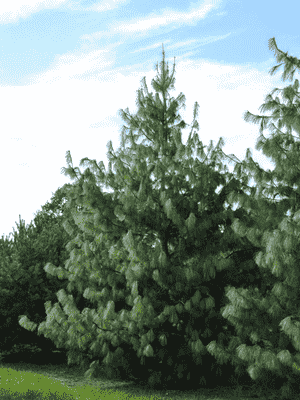
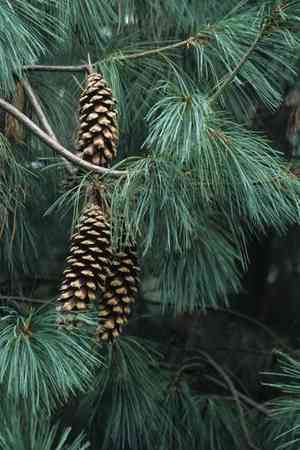
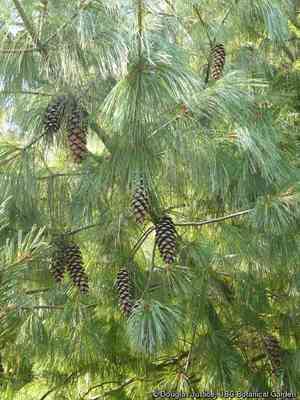
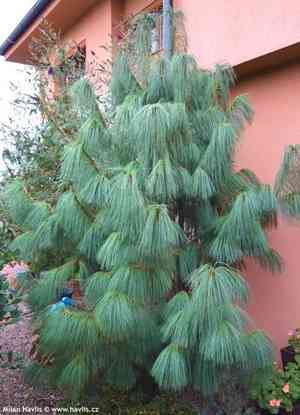
Quickly Identify Himalayan pine
1
Sturdy evergreen with broad base and pendulous branches.
2
Distinctive blue-green needles, silvery blue underside, pendulous older needles.
3
Bark transforms from smooth gray to deep fissures, then rich dark brown.
Scientific Classification of Himalayan pine
Phylum
Vascular plants
Class
Conifers
Order
Pinales
Family
Pine
Genus
Pines
Species
Himalayan pine
Planting and Growing of Himalayan pine
Care Difficulty
Easy
Watering Schedule
Every 2 days
Sunlight Requirements
Full sun
Sunshine Duration
6-10 hours
Ideal Temperature
50-68℉
Soil Type
Potting Mix, Peat Mix
Soil pH
6.5-7.5
Fertilizer Type
Balanced
Pruning Season
Spring, Summer
Pruning Area
Branches, Leaves
Pruning Frequency
2 times a year
Repotting Season
Spring
Pot Type
Plastic, Ceramic
 How to Water Himalayan pine?
Pinus wallichiana, or the Himalayan pine, requires a careful balance when it comes to watering. The soil should be moist, not waterlogged. Aim for approximately 500 ml of water per instance, ensuring the soil is wet up to several centimeters down.
What are the symptoms of an underwatered Himalayan pine?
›
What should I do if my Himalayan pine is not getting enough water?
›
What are the symptoms of an overwatered Himalayan pine?
›
How to save an overwatered Himalayan pine?
›
 What Are the Sunlight Requirements for Himalayan pine?
Pinus wallichiana thrives in full sun to partial sun, benefiting from 6 to 8 hours of sunlight daily. In optimal light, the plant grows vigorously, showing vibrant colors and improved resistance to environmental stressors.
More About Sunlight Requirements Techniques→
How much sunlight does Pinus wallichiana need?
›
How can we ensure Pinus wallichiana gets enough light?
›
What are the benefits when Pinus wallichiana receives ideal sunlight?
›
 What Is the Ideal Temperature Range for Himalayan pine?
The ideal temperature range for Pinus wallichiana is between 50°F to 68°F. This range ensures optimal growth and health. Temperatures within this range promote effective photosynthesis and proper physiological functions. It is recommended to maintain this temperature to prevent stress and encourage vigorous growth.
 What Soil is Best for Himalayan pine?
Pinus wallichiana thrives in well-drained soils. Proper drainage prevents waterlogging that may lead to root rot, ensuring a healthy, sturdy tree. The soil should be rich in organic matter, providing essential nutrients for robust growth and lush foliage. While well-drained, the soil must also retain moisture adequately to support the tree through dry spells, balancing hydration needs.
 How to Fertilize Himalayan pine?
For Pinus wallichiana, the appropriate fertilization involves moderate usage due to its susceptibility to root burn from excess nutrients. Typically, using a balanced 10-10-10 NPK ratio fertilizer is advisable. Liquid fertilizers should be applied at half the recommended concentration to avoid nutrient toxicity.
 How to Prune Himalayan pine?
Begin your pruning process by removing any dead or diseased branches. This helps in preventing the spread of any potential diseases and encourages the growth of healthy branches. After removing the unhealthy branches, focus on thinning out any overly dense areas of the tree. Target branches that are crossing or rubbing against each other to enhance sunlight penetration and air circulation. When cutting, make your cuts just above a healthy bud or branch junction to ensure proper growth direction and health. Avoid leaving stubs, and aim for clean, angled cuts. In addition to yearly pruning, monitor your tree throughout the year for any signs of distress or disease. Prompt action will help maintain the health and aesthetics of your Pinus wallichiana.
More About Pruning Techniques→
 How to Propagate Himalayan pine plant?
1
For successful germination, seeds of Pinus wallichiana require stratification. This involves storing them in a moist, cold environment to break dormancy before planting.
2
After stratification, sow the seeds in a well-draining seed tray filled with a pine-friendly soil mix. Ensure the seeds are lightly covered and keep the soil consistently moist.
3
Select healthy grafting stock and scion from mature Pinus wallichiana. Prepare the graft by cutting matching notches, fit them together, and wrap securely. Keep the graft protected and in a humid environment.
 How to Repot Himalayan pine plant?
1
Pinus wallichiana needs repotting when its roots start emerging from the drainage holes, indicating root-bound conditions. Another sign is when water retains longer on the soil surface, suggesting compacted soil. The best time to undertake this task is early spring when the plant begins its active growth phase, ensuring minimal stress and quicker recovery.
2
Select a pot that is slightly larger than the current one, with adequate drainage holes. A ceramic or terracotta pot is preferred as it provides better air circulation and prevents waterlogging, maintaining root health. This choice also offers better stability, reducing the top-heaviness often encountered in coniferous trees.
3
Opt for a well-draining, slightly acidic to neutral soil mix tailored for conifers. This should include components like pine bark, perlite, and sand, providing sufficient aeration. Such a mix supports vigorous root development and prevents the risks of root rot, which is vital for the longevity and vigor of Pinus wallichiana.



