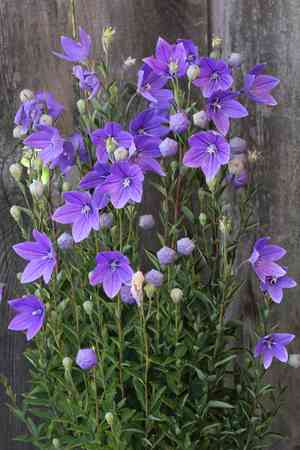
Balloon flower (Platycodon grandiflorus)
Also known as: Japanese bell flower
The balloon flower (Platycodon grandiflorus) is a perennial plant found in East Asia and eastern Russia. Its name comes from the way its buds puff up like balloons before blooming into star-shaped flowers, and they can 'pop' when squeezed.
In This Article
Attributes of Balloon flower
Lifespan
Perennial
Plant Type
Herb
Plant Height
40 cm to 1 m
Spread
30 cm to 60 cm
Leaf Color
Green Blue
Flower Size
5 cm to 7 cm
Flower Color
Blue White Pink Purple
Images of Balloon flower
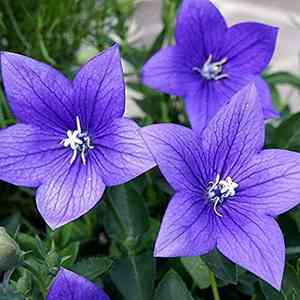
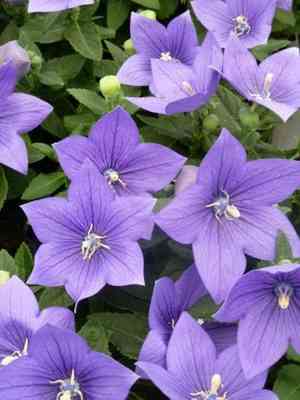
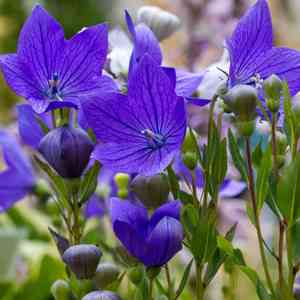
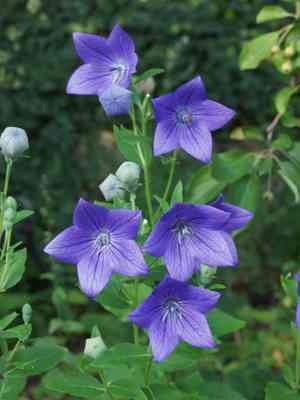
Quickly Identify Balloon flower
1
Inflated sphere-shaped unopened buds
2
Broad, bell-shaped flowers in deep blue to violet hues
3
Ovate, alternate leaves with serrated margins
4
Compact, upright habit reaching 12-24 inches (30-60cm) in height
5
Outward and upward-facing bell-shaped blooms measuring 2-3 inches (5-7.5 cm) in diameter
Scientific Classification of Balloon flower
Phylum
Vascular plants
Class
Dicotyledons
Order
Asters bellflowers fanflowers and allies
Family
Bellflower
Genus
balloon flower
Species
Balloon flower
Planting and Growing of Balloon flower
Care Difficulty
Easy
Watering Schedule
Every 4 days
Sunlight Requirements
Partial sun
Sunshine Duration
10-14 hours
Ideal Temperature
60-75℉
Soil Type
Potting Mix, Peat Mix
Soil pH
6-7.5
Fertilizer Type
Balanced
Pruning Season
Spring, Summer
Pruning Area
Branches, Leaves
Pruning Frequency
2 times a year
Repotting Season
Spring
Pot Type
Plastic, Ceramic
 How to Water Balloon flower?
The amount of water needed for Platycodon grandiflorus should ensure that the soil is evenly moist but not waterlogged. It is recommended to water about 500 ml each session, enough to allow the water to reach the roots without pooling excessively. This should cater to the plant's moderate watering needs, especially during active growth periods.
More About Watering Techniques→
What are the symptoms of an underwatered Balloon flower?
›
What should I do if my Balloon flower is not getting enough water?
›
What are the symptoms of an overwatered Balloon flower?
›
How to save an overwatered Balloon flower?
›
 What Are the Sunlight Requirements for Balloon flower?
Platycodon grandiflorus ideally thrives in partial sun settings. This exposure supports bloom production and healthy foliage, ensuring the plant achieves its full growth potential while minimizing stress risks.
More About Sunlight Requirements Techniques→
What type of light does Platycodon grandiflorus need?
›
How to ensure the plant receives ideal lighting?
›
Why is ensuring ideal lighting beneficial for the plant?
›
 What Is the Ideal Temperature Range for Balloon flower?
The ideal temperature range for Platycodon grandiflorus, also known as Balloon Flower, is between 60°F and 75°F. This range offers a balanced environment for optimal growth, ensuring that photosynthesis occurs efficiently and plant enzymes function properly. During this temperature window, the plant's growth cycle, including flowering and leaf development, is supported best without causing any thermal stress.
 What Soil is Best for Balloon flower?
Platycodon grandiflorus thrives in well-draining soil, preventing waterlogging and root rot. This drainage capacity protects the plant's roots from suffocation, promoting vigorous growth and ensuring vibrant blooms. A soil with moderate fertility is ideal for Balloon Flower, providing essential nutrients without overwhelming the plant. This balance supports healthy foliage and robust flowering, maintaining the plant's ornamental appeal. Soil enriched with organic matter offers benefits like improved structure, enhanced nutrient retention, and increased microbial activity, all of which contribute to the health and vitality of Platycodon grandiflorus.
More About Soil→
 How to Fertilize Balloon flower?
The Balloon Flower (Platycodon grandiflorus) requires moderate fertilization amounts. Use a balanced liquid fertilizer, such as 10-10-10 or 20-20-20, and apply at half the recommended strength. This helps to avoid over-fertilizing and causing nutrient burn.
More About Fertilizing Techniques→
 How to Prune Balloon flower?
Start by identifying any stems or branches that look diseased or dead. Remove these entirely to prevent any potential spread of disease and to maintain the plant's overall health. Additionally, removing dead stems allows light and air to circulate more freely around the plant, promoting better overall growth. Examine the plant for any stems that have grown overly long or leggy. Trim these back to promote a bushier and more compact shape. Cut just above a healthy leaf node to encourage new growth from this point. This will help the plant maintain a pleasing and proportional shape. After managing health and vigor, focus on shaping your Platycodon grandiflorus. Trim excess growth on all sides to create a more uniform appearance. This not only gives the plant a cleaner look but also balances its energy distribution among existing branches. After initial pruning, monitor your plant's response and adjust care routines as necessary. If the plant shows signs of stress, such as wilting or discoloration, consider altering your watering schedule and feeding regimen. Pruning should always align with the plant's health needs.
More About Pruning Techniques→
 How to Propagate Balloon flower plant?
1
Sow Platycodon grandiflorus seeds in a seed tray filled with well-draining soil. Cover them lightly with a thin layer of soil and keep the medium consistently moist until you see germination.
2
Take healthy cuttings from the plant during its active growth season, ensuring each cutting has at least one node. Dip the ends in a rooting hormone before planting.
3
Carefully divide the root clumps in early spring before new growth begins. Use sharp tools to separate the roots cleanly and replant immediately in prepared soil.
 How to Repot Balloon flower plant?
1
The optimal time for repotting Platycodon grandiflorus is when you notice roots peeking out from the drainage holes of the current pot. Additionally, if the plant exhibits stunted growth or the soil is no longer retaining moisture effectively, it's a clear signal that repotting is overdue.
2
Choose a pot that is one size larger than the current one, with adequate drainage holes to prevent waterlogging. A ceramic or terracotta pot is ideal as it allows some moisture evaporation, reducing the risk of root rot while maintaining a stable temperature for the roots.
3
Opt for a well-draining loamy soil blend that ensures excess water can swiftly exit the pot. This choice prevents root rot and supports robust growth by allowing adequate air circulation around the roots, simulating the plant’s natural environment.
Learn More About Balloon flower Diseases
Anthracnose
Bacterial Leaf Spot
Bacterial Soft Rot
Bacterial Wilt
Chemical Injury
Cyst Nematode
Damping-off
Drought Stress
Fusarium Wilt
Gray Mold
Leaf Spot
Mosaic
Nutrient Deficiency
Nutrient Toxicity
Powdery Mildew
Root Rot
Root-knot Nematode
Sooty Mold
Spider Mites
Temperature Stress
Thrips Damage
White Mold



