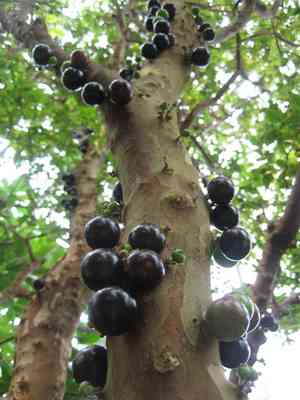
Jaboticaba tree (Plinia cauliflora)
Also known as: Jabuticaba, Brazilian grape tree
The Jaboticaba tree (Plinia cauliflora), native to Brazil and other parts of South America, produces unique purplish-black berries that grow directly on its trunk. These berries are versatile in the kitchen. They can be enjoyed fresh, straight off the tree, or transformed into delicious jams and jellies, thanks to their natural pectin. Additionally, the fruit can be fermented to create distinctive wines and liqueurs, adding a touch of exotic flavor to beverages.
In This Article
Attributes of Jaboticaba tree
Lifespan
Perennial
Plant Type
Tree
Plant Height
3 m to 8 m
Spread
2.5 m
Leaf Color
Green
Flower Size
2.5 cm to 5 cm
Flower Color
White Yellow Green Brown Gold
Images of Jaboticaba tree
Quickly Identify Jaboticaba tree
1
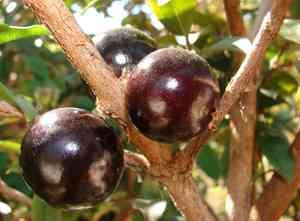
Purplish-black, grape-like fruit measuring 0.8-1.6 inches (2-4 cm) in diameter.
2
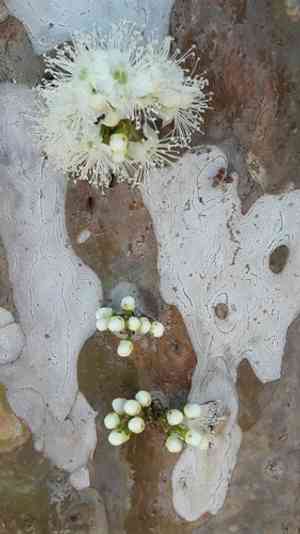
White-yellow flowers growing directly on trunk and branches in clusters of four.
3
Globular, green to purplish-black fruits sprouting from trunk and branches.
4
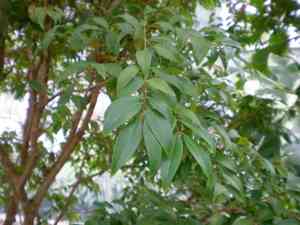
Elliptical leaves with salmon color in youth, later turning sturdy green.
5
Visually striking bark with reddish-brown hues, peeling in irregular patterns.
Scientific Classification of Jaboticaba tree
Phylum
Vascular plants
Class
Dicotyledons
Order
Myrtle order
Family
Myrtle
Genus
Plinia
Species
Jaboticaba tree
Planting and Growing of Jaboticaba tree
Care Difficulty
Hard
Watering Schedule
Every 5 days
Sunlight Requirements
Full sun
Sunshine Duration
8-12 hours
Ideal Temperature
68-82℉
Soil Type
Potting Mix, Peat Mix
Soil pH
5.5-6.5
Fertilizer Type
Balanced
Pruning Season
Spring, Summer
Pruning Area
Branches, Leaves
Pruning Frequency
2 times a year
Repotting Season
Spring
Pot Type
Plastic, Ceramic
 How to Water Jaboticaba tree?
The amount of water should be approximately 500 ml per watering session, ensuring the soil is evenly moist but not soggy. Water deeply so that the roots can absorb enough moisture without leaving excess water that may lead to root rot.
More About Watering Techniques→
What are the symptoms of an underwatered Jaboticaba tree?
›
What should I do if my Jaboticaba tree is not getting enough water?
›
What are the symptoms of an overwatered Jaboticaba tree?
›
How to save an overwatered Jaboticaba tree?
›
 What Are the Sunlight Requirements for Jaboticaba tree?
Partial shade allows Plinia cauliflora to flourish while avoiding stress from too much direct sun. The lighting conditions must balance light intensity for effective photosynthesis and overall health.
More About Sunlight Requirements Techniques→
How much sunlight does it need?
›
What are the solutions for optimal light?
›
What are the benefits of ideal light?
›
 What Is the Ideal Temperature Range for Jaboticaba tree?
The ideal temperature range for Plinia cauliflora is between 68°F and 82°F. This range provides a suitable environment that supports healthy growth and fruit production. Maintaining this range helps the plant to thrive and ensures optimal atmospheric conditions for photosynthesis and nutrient uptake.
 What Soil is Best for Jaboticaba tree?
Plinia cauliflora thrives in well-drained soil as it prevents root rot by allowing excess water to escape. Ensuring proper drainage protects the root system and promotes healthy growth. A nutrient-rich loam soil is ideal for Plinia cauliflora as it provides essential minerals needed for robust growth, improving fruit production and the plant's overall health. Although good drainage is vital, the soil should also retain enough moisture to keep the plant hydrated, ensuring optimal health and preventing wilting, especially in dry periods.
More About Soil→
 How to Fertilize Jaboticaba tree?
Plinia cauliflora, commonly known as Jabuticaba, benefits from a balanced fertilizer such as one with a 10-10-10 NPK ratio. For liquid fertilizer, apply at a rate of 0.5 to 1.0 pound per 100 square feet. Ensure uniform distribution to avoid localized root burn.
More About Fertilizing Techniques→
 How to Prune Jaboticaba tree?
Start by removing any dead or diseased branches. Cut close to the branch collar without injuring it, which helps in quick healing and avoids potential infections. Trim to maintain an open and balanced canopy. Focus on thinning out crowded areas to enhance air circulation and light penetration, vital for health and fruit productivity. Leggy, over-extended branches should be cut back to a lateral branch to promote a more compact growth. This helps in maintaining an aesthetic shape and boosts branch strength.
More About Pruning Techniques→
 How to Propagate Jaboticaba tree plant?
1
Soak the seeds in lukewarm water for 24 hours to enhance germination rates. Post soaking, dry the seeds gently and prepare them for sowing in a mixture of well-draining soil and compost.
2
Select healthy, disease-free stems for taking cuttings. Use a clean, sharp knife to make a cut just below a node, and remove the lower leaves to minimize transpiration and rotting during rooting.
3
Grafting involves joining a scion with a rootstock. Ensure both parts fit snugly together, and secure them with grafting tape. Keep the grafts in a humid environment to promote the fusion of the plant tissues.
 How to Repot Jaboticaba tree plant?
1
Plinia cauliflora should be repotted when roots start to protrude from the bottom of the pot or when growth seems stunted. Another sign is the soil retaining too much moisture or the plant's leaves turning yellow. Spring is ideal as it coincides with the onset of active growth.
2
Select a new pot that is one size larger than the current one, typically 1-2 inches wider in diameter. Ensure it has sufficient drainage holes to prevent waterlogging, an issue detrimental to Jabuticaba's health. Mulch can be added on top to aid moisture retention.
3
Opt for a soil mix that mimics the native growing conditions of the Jabuticaba. A well-draining mixture with organic matter, such as peat and perlite, facilitates root aeration and nutrient absorption, fostering healthy growth and minimizing root rot risks.
Learn More About Jaboticaba tree Diseases
Anthracnose
Bacterial Leaf Spot
Bacterial Soft Rot
Crown Gall
Damping-off
Downy Mildew
Drought Stress
Fusarium Wilt
Gray Mold
Leaf Curl
Leaf Spot
Mosaic
Nutrient Deficiency
Nutrient Toxicity
Powdery Mildew
Root Rot
Root-knot Nematode
Rusts
Sooty Mold
Spider Mites
Temperature Stress
Thrips Damage
White Mold



