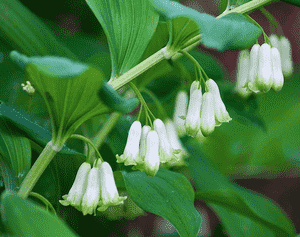
Smooth solomon's-seal (Polygonatum biflorum)
Also known as: Great solomon's seal
Smooth solomon's-seal (Polygonatum biflorum) features circular scars on its underground stem, or rhizome, reminiscent of ancient Hebrew script, which inspired its name in honor of King Solomon. In the spring, it blooms with small, white, bell-shaped flowers, followed by blue-purple berries that are toxic to humans.
In This Article
Attributes of Smooth solomon's-seal
Lifespan
Perennial
Plant Type
Herb
Plant Height
1.2 m to 1.5 m
Spread
60 cm
Leaf Color
Green
Flower Size
4 mm to 7 mm
Flower Color
White Green
Images of Smooth solomon's-seal
Quickly Identify Smooth solomon's-seal
1
Arching stems up to 3 feet (90 cm) long
2
Distinctive lanceolate leaves, glossy upper surface
3
Bell-shaped cream flowers with greenish-white tepals
4
Bluish-black berries, twinned with smooth texture
5
Smooth, unbranched stem reaching 1-5 feet (30-150 cm)
Scientific Classification of Smooth solomon's-seal
Phylum
Vascular plants
Class
Monocotyledons
Order
Asparagales
Family
Asparagus
Genus
Solomon's seal
Species
Smooth solomon's-seal
Planting and Growing of Smooth solomon's-seal
Care Difficulty
Easy
Watering Schedule
Every 2 days
Sunlight Requirements
Partial sun
Sunshine Duration
4-8 hours
Ideal Temperature
60-75℉
Soil Type
Potting Mix, Peat Mix
Soil pH
5-7.5
Fertilizer Type
Balanced
Pruning Season
Spring, Summer
Pruning Area
Branches, Leaves
Pruning Frequency
2 times a year
Repotting Season
Spring
Pot Type
Plastic, Ceramic
 How to Water Smooth solomon's-seal?
Polygonatum biflorum thrives with a moderate amount of water. Ensuring that the soil is consistently moist but not waterlogged is crucial. Water until it begins to drain from the bottom of the pot or until the soil is moist to the touch about an inch deep. This helps in maintaining the balanced moisture level the plant needs for optimal growth.
What are the symptoms of an underwatered Smooth solomon's-seal?
›
What should I do if my Smooth solomon's-seal is not getting enough water?
›
What are the symptoms of an overwatered Smooth solomon's-seal?
›
How to save an overwatered Smooth solomon's-seal?
›
 What Are the Sunlight Requirements for Smooth solomon's-seal?
Partial sun, full shade conditions are ideal, ensuring Polygonatum biflorum experiences enough sunlight to encourage healthy growth and vibrant leaves without the risk of sun damage.
More About Sunlight Requirements Techniques→
How much light is best?
›
What solutions ensure ideal lighting?
›
What are the benefits of ideal lighting?
›
 What Is the Ideal Temperature Range for Smooth solomon's-seal?
Polygonatum biflorum thrives best in an environment where the temperature ranges from 60°F to 75°F. This temperature range closely mimics the plant's natural habitat, ensuring optimal growth and development.
 What Soil is Best for Smooth solomon's-seal?
Polygonatum biflorum thrives in well-draining soil. This type of soil prevents water from accumulating around the roots, reducing the risk of rot and other moisture-related issues, thereby ensuring healthy growth. While well-draining, the soil must retain adequate moisture to support the plant's hydration needs. This balance is crucial, as overly dry conditions can hinder growth and lead to wilting. Rich in organic matter, the soil provides essential nutrients vital for robust growth and blossoming. Nutrient-rich soils enhance the plant's resilience against diseases and support vibrant foliage.
 How to Fertilize Smooth solomon's-seal?
Polygonatum biflorum typically requires a balanced 10-10-10 fertilizer. Use about half the recommended dose on the package to avoid nutrient burn, especially during the growth season. This ensures the plant receives adequate nourishment without being overwhelmed by excess nutrients.
 How to Prune Smooth solomon's-seal?
Identify and remove any dead or damaged stems by cutting them back to the base of the plant. This encourages healthier growth and prevents the development of diseases that could harm the plant. Shape the plant by carefully trimming back overgrown areas to encourage a more balanced form. Be sure to make cuts just above a node to promote new growth.
More About Pruning Techniques→
 How to Propagate Smooth solomon's-seal plant?
1
Collect seeds in early autumn as the plant's berries mature. Clean the seeds by removing pulp material and dry them well for storage before planting.
2
Use well-draining soil composed of peat moss and perlite. Ensure the soil is moist but not waterlogged before planting seeds or divisions.
3
Carefully divide the rhizomes with a clean, sharp knife and plant them into prepared soil. Cover with soil, water thoroughly and mulch to retain moisture.
 How to Repot Smooth solomon's-seal plant?
1
Polygonatum biflorum, commonly known as Solomon's Seal, should be repotted when you notice its roots crowding the pot or growing out of the drainage holes. Early signs such as reduced growth rate, water not absorbing into the soil as usual, or the plant becoming top-heavy are strong indicators that it’s time for a change. This often aligns with the spring planting season, when the plant has maximum energy to adjust to new surroundings.
2
Select a pot that is just slightly larger than the current one; typically, an increase of 1-2 inches in diameter is sufficient. The new pot should have drainage holes to prevent waterlogging, which can lead to root rot. This size upgrade ensures enough room for root growth while minimizing the risk of excess water retention, thus promoting a healthy growth environment.
3
Opt for a rich, well-draining potting mix that includes organic matter like compost or peat moss to retain moisture but also facilitates aeration. Such soil mimics the plant's natural forest floor habitat, providing essential nutrients while preventing the roots from sitting in water, an environment in which Solomon's Seal thrives.
Toxicity
ingestion
WARNING
The judgment on toxicity and danger is for reference only. We DO NOT GUARANTEE any accuracy of such judgment. Therefore, you SHALL NOT rely on such judgment. It is IMPORTANT TO SEEK PROFESSIONAL ADVICE in advance when necessary.
Learn More About Smooth solomon's-seal Diseases
Anthracnose
Bacterial Leaf Spot
Bacterial Soft Rot
Crown Gall
Cyst Nematode
Damping-off
Downy Mildew
Drought Stress
Fusarium Wilt
Gray Mold
Leaf Spot
Mosaic
Nutrient Deficiency
Nutrient Toxicity
Powdery Mildew
Root Rot
Root-knot Nematode
Rusts
Sooty Mold
Spider Mites
Temperature Stress
Thrips Damage
White Mold



