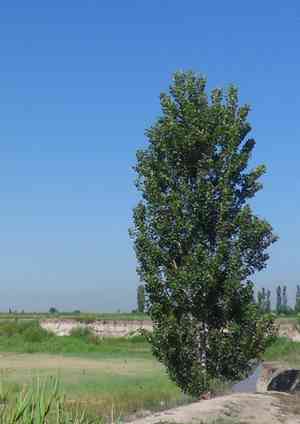
White poplar (Populus alba)
Also known as: Abele
The white poplar (*Populus alba*), also known as the silver poplar or silverleaf poplar, is native to Morocco and Central Europe. It thrives in moist soils within temperate regions. Its wood is favored for carving, making it a popular choice for sculptures in both China and Europe.
In This Article
Attributes of White poplar
Lifespan
Perennial
Plant Type
Tree
Plant Height
15 m to 30 m
Spread
15 m to 24 m
Leaf Color
Green White Yellow
Flower Size
3 cm to 6 cm
Flower Color
Green Red
Images of White poplar
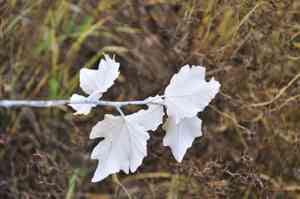
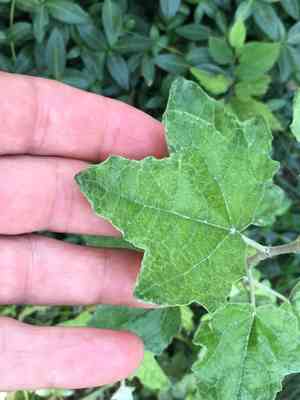
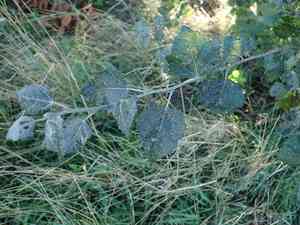
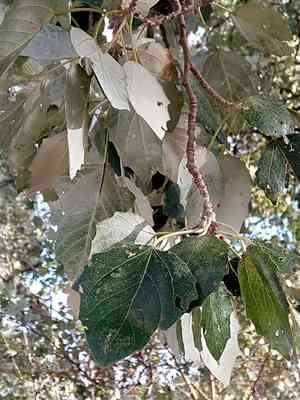
Quickly Identify White poplar
1
Stark white bark with deep furrows and ridges, featuring distinctive white patches.
2
Leaves are glossy green with a silvery-white underside, lobed, and 2-4 inches (5-10 cm) long.
3
Male flowers dangle in catkins, up to 2 inches (5 cm) long, lacking petals.
4
Fruit capsules split open, containing small seeds with cottony tufts for wind dispersal.
5
Trunk has thick, pale grey bark turning deeply furrowed with age, reaching 3 feet (90 cm) in diameter.
Scientific Classification of White poplar
Phylum
Vascular plants
Class
Dicotyledons
Order
Nances, spurges, willows and allies
Family
Willow
Genus
Populus
Species
White poplar
Planting and Growing of White poplar
Care Difficulty
Easy
Watering Schedule
Every 3 days
Sunlight Requirements
Full sun
Sunshine Duration
4-6 hours
Ideal Temperature
50-77℉
Soil Type
Potting Mix, Peat Mix
Soil pH
6.5-7.5
Fertilizer Type
Balanced
Pruning Season
Spring, Summer
Pruning Area
Branches, Leaves
Pruning Frequency
2 times a year
Repotting Season
Spring
Pot Type
Plastic, Ceramic
 How to Water White poplar?
Populus alba prefers a generous soak rather than frequent light watering. Aim to water the soil thoroughly until it feels moist to the touch but not soggy. Each watering session should ideally see around 1000 ml of water distributed evenly across the root area. This ensures the roots receive adequate moisture without becoming waterlogged, which is crucial for their health.
More About Watering Techniques→
What are the symptoms of an underwatered White poplar?
›
What should I do if my White poplar is not getting enough water?
›
What are the symptoms of an overwatered White poplar?
›
How to save an overwatered White poplar?
›
 What Are the Sunlight Requirements for White poplar?
Populus alba ideally thrives with full to partial sun, encouraging robust growth and vibrant foliage. Adequate sunlight stimulates photosynthesis, contributing to the plant's overall health and resilience against diseases.
More About Sunlight Requirements Techniques→
What is the ideal sunlight exposure for Populus alba?
›
How can Populus alba obtain its ideal sunlight?
›
What are the benefits of ideal sunlight conditions for Populus alba?
›
 What Is the Ideal Temperature Range for White poplar?
The Populus alba thrives best in moderately cool to warm conditions. Ideally, they prefer temperatures ranging from 50°F to 77°F. Within this range, the physiological processes such as photosynthesis and nutrient uptake occur efficiently, promoting healthy growth and development. Maintaining temperatures within this ideal range ensures that the plant's metabolic activities proceed without stress, allowing it to flourish in a stable environment.
 What Soil is Best for White poplar?
Populus alba prefers well-drained soils which means that water should not pool around the roots. Good drainage prevents root rot and other water-related issues while promoting robust root development. Though Populus alba prefers well-drained soil, it also requires moisture retention to sustain growth. A balance allows the tree to access water even during dry spells, ensuring steady growth and leaf health. Soil rich in organic matter provides essential nutrients for the vigorous growth of Populus alba. The presence of nutrients supports foliage development, boosts resistance to diseases, and enhances overall vitality.
More About Soil→
 How to Fertilize White poplar?
For Populus alba, the recommended fertilizer amount is tailored to its requirements. Typically, use 100 grams per square meter for granular fertilizers and dissolve liquid fertilizers according to the manufacturer's instructions, ensuring a balanced nutrient supply without causing stress to the plant.
More About Fertilizing Techniques→
 How to Prune White poplar?
Begin by removing any branches that are clearly dead or showing signs of disease. Such branches can harm the overall health of the tree and should be removed promptly. Focus on thinning the canopy to improve wind passage and light infiltration. This involves trimming back branches that are crossing, rubbing, or growing inward toward the trunk. Trim the tree to maintain its natural shape. This involves cutting back longer branches and maintaining a balanced form. Ensure the central leader remains dominant for structural integrity.
More About Pruning Techniques→
 How to Propagate White poplar plant?
1
Collect seeds from mature Populus alba trees. Clean them to remove any pulp and sow them in seed trays with a light coating of soil. Keep the trays in a sunny spot and water regularly.
2
Choose healthy branches of Populus alba that are between 10-15 cm long. Ensure the cuttings have at least two nodes, and use sharp shears to make a clean cut just below a node.
3
For root cutting propagation, select thick, healthy roots in late winter. Cut sections that are 10 cm long, ensuring they are mature and free of disease or pest infestation.
 How to Repot White poplar plant?
1
Populus alba shows several signals indicating the need for repotting. Look for roots protruding from the drainage holes, or a noticeable slowing of growth. Spring and early summer are ideal, as new growth accelerates, allowing the plant to quickly establish in its new pot.
2
Select a pot 2-4 inches larger in diameter than the current one, equipped with adequate drainage holes. This size allows for enough room for root expansion, reducing the risk of root bound while also preventing excessive soil moisture retention which could lead to root rot.
3
Opt for a well-draining loamy soil that retains enough moisture without becoming waterlogged. The right balance ameliorates the risk of root rot while still providing essential nutrients, enhancing the plant’s growth and robustness.



