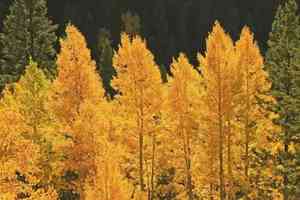
Quaking aspen (Populus tremuloides)
Also known as: White poplar, Trembling poplar
The Quaking Aspen (Populus tremuloides) is a tree indigenous to North America, often known as the trembling aspen or golden aspen. This species is recognized as the state tree of Utah. In natural habitats, the Quaking Aspen serves as a food source and attraction for various wildlife, including quail, beavers, rabbits, deer, sheep, and goats.
In This Article
Attributes of Quaking aspen
Lifespan
Perennial
Plant Type
Tree
Plant Height
20 m to 25 m
Spread
3 m to 9 m
Leaf Color
Green Yellow Gold Bronze
Flower Size
1.3 mm to 1.8 mm
Flower Color
Green Yellow Blue Red Gray Silver
Images of Quaking aspen

Quickly Identify Quaking aspen
1
Heart-shaped leaves that 'quake' in the breeze, 1.5-3 inches (4-8 cm) long.
2
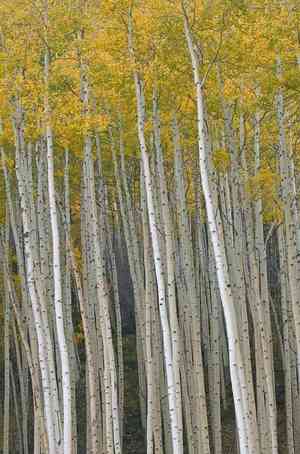
Distinctive silvery white-green bark maturing into deep furrows, up to 1/2 inch (1.3 cm) thick.
3
Silver catkins with tiny, hairy flowers, 1.5-3 inches (4-7.5 cm) long, wind-pollinated.
4
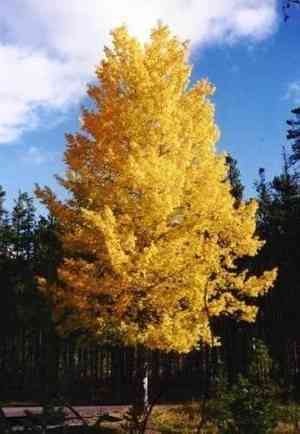
Dense foliage forming a narrow, rounded crown at maturity, reaching 20-50 feet (6-15 meters).
5
Male and female flowers on separate trees, male catkins thicker than female catkins.
Scientific Classification of Quaking aspen
Phylum
Vascular plants
Class
Dicotyledons
Order
Malpighiales
Family
Willow
Genus
Populus
Species
Quaking aspen
Planting and Growing of Quaking aspen
Care Difficulty
Easy
Watering Schedule
Every 3 days
Sunlight Requirements
Full sun
Sunshine Duration
6-8 hours
Ideal Temperature
59-77℉
Soil Type
Potting Mix, Peat Mix
Soil pH
6.5-7.5
Fertilizer Type
Balanced
Pruning Season
Spring, Summer
Pruning Area
Branches, Leaves
Pruning Frequency
2 times a year
Repotting Season
Spring
Pot Type
Plastic, Ceramic
 How to Water Quaking aspen?
For Populus tremuloides, each watering session should provide about 2000 ml of water. The amount aims to ensure the soil is moist but not waterlogged, which could lead to root rot. Always check several inches under the soil; it should be damp to the touch slightly. This level of watering encourages deep root growth critical to the tree's health.
More About Watering Techniques→
What are the symptoms of an underwatered Quaking aspen?
›
What should I do if my Quaking aspen is not getting enough water?
›
What are the symptoms of an overwatered Quaking aspen?
›
How to save an overwatered Quaking aspen?
›
 What Are the Sunlight Requirements for Quaking aspen?
Populus tremuloides flourishes under partial to full sun, accommodating six to twelve hours of light daily. Such exposure supports vibrant leaf pigmentation, strong structural formation, and robust health, enhancing aesthetic and ecological functionality within its habitat.
More About Sunlight Requirements Techniques→
Question: What is the ideal lighting condition for Populus tremuloides?
›
Question: How can we ensure Populus tremuloides receives adequate sunlight indoors?
›
Question: What measures can be taken to adjust light exposure for different seasons?
›
 What Is the Ideal Temperature Range for Quaking aspen?
The ideal temperature range for Populus tremuloides, also known as quaking aspen, is between 59°F and 77°F. Within this temperature range, the tree can photosynthesize efficiently, maintain its metabolic functions, and grow at an optimal rate. This range ensures that the plant is neither exposed to cold stress nor heat stress, providing the best conditions for leaf expansion, wood formation, and overall health.
 What Soil is Best for Quaking aspen?
Populus tremuloides prefers well-drained soils that allow excess water to escape quickly, averting root rot and ensuring nutrient availability. Efficient drainage mimics their natural habitat conditions, providing healthier growth and taller, stronger trees. This species thrives in soils enriched with organic matter, which provides essential nutrients for robust growth and resilience. Nutrient-rich loam ensures that Populus tremuloides reach its full growth potential and resist environmental stresses. A delicate balance of moisture is vital for aspen trees. The soil should retain enough water to keep roots hydrated but not overly wet. Perfect moisture balance prevents drought stress and helps maintain consistent growth rates.
More About Soil→
 How to Fertilize Quaking aspen?
When fertilizing Populus tremuloides, it’s crucial to use the right amount. Generally, for liquid fertilizers, apply a low concentration mix, about a 10-10-10 NPK ratio, diluted to half the recommended strength to avoid over-fertilization. For solid fertilizers, use 1 pound (approximately 0.45 kg) per inch of trunk diameter for larger, established trees, evenly distributed around the root zone.
More About Fertilizing Techniques→
 How to Prune Quaking aspen?
Begin by identifying and marking dead, dying, or diseased branches. Also, look for branches growing inward or rubbing against each other, as these can cause wounds. When cutting, make sure to cut at a slight angle just above a bud that faces outward. This encourages outward-facing growth, promoting better airflow and sun exposure. While pruning, keep the tree's natural shape in mind. Ensure the crown is balanced by removing branches evenly around the tree, focusing on maintaining an open structure for sunlight penetration. Avoid cutting branches too close to the trunk to prevent damage to the collar, which is crucial for the tree's healing process. This ensures the tree can seal the cut effectively and stay healthy.
More About Pruning Techniques→
 How to Propagate Quaking aspen plant?
1
Gather seeds during the right season, ensuring they are fully ripe. Clean the seeds thoroughly, removing any debris or foreign material. This step ensures better germination rates.
2
Select healthy roots and cut them into sections using sterilized pruning shears. Each section should be 2-4 inches long, with each having multiple growth nodes.
3
Plant seeds or root cuttings in a suitable growth medium, maintaining adequate moisture and ventilation. Ensuring proper care during the initial stages is crucial for successful propagation.
 How to Repot Quaking aspen plant?
1
The best time to repot Populus tremuloides is when you notice that its roots are starting to circle the pot or protrude from the drainage holes. Additionally, if the growth of the plant seems stunted or the potting soil isn't holding moisture well, these could also be signals that it's time for a larger pot.
2
Select a pot that is about 2-4 inches larger in diameter than the current one to provide room for growth. Ensure it has adequate drainage holes to prevent soil from becoming waterlogged. A pot that is too large may lead to excess moisture and root rot.
3
Opt for a well-draining loamy soil mixed with some compost for nutrient enrichment. Loamy soil helps in water retention without causing waterlogging, fostering healthy root growth. The compost provides the necessary nutrients for robust plant health.



