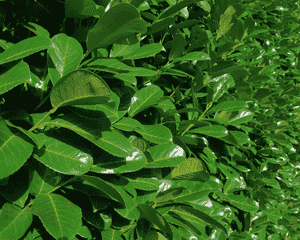
Cherry laurel(Prunus laurocerasus)

Cherry laurel (Prunus laurocerasus)

Also known as: Versailles Laurel, Common laurel

Cherry laurel (Prunus laurocerasus) is an evergreen shrub or small tree often used in landscaping for its aesthetic appeal. It features broad, glossy, dark green leaves that have a leathery feel. The plant produces fragrant white flowers in the spring, followed by small, black or dark purple berries in late summer.

### Characteristics:
- **Foliage**: Evergreen with shiny, dark green, and leathery leaves.
- **Flowers**: White, fragrant, and clustered, appearing in spring.
- **Berries**: Dark purple to black, forming in late summer.
- **Growth Habit**: Fast-growing and dense, suitable for hedges.

### Potential Dangers:
- **Toxicity**: Contains cyanogenic glycosides in its leaves and seeds, which can release cyanide when consumed, posing a poisoning risk.
- **Allergic Reactions**: Contact with the plant may cause skin irritation or allergic reactions in sensitive individuals.
- **Invasiveness**: Can become invasive in some regions, outcompeting native species and disrupting ecosystems.

### Summary:
Cherry laurel is a visually appealing and fast-growing plant ideal for hedging but should be handled with care due to its toxic components and potential to become invasive.

Attributes of Cherry laurel

Lifespan
Perennial
Plant Type
Shrub
Plant Height
3 to 12 m
Spread
2 m to 10 m
Leaf Color
Green
Flower Size
1 cm
Flower Color
White Cream

PlantJoy - Identify plants with a snap

Identify and diagnose plants, get toxicity alerts, and explore safety guides for all types of fungi.

Try for Free

Images of Cherry laurel

Cherry laurel(Prunus laurocerasus)

Quickly Identify Cherry laurel

1
Coriaceous leaves emit cherry fragrance when crushed.
2
Distinctive purple-black, globose-ovoid drupe fruits under 1 inch (2.54 cm).
3
Axillary racemes with white, fragrant flowers boasting 20 stamens.
4
Upright, evergreen shrub with glossy, elliptic-oblong leaves up to 10 inches (25 cm) wide.
5
Woody stem with pale to brown pith, emitting cherry scent when bruised.

Scientific Classification of Cherry laurel

Phylum
Vascular plants
Class
Dicotyledons
Order
Rosales
Family
Rose
Genus
Prunus
Species
Cherry laurel

Planting and Growing of Cherry laurel

Care Difficulty
Easy
Watering Schedule
Every 2 days
Sunlight Requirements
Partial sun
Sunshine Duration
6-10 hours
Ideal Temperature
60-75℉
Soil Type
Potting Mix, Peat Mix
Soil pH
6.5-7.5
Fertilizer Type
Balanced
Pruning Season
Spring, Summer
Pruning Area
Branches, Leaves
Pruning Frequency
2 times a year
Repotting Season
Spring
Pot Type
Plastic, Ceramic

water icon How to Water Cherry laurel?

Cherry laurel needs to be watered thoroughly, allowing the soil to absorb moisture fully. This means watering until water drains out of the bottom of the pot. On average, aim for approximately 1000 ml per watering session, ensuring all layers of soil receive sufficient moisture.
What are the symptoms of an underwatered Cherry laurel?
What should I do if my Cherry laurel is not getting enough water?
What are the symptoms of an overwatered Cherry laurel?
How to save an overwatered Cherry laurel?
More About Watering Techniques

sunlight icon What Are the Sunlight Requirements for Cherry laurel?

Sunlight Requirements: Partial sun, Full shade
Duration of light: 3 to 6 hours
The ideal light range for Prunus laurocerasus includes partial sun to full shade, benefiting its overall growth and foliage development. Proper lighting ensures consistent growth, lush leaves, and prompts flowering, maintaining plant vigor.
What is the ideal lighting condition?
How can you achieve ideal lighting for this plant?
What are the benefits of providing ideal lighting?
More About Sunlight Requirements Techniques

temperature icon What Is the Ideal Temperature Range for Cherry laurel?

Ideal Temperature: 60 ~ 75℉
For optimal growth, Prunus laurocerasus thrives best between 60°F and 75°F. This range provides a balanced environment that supports photosynthesis, nutrient absorption, and humidity levels, promoting vibrant foliage and flower production.

soil icon What Soil is Best for Cherry laurel?

Soil type: Loam, Sandy loam, Clay soil
Soil PH: 6.5 ~ 7.5
For Prunus laurocerasus, well-drained soil is essential as it prevents root rot by allowing excess moisture to escape. This condition ensures the roots have access to oxygen and reduces pathogen proliferation, contributing to the overall health and robustness of the plant. This plant thrives in nutrient-rich soil, which provides the essential elements for optimal growth and foliage production. Regularly amending the soil with organic matter helps maintain fertility, ensuring the plant remains lush and vibrant. Prunus laurocerasus requires soil that retains moderate moisture without becoming waterlogged. This balance is crucial to maintain hydration for the plant while preventing water stress, promoting steady and healthy development. More About Soil

fertilize icon How to Fertilize Cherry laurel?

Fertilizer type: Balanced
When fertilizing Prunus laurocerasus, it's important to use a balanced fertilizer with an NPK ratio of around 10-10-10 or 20-20-20. For liquid fertilizers, dilute as per the package instructions, typically using 1 tablespoon per gallon of water. For slow-release fertilizers, apply approximately 1/2 pound per plant annually. More About Fertilizing Techniques

prune icon How to Prune Cherry laurel?

Pruning Time: Spring, Summer
Begin by removing any dead, damaged, or diseased branches. These are usually at odd angles or have discolored leaves. Use sharp shears to cut them back to healthy wood, which will help improve the plant's overall health. To increase airflow and sunlight penetration, thin out the interior branches. Focus on branches that cross or rub against each other, as this can lead to wounds that invite disease. Cut these back to their base, promoting better structure and vigour. For a well-shaped hedge or shrub, prune the outer stems to your desired shape. Cut just above a leaf node at a slight angle to encourage new growth. This not only encourages a lush appearance but also reinforces the plant's natural shape. More About Pruning Techniques

propagate icon How to Propagate Cherry laurel plant?

Propagate Time: Spring, Late spring
1
Select healthy seeds from ripe fruits and soak them in water for 24 hours to soften the seed coat, which helps enhance germination rates in Prunus laurocerasus.
2
Choose semi-hardwood cuttings in late spring. Each cutting should be 4-6 inches long, and leaves on the lower half should be stripped off to prepare for planting.
3
Plant seeds or cuttings in well-draining soil. Water lightly but consistently to maintain soil moisture without waterlogging, facilitating root growth.
More About Propagating Techniques

repot icon How to Repot Cherry laurel plant?

Repotting frequency: Every couple of years
1
Repot Prunus laurocerasus when you notice roots emerging from the drainage holes or if growth slows significantly. Early spring or autumn is the ideal time, ensuring the plant is not in the height of its growth season. Choose a calm weather day to minimize stress.
2
Select a pot that is 2-4 inches larger in diameter than the current one to give the roots space to expand. A pot with adequate drainage is crucial to prevent waterlogging, which can cause root rot. This ensures your plant thrives by facilitating proper aeration.
3
Opt for a well-draining potting mix, ideally with organic material like peat or compost. Good drainage and nutrients help in root development and prevent disease. This provides a stable foundation for growth and supports the plant’s nutrient requirements adequately.

PlantJoy - Identify plants with a snap

Find the best spots for them to optimize their health, simply using your phone.

Try for Free

Toxicity of Cherry laurel

Is Cherry laurel toxic to humans?

The cherry laurel, similar to almost all species within the *Prunus* genus, contains cyanogenic compounds present in every portion of the plant, including its seeds, with the exception of its fruit. When an individual consumes the seeds, leaves, or any other section of the plant, these cyanotoxins will undergo a transformation into cyanide gas upon contact with stomach acid. This gas penetrates through the mucous membranes, resulting in poisoning. The symptoms advance from agitation and dilated pupils to weakness, lack of coordination, muscle spasms, difficulties with movement or speech, reduced respiration and heartbeat, and ultimately culminate in death.

Identify toxic plants for your safety

Learn which plants are harmful to you and your pets, and make informed choices for a safer home!

Try for Free
WARNING
The judgment on toxicity and danger is for reference only. We DO NOT GUARANTEE any accuracy of such judgment. Therefore, you SHALL NOT rely on such judgment. It is IMPORTANT TO SEEK PROFESSIONAL ADVICE in advance when necessary.
More About Toxic Techniques

