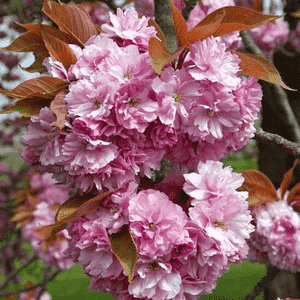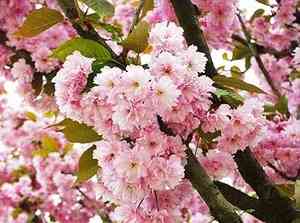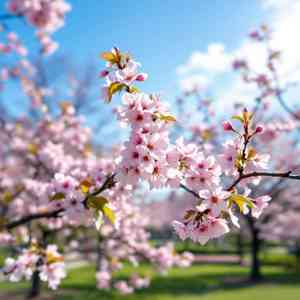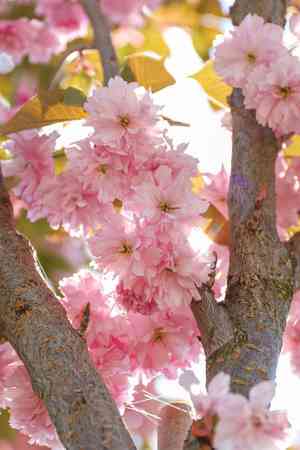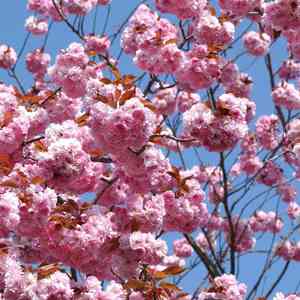
Japanese cherry(Prunus serrulata)

Japanese cherry (Prunus serrulata)

Also known as: Japanese flowering cherry, Hill cherry, Sakura

The Japanese tradition known as Hanami involves people enjoying picnics and outdoor gatherings beneath cherry trees. The stunning spring colors of the Prunus serrulata, or cherry blossom tree, draw many admirers. These trees display their beautiful pink and white blooms in early to mid-spring, and some varieties even have a delicate fragrance.

Attributes of Japanese cherry

Lifespan
Perennial
Plant Type
Tree
Plant Height
4 m to 16 m
Spread
4.5 m to 6 m
Leaf Color
Green
Flower Size
2 cm to 3 cm
Flower Color
White Pink

PlantJoy - Identify plants with a snap

Identify and diagnose plants, get toxicity alerts, and explore safety guides for all types of fungi.

Try for Free

Images of Japanese cherry

Japanese cherry(Prunus serrulata)

Quickly Identify Japanese cherry

1
Smooth reddish-brown bark with distinct horizontal lenticels.
2
Alternate lanceolate to ovate leaves with serrated edges.
3
Clusters of double white flowers in trios or quintets.
4
Small round black drupes in late summer.
5
Distinctive red-brown twigs, smooth with large buds.

Scientific Classification of Japanese cherry

Phylum
Vascular plants
Class
Dicotyledons
Order
Roses, elms, figs, and allies
Family
Rose
Genus
Prunus
Species
Japanese cherry

Planting and Growing of Japanese cherry

Care Difficulty
Moderate
Watering Schedule
Every 8 days
Sunlight Requirements
Full sun
Sunshine Duration
4-8 hours
Ideal Temperature
60-75℉
Soil Type
Potting Mix, Peat Mix
Soil pH
6.5-7.5
Fertilizer Type
Balanced
Pruning Season
Spring, Summer
Pruning Area
Branches, Leaves
Pruning Frequency
Once a year
Repotting Season
Spring
Pot Type
Plastic, Ceramic

water icon How to Water Japanese cherry?

For Prunus serrulata, water the soil thoroughly until it is evenly moist but not soggy. Use about 500 ml per watering to ensure the roots are properly hydrated while allowing excess water to drain away to prevent root rot.
What are the symptoms of an underwatered Japanese cherry?
What should I do if my Japanese cherry is not getting enough water?
What are the symptoms of an overwatered Japanese cherry?
How to save an overwatered Japanese cherry?
More About Watering Techniques

sunlight icon What Are the Sunlight Requirements for Japanese cherry?

Sunlight Requirements: Full sun, Partial sun
Duration of light: 6 to 8 hours
Prunus serrulata ideally needs full sun to partial sun. This range allows photosynthesis and energy accumulation, crucial for its flowering and health.
What is the best lighting condition for Prunus serrulata?
How can you provide ideal lighting for this plant?
What benefits does ideal lighting offer to Prunus serrulata?
More About Sunlight Requirements Techniques

temperature icon What Is the Ideal Temperature Range for Japanese cherry?

Ideal Temperature: 60 ~ 75℉
Prunus serrulata thrives best in environments where the temperature remains between 60°F and 75°F. These conditions mirror its native climates in East Asia, supporting healthy growth and blooming.

soil icon What Soil is Best for Japanese cherry?

Soil type: Loam, Sandy loam
Soil PH: 6.5 ~ 7.5
Prunus serrulata thrives in well-drained soil, which prevents root rot and other water-related issues. Ensuring proper drainage allows the roots to access oxygen, crucial for the plant's health and promotes vibrant blooming. This cherry blossom prefers a nutrient-rich soil with a good mix of organic matter. The presence of nutrients, such as nitrogen and phosphorus, supports robust growth and enhances the tree's overall vigor and bloom quality. Maintaining consistent moisture levels in the soil is essential for Prunus serrulata. The consistent moisture ensures that the tree does not undergo stress from drought, which can lead to leaf drop and reduced flowering. More About Soil

fertilize icon How to Fertilize Japanese cherry?

Fertilizer type: Balanced
For Prunus serrulata, it's essential to apply a balanced fertilizer that may be typically represented by an N-P-K ratio of 10-10-10. This ensures that the flowering and leaf growth are adequately supported. Use about 1-2 pounds of fertilizer for every 100 square feet of garden space, depending on the specific requirements of your soil. This measurement provides a good foundation but could be adjusted after conducting a soil test. More About Fertilizing Techniques

prune icon How to Prune Japanese cherry?

Pruning Time: Spring, Summer
Begin your pruning by identifying any dead or diseased branches. These need to be removed promptly to promote healthier growth and prevent the spread of any potential diseases. Cut back to the healthy, living wood. Prune to improve air circulation within the canopy. This helps reduce the risk of fungal infections and other diseases. Remove any branches that are crossing or growing inward towards the center of the tree. The best time to prune is in early spring before the first buds appear. This timing helps the tree heal quickly and directs energy into new growth. Avoid late summer pruning as it can stimulate new growth that is susceptible to winter damage. More About Pruning Techniques

propagate icon How to Propagate Japanese cherry plant?

Propagate Time: Early spring,Late spring
1
Collect seeds from mature Prunus serrulata fruits. Clean and dry them before storing in a cool, dry place to enhance germination rates.
2
Select healthy, semi-woody shoots and use pruning shears to cut 6-8 inch sections. Remove leaves from the lower half to prepare for rooting.
3
For grafting, use the 'whip and tongue' method for best results. Secure the graft with grafting tape to maintain moisture and alignment.
More About Propagating Techniques

repot icon How to Repot Japanese cherry plant?

Repotting frequency: Every 2-3 years
1
Repot Prunus serrulata when you notice roots protruding from drainage holes, indicating root bound. Another sign is sluggish growth despite optimal care. Spring or autumn is ideal as stress on the plant is minimal, ensuring quicker acclimatization.
2
Select a pot 2-3 inches larger in diameter than the current one, with adequate drainage holes. A slightly larger pot prevents excessive soil moisture that could cause root rot. The material should be sturdy enough to support the plant’s growth and weight.
3
Opt for a well-draining sandy loam mixed soil, providing aeration and retaining moisture without water logging. This type of soil promotes healthy root development and nutrient uptake, ensuring vibrant blooms and foliage.

PlantJoy - Identify plants with a snap

Find the best spots for them to optimize their health, simply using your phone.

Try for Free

Toxicity of Japanese cherry

Is Japanese cherry toxic to humans?

Similar to other species within the Prunus genus, the Japanese cherry possesses toxic characteristics that can be detrimental to human health if consumed. The effects can be quite serious, with the potential to result in death. The leaves, seeds, and twigs of the plant are the toxic components, all of which harbor poisonous cyanogenic compounds. Symptoms of poisoning may manifest as weakness, breathlessness, dilated pupils, increased heart rate, and in severe instances, loss of consciousness and mortality. There is a possibility that some individuals may inadvertently ingest the seeds while enjoying the widely favored fruits produced by this species.

Identify toxic plants for your safety

Learn which plants are harmful to you and your pets, and make informed choices for a safer home!

Try for Free
WARNING
The judgment on toxicity and danger is for reference only. We DO NOT GUARANTEE any accuracy of such judgment. Therefore, you SHALL NOT rely on such judgment. It is IMPORTANT TO SEEK PROFESSIONAL ADVICE in advance when necessary.
More About Toxic Techniques