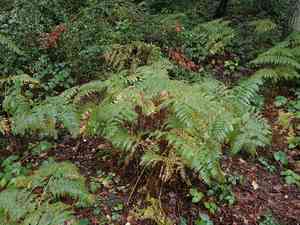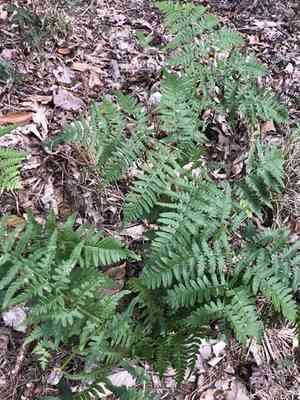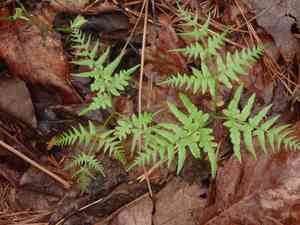
Western brackenfern(Pteridium aquilinum)

Western brackenfern (Pteridium aquilinum)

Also known as: Eagle fern, Hairy brackenfern

The Bracken Fern (Pteridium aquilinum), also called Hog-brake or Eagle Fern, is a widespread fern species. In North America, it typically emerges in the spring. Each frond has the potential to produce up to 300,000 spores annually, although spore production decreases when the plant is grown in shaded conditions.

Attributes of Western brackenfern

Lifespan
Perennial
Plant Type
Fern
Plant Height
30 cm to 1 m
Spread
90 cm
Leaf Color
Green
Flower Size
N/A
Flower Color
N/A

PlantJoy - Identify plants with a snap

Identify and diagnose plants, get toxicity alerts, and explore safety guides for all types of fungi.

Try for Free

Images of Western brackenfern

Western brackenfern(Pteridium aquilinum)

Quickly Identify Western brackenfern

1
Fronds are feathery and triangular, reaching 2-3 feet (60-90 cm) in length.
2
Each frond divided into small, sub-triangular segments, creating a textured appearance.
3
Fronds rise from long-creeping rhizomes, giving the plant extensive spread.
4
Adaptable to various light conditions from shade to full sun.
5
Prefers acidic, sandy substrates in moist to somewhat dry environments.

Scientific Classification of Western brackenfern

Phylum
Vascular plants
Class
Ferns
Order
Polypodiales
Family
Bracken fern
Genus
Brackens
Species
Western brackenfern

Planting and Growing of Western brackenfern

Care Difficulty
Easy
Watering Schedule
Every 2 days
Sunlight Requirements
Full shade
Sunshine Duration
6-12 hours
Ideal Temperature
60-75℉
Soil Type
Potting Mix, Peat Mix
Soil pH
4-6.5
Fertilizer Type
Balanced
Pruning Season
Spring, Summer
Pruning Area
Branches, Leaves
Pruning Frequency
2 times a year
Repotting Season
Spring
Pot Type
Plastic, Ceramic

water icon How to Water Western brackenfern?

For Pteridium aquilinum, it's best to water until the soil is thoroughly wet. Ensure that water reaches the roots without leaving pooled water at the surface to prevent rot.
What are the symptoms of an underwatered Western brackenfern?
What should I do if my Western brackenfern is not getting enough water?
What are the symptoms of an overwatered Western brackenfern?
How to save an overwatered Western brackenfern?

sunlight icon What Are the Sunlight Requirements for Western brackenfern?

Sunlight Requirements: Full shade, Partial sun
Duration of light: Two to six hours
Pteridium aquilinum prefers partial shade and occasional full shade, thriving under filtered light. This condition aids in maintaining the lush quality of foliage and prevents damage from excessive UV exposure.
Identify Suitable Environment
Monitor Sunlight Exposure
Adjust Seasons Adaptation
More About Sunlight Requirements Techniques

temperature icon What Is the Ideal Temperature Range for Western brackenfern?

Ideal Temperature: 60 ~ 75℉
The ideal temperature range for Pteridium aquilinum is between 60°F and 75°F. In this temperature bracket, the plant exhibits robust growth, with healthy fronds and vivid coloration. An environment within this range provides sufficient warmth to promote photosynthesis while preventing heat stress, ensuring that the plant maintains its physiological balance. Proper air circulation and moisture within this temperature spectrum are essential to create optimal conditions for growth.

soil icon What Soil is Best for Western brackenfern?

Soil type: Sandy soil, Loam, Acidic soil
Soil PH: 4 ~ 6.5
Pteridium aquilinum thrives in soil that retains moisture but doesn't become waterlogged. Ensuring the soil is well-draining yet able to keep enough moisture helps prevent the bracken from drying out during hot spells. This plant benefits from nutrient-rich soil that replenishes vital nutrients regularly. Using organic compost or well-rotted manure can enhance soil fertility, promoting vigorous growth and foliage. Pteridium aquilinum flourishes in acidic soils with a pH between 4.0 and 6.5. Maintaining the right acidity ensures optimal nutrient availability, which supports healthy development.

fertilize icon How to Fertilize Western brackenfern?

Fertilizer type: Balanced
Pteridium aquilinum requires moderate fertilization. For liquid fertilizers, use a solution diluted to half strength. Ensure that you do not exceed one teaspoon of a balanced all-purpose fertilizer mixed into a gallon of water. For slow-release fertilizers, apply a thin layer, approximately 2 to 3 tablespoons per square foot, over the soil surface.

prune icon How to Prune Western brackenfern?

Pruning Time: Summer, Autumn
Begin by assessing the plant for overgrown or damaged fronds. Cut these back to the base using sharp pruners. Focus on old, brown fronds first, which are the least productive. Dispose of these carefully to prevent any spore dispersal. After removing unhealthy fronds, focus on shaping the plant. Trim the outer edges to maintain a desired shape or size. This step ensures that the plant not only looks tidy but also allows light to penetrate to the inner sections, promoting growth. More About Pruning Techniques

propagate icon How to Propagate Western brackenfern plant?

Propagate Time: Spring, Early autumn
1
Choose mature plants with healthy rhizomes for division. It's important that these rhizomes are free from disease or damage, as they will become the new plant. Identification of healthy rhizomes ensures the best chances of successful propagation and vigorous new growth.
2
Using a sharp spade, carefully divide the rhizome sections ensuring each has at least one set of leaves and adequate roots. Avoid over-dividing as harsh cutbacks can stress the plant and reduce the propagation success.
3
Once divided, re-plant the sections at the same depth they were growing originally. Water thoroughly to help settle soil around the roots. Proper positioning and initial care like watering are crucial for the plant parts to establish in their new environment.
More About Propagating Techniques

repot icon How to Repot Western brackenfern plant?

Repotting frequency: Every 2-3 years
1
You'll know it's time to repot Pteridium aquilinum when you see roots emerging from the drainage holes or the growth becomes stunted. Typically, repotting is best done during the more active phases of its growth cycle, particularly in spring or autumn, to give the plant the best chance to acclimate and thrive.
2
Opt for a pot that's 2 inches larger in diameter than the current one. This size allows the bracken to expand without becoming cramped, promoting healthier growth. A pot with excellent drainage capabilities is crucial as it prevents root rot, a common problem if excess water cannot escape.
3
Select a loamy, well-draining soil mix to mimic the plant's natural habitat. This type of soil retains the necessary moisture while allowing excess water to drain away, reducing the risk of waterlogged roots. Incorporating organic matter further enriches the substrate, supporting robust growth.

PlantJoy - Identify plants with a snap

Find the best spots for them to optimize their health, simply using your phone.

Try for Free

Toxicity of Western brackenfern

Is Western brackenfern toxic to humans?

Western brackenfern is known to induce airborne allergic reactions as well as toxicity when consumed intentionally. Every part of this plant is toxic, yet the young shoots and fronds pose the greatest risk due to their high concentration of harmful substances. The plant releases spores that contain the chemical ptaquiloside, which has the potential to damage human DNA and contribute to the development of stomach cancers. Additionally, the leaves have been demonstrated to exhibit carcinogenic properties and possess the enzyme thiaminase, which degrades vitamin B1 before it can be properly absorbed into the body. This can lead to vitamin B1 deficiency if the plant is ingested in its raw form. Poisoning from Western brackenfern may occur if humans consume milk that has been contaminated or if its natural ptaquiloside penetrates the drinking water supply.

Is Western brackenfern toxic to cat?

Western brackenfern is categorized as a toxic plant that poses a significant risk to the health of felines, particularly if any part of it is ingested. When cats inadvertently consume portions of western brackenfern, they face the danger of poisoning since all sections of this plant harbor toxic compounds. Such exposure typically occurs when cats explore their surroundings by chewing or ingesting the plant. Following ingestion, cats may display a range of symptoms indicating physical distress. It is vital to monitor any shifts in their behavior or health and to link these changes to their potential interaction with western brackenfern. If a cat exhibits any troubling reactions, immediate veterinary attention is essential. Seeking prompt treatment at a veterinary clinic is critical for the cat's well-being and recovery.

Is Western brackenfern toxic to dog?

The western brackenfern is a plant that presents a considerable danger to dogs due to its toxic properties. Accidental ingestion of any part of this plant can lead to poisoning in dogs. Every part of the western brackenfern, including its leaves, stems, and roots, contains toxins, meaning that consuming any portion can result in negative health effects for dogs. Signs of poisoning may manifest as gastrointestinal disturbances, including vomiting and diarrhea, along with more serious symptoms such as neurological problems or even damage to blood cells. Therefore, it is essential for dog owners to ensure their pets are kept away from areas where western brackenfern is present, and to closely observe their dogs' behavior during outdoor activities. Should there be a suspicion that a dog has ingested any part of the western brackenfern, seeking immediate veterinary care is critical for timely treatment and the best possible recovery.

Identify toxic plants for your safety

Learn which plants are harmful to you and your pets, and make informed choices for a safer home!

Try for Free
WARNING
The judgment on toxicity and danger is for reference only. We DO NOT GUARANTEE any accuracy of such judgment. Therefore, you SHALL NOT rely on such judgment. It is IMPORTANT TO SEEK PROFESSIONAL ADVICE in advance when necessary.
More About Toxic Techniques