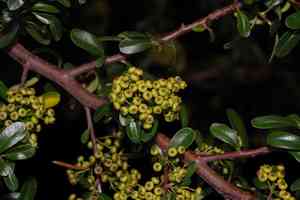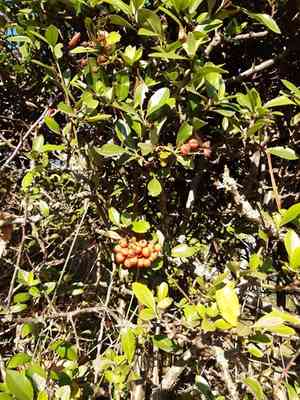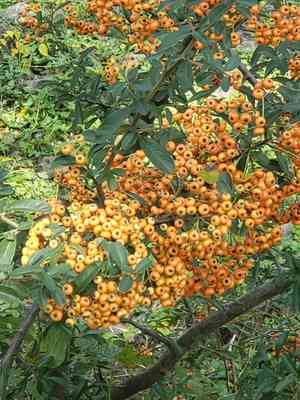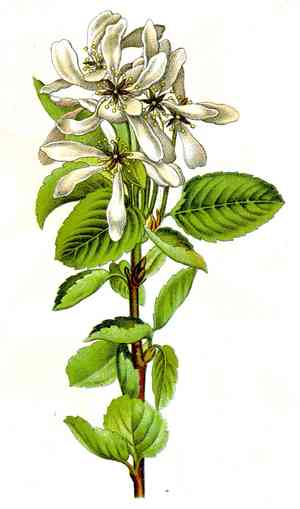
Scarlet firethorn(Pyracantha coccinea)

Scarlet firethorn (Pyracantha coccinea)

Also known as: Red firethorn

*Pyracantha coccinea*, commonly known as Scarlet Firethorn, is a semi-evergreen shrub notable for its thorny branches and dense clusters of white flowers. These flowers stand out against its glossy, dark green leaves. The shrub also produces bright red berries that are a favorite among birds. The genus name "Pyracantha" combines the Greek words "pyr," meaning "fire," and "akantha," meaning "thorn," likely highlighting the plant's sharp thorns and fiery-colored berries.

Attributes of Scarlet firethorn

Lifespan
Perennial
Plant Type
Shrub
Plant Height
2.5 m to 3 m
Spread
3.5 m
Leaf Color
Green
Flower Size
6 mm to 8 mm
Flower Color
White

PlantJoy - Identify plants with a snap

Identify and diagnose plants, get toxicity alerts, and explore safety guides for all types of fungi.

Try for Free

Images of Scarlet firethorn

Scarlet firethorn(Pyracantha coccinea)

Quickly Identify Scarlet firethorn

1
Upright growth reaching 6-18 feet (1.8-5.5 meters) with reddish-brown bark and spines.
2
Dark green, shiny leaves 1-2.5 inches (2.5-6.4 cm) long, with cuneate bases.
3
Clusters of fetid, white, 5-petaled flowers in spring, 1/3 inch (0.8 cm) wide.
4
Orange-red pomes, berry-like, tightly clustered at 1/4 inch (6 mm) diameter.
5
Distinctive smooth, glossy, reddish-brown trunk bark with scattered lenticels.

Scientific Classification of Scarlet firethorn

Phylum
Vascular plants
Class
Dicotyledons
Order
Roses, elms, figs, and allies
Family
Rose
Genus
Firethorns
Species
Scarlet firethorn

Planting and Growing of Scarlet firethorn

Care Difficulty
Easy
Watering Schedule
Every 3 days
Sunlight Requirements
Full sun
Sunshine Duration
6-10 hours
Ideal Temperature
60-75℉
Soil Type
Potting Mix, Peat Mix
Soil pH
6.5-7.5
Fertilizer Type
Balanced
Pruning Season
Spring, Summer
Pruning Area
Branches, Leaves
Pruning Frequency
2 times a year
Repotting Season
Spring
Pot Type
Plastic, Terracotta

water icon How to Water Scarlet firethorn?

Pyracantha coccinea prefers slightly moist soil. Watering should ensure the soil stays evenly moist without becoming waterlogged. Aim for 500 ml each time to provide adequate moisture without oversaturating. The goal is to mimic the natural rain patterns the plant would experience in its native habitat.
What are the symptoms of an underwatered Scarlet firethorn?
What should I do if my Scarlet firethorn is not getting enough water?
What are the symptoms of an overwatered Scarlet firethorn?
How to save an overwatered Scarlet firethorn?
More About Watering Techniques

sunlight icon What Are the Sunlight Requirements for Scarlet firethorn?

Sunlight Requirements: Full sun, Partial sun
Duration of light: 6 to 8 hours daily
Pyracantha coccinea favors full sun to partial sun conditions. Adequate lighting fosters robust growth, leading to lush, bushy appearance and abundant berry production, while poor light can stunt development.
What is the optimal sunlight for Pyracantha coccinea?
How can you ensure ideal lighting conditions?
What are the benefits of ideal lighting for Pyracantha coccinea?
More About Sunlight Requirements Techniques

temperature icon What Is the Ideal Temperature Range for Scarlet firethorn?

Ideal Temperature: 60 ~ 75℉
The ideal temperature range for growing Pyracantha coccinea is between 60°F to 75°F. This range allows for optimal photosynthesis and growth, ensuring that the plant receives enough warmth to thrive without the extreme heat that could cause stress. Maintaining this temperature range helps in robust foliage and berry production.

soil icon What Soil is Best for Scarlet firethorn?

Soil type: Sandy soil, Loam, Clay soil
Soil PH: 6.5 ~ 7.5
Pyracantha coccinea thrives in well-drained soils that prevent waterlogging, crucial for healthy root development. Such conditions minimize the risk of root rot and improve nutrient absorption, leading to more robust growth. While Pyracantha can adapt to various soil fertility levels, moderately fertile soil encourages lush foliage and an abundance of berries. The presence of essential nutrients supports vibrant plant health and resistance to diseases. This plant prefers soil with balanced moisture levels, keeping it neither too dry nor too soggy. Consistent moisture ensures steady growth and enhances the plant's ability to withstand environmental stresses. More About Soil

fertilize icon How to Fertilize Scarlet firethorn?

Fertilizer type: Balanced
For Pyracantha coccinea, a balanced fertilizer such as 10-10-10 NPK can be used at a rate of 30 grams per square meter. Ensuring even distribution helps prevent over-fertilization in any one area. More About Fertilizing Techniques

prune icon How to Prune Scarlet firethorn?

Pruning Time: Spring, Summer
Begin by removing dead or dying branches to maintain plant health. Cut back overgrown stems to the desired shape, ensuring the plant remains open and not too dense to allow sunlight penetration. Use sharp, clean tools and make cuts at a 45-degree angle just above a healthy bud or branch. Focus on thinning out the interior branches to improve air circulation and light penetration. This reduces the risk of fungal disease and encourages vigorous growth. Shape the plant to complement its surroundings, keeping in mind its natural form for a balanced and aesthetically pleasing appearance.

propagate icon How to Propagate Scarlet firethorn plant?

Propagate Time: Spring, Early spring, Late spring
1
Harvest the Pyracantha coccinea berries in the fall, mash them gently, and rinse to remove the pulp. Allow seeds to dry naturally before planting.
2
Select healthy, semi-hardwood cuttings of about 10-15 cm in length. Remove the lower leaves, dip the base in rooting hormone, and plant them in a sandy soil mix.
3
Bend a low-growing stem to the ground, covering part of it with soil while leaving the shoot tip exposed. This should encourage rooting where the stem contacts the soil.
More About Propagating Techniques

repot icon How to Repot Scarlet firethorn plant?

Repotting frequency: Every 2-3 years
1
Pyracantha coccinea should be repotted when you notice that its roots are starting to circle the inside of the pot or protrude through the drainage holes. Another signal is when the growth appears stunted, or the soil seems compacted and depleted. Spring and Autumn are ideal seasons due to moderate temperatures and active root growth.
2
Select a pot that is one size larger than the current pot, which provides ample room for root growth. The pot should also have sufficient drainage holes to help prevent waterlogging. Using a slightly larger pot ensures the plant has the right balance of room to grow without excessive soil that retains too much moisture.
3
A well-draining potting mix is crucial for Pyracantha coccinea's health. The ideal soil mix should contain a combination of peat, perlite, and pine bark, offering good drainage, aeration, and modest retention of moisture. This type of soil mix prevents root rot and encourages healthy growth.

PlantJoy - Identify plants with a snap

Find the best spots for them to optimize their health, simply using your phone.

Try for Free

Toxicity of Scarlet firethorn

Is Scarlet firethorn toxic to cat?

Scarlet firethorn presents a slight toxicity risk to felines. If cats eat substantial quantities of scarlet firethorn berries, they may experience poisoning. Although the exact toxic agents are not specified, it is acknowledged that consuming large amounts can result in physical distress symptoms. To safeguard the health of a cat that has ingested scarlet firethorn, it is essential to seek veterinary assistance immediately for proper treatment.

Is Scarlet firethorn toxic to dog?

Scarlet firethorn presents a mild toxicity hazard for dogs. Although the plant is not considered highly toxic, consuming its fruits in significant amounts can result in poisoning for canines. When dogs eat excessive quantities of scarlet firethorn's fruits, they may show symptoms like gastrointestinal distress, vomiting, or diarrhea. It is vital for dog owners to keep a close eye on their pets and prevent them from consuming any parts of this plant. If a dog does ingest scarlet firethorn and shows signs of poisoning, it is essential to seek immediate medical attention at a veterinary clinic to safeguard the animal's health and well-being.

Identify toxic plants for your safety

Learn which plants are harmful to you and your pets, and make informed choices for a safer home!

Try for Free
WARNING
The judgment on toxicity and danger is for reference only. We DO NOT GUARANTEE any accuracy of such judgment. Therefore, you SHALL NOT rely on such judgment. It is IMPORTANT TO SEEK PROFESSIONAL ADVICE in advance when necessary.
More About Toxic Techniques