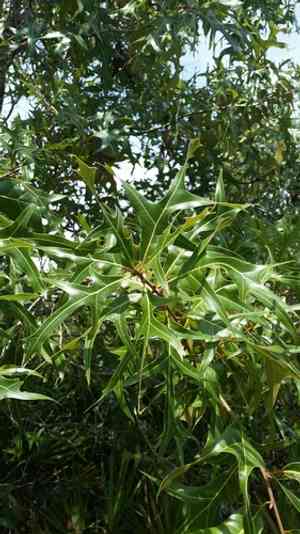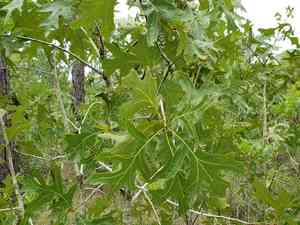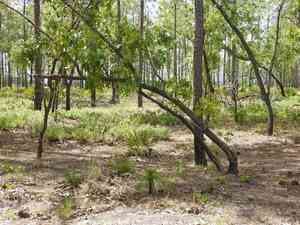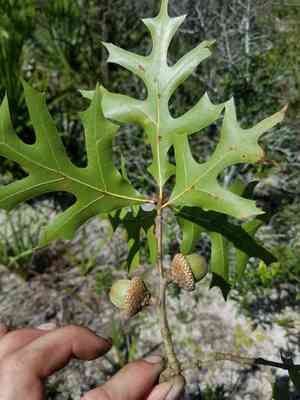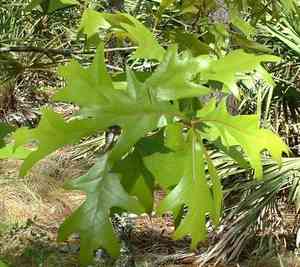
Turkey oak(Quercus laevis)

Turkey oak (Quercus laevis)

Also known as: Catesby Oak, Turkey-Foot Oak, Turkey foot oak

The Turkey oak (Quercus laevis) is a deciduous tree native to the southeastern United States, typically reaching heights of 9 to 12 meters and spreading 3 to 4.5 meters wide. This tree provides a vital habitat for a variety of birds and squirrels, and its acorns are an important food source for wildlife such as woodpeckers, deer, and wild turkeys. Additionally, its strong root system offers significant resistance to hurricane-force winds, adding to its ecological value.

Attributes of Turkey oak

Lifespan
Perennial
Plant Type
Shrub
Plant Height
9 m to 12 m
Spread
6 m to 11 m
Leaf Color
Yellow Brown Green Red Gold Orange
Flower Size
8 cm to 13 cm
Flower Color
Yellow

PlantJoy - Identify plants with a snap

Identify and diagnose plants, get toxicity alerts, and explore safety guides for all types of fungi.

Try for Free

Images of Turkey oak

Turkey oak(Quercus laevis)

Quickly Identify Turkey oak

1
Distinctive turkey foot-shaped leaves with 3-7 lobes.
2
Male flowers in drooping catkins, 2-4 inches (5-10 cm) long.
3
Acorns with reddish-brown caps covering one-third of the nut.
4
Chestnut brown to grey stems with sparse fine hairs.
5
Mature bark with dark furrows, revealing reddish inner bark.

Scientific Classification of Turkey oak

Phylum
Vascular plants
Class
Dicotyledons
Order
Fagales
Family
Beech
Genus
Oaks
Species
Turkey oak

Planting and Growing of Turkey oak

Care Difficulty
Easy
Watering Schedule
Every 2 days
Sunlight Requirements
Full sun
Sunshine Duration
4-8 hours
Ideal Temperature
60-75℉
Soil Type
Potting Mix, Peat Mix
Soil pH
4.5-6.5
Fertilizer Type
Balanced
Pruning Season
Spring, Summer
Pruning Area
Branches, Leaves
Pruning Frequency
2 times a year
Repotting Season
Spring
Pot Type
Plastic, Ceramic

water icon How to Water Turkey oak?

For Quercus laevis, the oak's soil should be drenched until water flows out of the bottom of the pot, indicating the soil is thoroughly and evenly moist. However, always allow the top 5 centimeters of soil to dry out between waterings to prevent oversaturation.
What are the symptoms of an underwatered Turkey oak?
What should I do if my Turkey oak is not getting enough water?
What are the symptoms of an overwatered Turkey oak?
How to save an overwatered Turkey oak?

sunlight icon What Are the Sunlight Requirements for Turkey oak?

Sunlight Requirements: Full sun, Partial sun
Duration of light: 6 to 8 hours daily
Full sun to partial sun. This range supports optimal photosynthesis and healthy development of strong branches and vibrant foliage.
What is the optimal lighting condition for Quercus laevis?
How can I ensure ideal lighting conditions for Quercus laevis?
What are the benefits of providing ideal lighting to Quercus laevis?
More About Sunlight Requirements Techniques

temperature icon What Is the Ideal Temperature Range for Turkey oak?

Ideal Temperature: 60 ~ 75℉
The ideal temperature range for Quercus laevis, commonly known as Turkey Oak, is between 60°F and 75°F. This range ensures optimal growth conditions that mimic its native habitat, supporting active photosynthesis and healthy development. Outside this range, the plant may experience stress or reduced growth.

soil icon What Soil is Best for Turkey oak?

Soil type: Sandy soil, Sandy loam
Soil PH: 4.5 ~ 6.5
Quercus laevis, also known as the Turkey Oak, requires well-drained soil to thrive. This ensures that the roots get enough air and prevents rotting. Adequate drainage allows the plant to absorb nutrients more efficiently, improving overall growth and health. This oak tree is adapted to sandy, low-nutrient soils, making it ideal for less fertile areas. The lower competition for nutrients leads to better uptake of available resources, supporting sustained growth. Quercus laevis can tolerate dry conditions, which means it doesn't require constant watering. This drought tolerance is advantageous in regions with irregular rainfall patterns, reducing maintenance needs and conserving water.

fertilize icon How to Fertilize Turkey oak?

Fertilizer type: Balanced
When fertilizing Quercus laevis, it's crucial to provide appropriate amounts to support its healthy growth. For liquid fertilizers, use a balanced formulation at a concentration of 1/2 tsp per gallon of water. Apply solid fertilizers at a rate of 1 pound per inch of trunk diameter, distributed evenly around the drip line.

prune icon How to Prune Turkey oak?

Pruning Time: Spring, Summer
Begin by assessing the shape and structure of your Quercus laevis. Focus on removing any dead or diseased branches first—these can drain resources and harbor pests. Next, remove branches that are crossing or rubbing against each other to prevent damage and disease. Finally, thin out any overly dense areas to allow better air circulation and sunlight penetration, which helps the tree thrive. More About Pruning Techniques

propagate icon How to Propagate Turkey oak plant?

Propagate Time: Autumn
1
Collect acorns from mature Quercus laevis trees in the autumn. Make sure to gather acorns that are free from damage and pests. Acorns are best collected from the ground after they fall naturally, indicating maturity and readiness for planting.
2
Quercus laevis seeds require a cold stratification period to break dormancy. Place the acorns in a refrigerator at around 4°C for 30-60 days. This mimics the natural winter period they would experience in the wild, ensuring the seeds are ready to germinate.
3
After stratification, sow the acorns in individual pots filled with potting soil. Plant them about 1 inch deep, and water thoroughly. Maintain consistent moisture without water-logging the soil, providing a humid and stable environment for seedling development.
More About Propagating Techniques

repot icon How to Repot Turkey oak plant?

Repotting frequency: Every 2-3 years
1
Signs that Quercus laevis needs repotting include roots growing out of the drainage holes, a plant that seems top-heavy, or soil that dries out too fast. Spring and autumn offer ideal times to repot because the plant's growth rate is moderate, minimizing stress.
2
Select a pot that is 1-2 inches larger in diameter than the current one. A slightly larger pot ensures ample space for root expansion without overwhelming the plant with excess soil. Terra cotta pots are ideal because they offer breathability, helping to keep roots healthy.
3
Opt for a well-draining loamy mix that mimics the plant's native environment. This mixture ensures that excess water drains away, reducing the risk of root rot while maintaining adequate moisture for nutrient absorption.

PlantJoy - Identify plants with a snap

Find the best spots for them to optimize their health, simply using your phone.

Try for Free

Toxicity of Turkey oak

Is Turkey oak toxic to humans?

The Turkey oak is considered toxic when consumed. Its poisonous rating is relatively low in severity. Both the fruits (acorns) and the foliage of this tree are toxic. There are no warnings regarding direct skin contact with the plant. Symptoms resulting from ingestion can include abdominal discomfort, constipation that may progress to diarrhea, feelings of depression, increased urination, altered urine color, or jaundice. This tree is often located in outdoor spaces such as roadsides and parks, posing a potential hazard to both children and adults who might ingest the acorns.

Identify toxic plants for your safety

Learn which plants are harmful to you and your pets, and make informed choices for a safer home!

Try for Free
WARNING
The judgment on toxicity and danger is for reference only. We DO NOT GUARANTEE any accuracy of such judgment. Therefore, you SHALL NOT rely on such judgment. It is IMPORTANT TO SEEK PROFESSIONAL ADVICE in advance when necessary.
More About Toxic Techniques