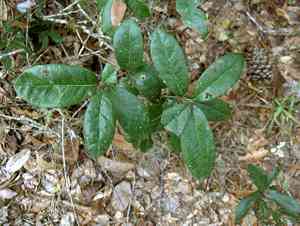
Dwarf live oak (Quercus minima)
Also known as: Small Live Oak, Dwarf Oak
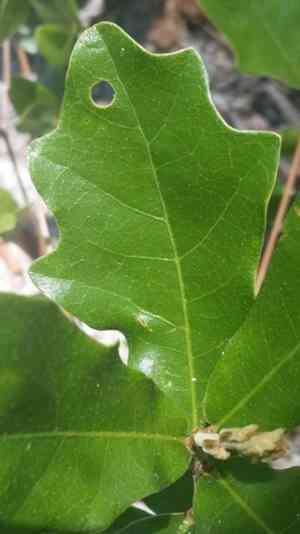
Certainly! This plant species often establishes large, cloned colonies with numerous stems, most of which are unbranched. The leaves are alternately arranged along the stem, can grow up to 12 cm in length, and may be either smooth-edged or have irregular teeth or lobes. When lobes are present, they typically end in a spine. The leaves persist through the winter, shedding just before or as new growth begins in late winter or early spring.
In This Article
Attributes of Dwarf live oak
Lifespan
Perennial
Plant Type
Shrub
Plant Height
61 cm to 91 cm
Spread
90 cm to 1.8 m
Leaf Color
Dark green
Flower Size
N/A (non-showy flowers)
Flower Color
Yellow-green (catkins)
Images of Dwarf live oak
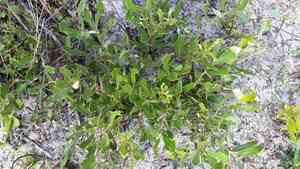
Quickly Identify Dwarf live oak
1
Persistent leaves with waxy undersides, light green and toothless, 3-5 inches (7.6-12.7 cm) long.
2
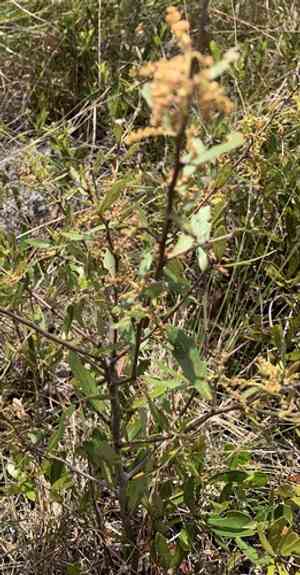
Yellow-green male catkins up to 3 inches (7.6 cm) long, fragrant, cylindrical arrangement.
3
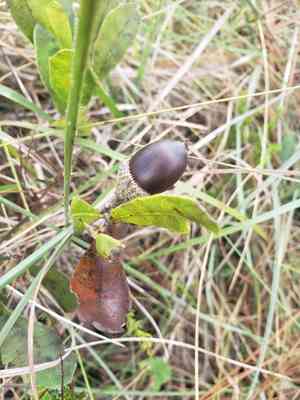
Pale brown acorn with textured cup encasing half, ovoid shape, 2/3 inch (1.7 cm) long.
4
Light gray stem with smooth texture, slender twigs, sparse branching, small roundish buds.
5
Simple, smooth bark in muted brown and gray hues, lacks furrows or ridges, thin texture.
Scientific Classification of Dwarf live oak
Phylum
Vascular plants
Class
Dicotyledons
Order
Fagales
Family
Beech
Genus
Oaks
Species
Dwarf live oak
Planting and Growing of Dwarf live oak
Care Difficulty
Easy
Watering Schedule
Every 2 days
Sunlight Requirements
Full sun
Sunshine Duration
4-8 hours
Ideal Temperature
65-75℉
Soil Type
Potting Mix, Peat Mix
Soil pH
6-8
Fertilizer Type
Balanced
Pruning Season
Spring, Summer
Pruning Area
Branches, Leaves
Pruning Frequency
2 times a year
Repotting Season
Spring
Pot Type
Plastic, Terracotta
 How to Water Dwarf live oak?
Quercus minima, known as the dwarf live oak, requires a watering volume that leaves its soil moderately moist but not waterlogged. The principle is to ensure water reaches a depth of about 6 to 8 inches, which promotes healthy root development. This depth often corresponds to about 1000 milliliters, but it's essential to adjust based on environmental conditions and soil drainage.
What are the symptoms of an underwatered Dwarf live oak?
›
What should I do if my Dwarf live oak is not getting enough water?
›
What are the symptoms of an overwatered Dwarf live oak?
›
How to save an overwatered Dwarf live oak?
›
 What Are the Sunlight Requirements for Dwarf live oak?
Quercus minima thrives in full sun to partial sun environments, benefiting most from prolonged exposure. Ideal lighting promotes healthy photosynthesis, vibrant foliage, and a robust ability to resist environmental stressors.
What is the ideal lighting environment for Quercus minima?
›
Solutions to achieve ideal lighting for Quercus minima?
›
Benefits of providing Quercus minima with ideal lighting?
›
 What Is the Ideal Temperature Range for Dwarf live oak?
For Quercus minima, maintaining a consistent temperature range between 65°F and 75°F is critical for optimal growth. This range allows the plant to carry out essential physiological processes efficiently, promoting healthy development and vibrant foliage.
 What Soil is Best for Dwarf live oak?
Quercus minima thrives in well-drained soil, which helps in preventing root rot and ensures a strong root system. This soil type allows for efficient water drainage, vital for the plant's overall health. The plant benefits from soil that is rich in organic matter, providing essential nutrients for growth. A nutrient-rich soil supports leaf development and enhances photosynthesis efficiency. Maintaining moderate soil moisture is key for Quercus minima, helping to prevent dehydration and supporting consistent growth without waterlogging the roots.
 How to Fertilize Dwarf live oak?
For Quercus minima, it is essential to ensure balanced fertilization. Use about half a cup of liquid fertilizer per application, diluted to half-strength, to avoid nutrient burn. For slow-release fertilizers, use approximately one cup per application but spread it out evenly across the root zone.
 How to Prune Dwarf live oak?
Start by cutting away any dead or diseased branches. This helps prevent the spread of disease and improves air circulation within the plant. Gently shape the bush, focusing on maintaining its natural form. Thin out the interior branches to allow sunlight to reach the core, promoting robust growth. Ensure each cut is clean and angled slightly. This discourages water from pooling on the cut surface and reduces the chance of infection.
More About Pruning Techniques→
 How to Propagate Dwarf live oak plant?
1
Gather healthy acorns from Quercus minima trees during autumn when they have naturally fallen to the ground. Clean and store them in a cool, dry place until you are ready to plant in early spring.
2
Select healthy branches or shoots from the plant during the spring growth phase. Cut sections about 6 to 8 inches long and remove any leaves near the base before dipping them into rooting hormone.
3
For grafting, select a robust rootstock and healthy scion from Quercus minima. Ensure a clean cut and proper alignment of cambium layers for successful graft fusion. Secure with grafting tape and monitor for successful union.
 How to Repot Dwarf live oak plant?
1
Repotting Quercus minima is best done when the plant shows signs of root-bound growth, such as roots protruding from drain holes or water draining too quickly. Another key signal is the soil becoming dense or compacted.
2
Select a pot that is 2-3 inches wider than the current one to allow ample space for root expansion. Ensure the pot has drainage holes to prevent water logging, which can lead to root rot. A slightly larger pot offers stability and reduces transplant shock.
3
Opt for a well-draining sandy loam that mimics Quercus minima's natural environment. This type of soil retains necessary moisture while providing enough aeration, preventing overwatering issues and encouraging healthy root development.
Toxicity
Ingestion of acorns or leaves
WARNING
The judgment on toxicity and danger is for reference only. We DO NOT GUARANTEE any accuracy of such judgment. Therefore, you SHALL NOT rely on such judgment. It is IMPORTANT TO SEEK PROFESSIONAL ADVICE in advance when necessary.



