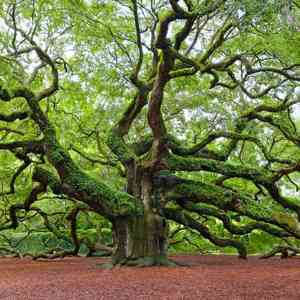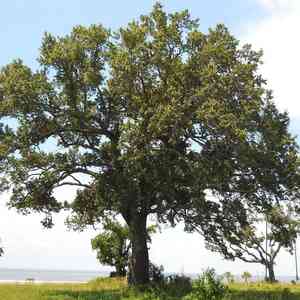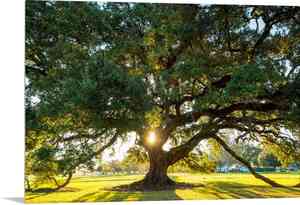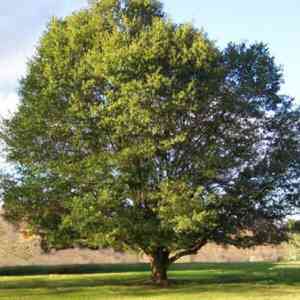
Live oak(Quercus virginiana)

Live oak (Quercus virginiana)

Also known as: Bay live oak, Escarpment live oak

The Southern Live Oak, scientifically known as Quercus virginiana, is a large evergreen tree native to the coastal regions of southeastern North America. It features a broad, majestic crown and is frequently used as an ornamental tree, often lining avenues in the American South.

Attributes of Live oak

Lifespan
Perennial
Plant Type
Tree
Plant Height
15 m to 35 m
Spread
18 m to 30 m
Leaf Color
Green
Flower Size
Small, inconspicuous
Flower Color
Yellow Green

PlantJoy - Identify plants with a snap

Identify and diagnose plants, get toxicity alerts, and explore safety guides for all types of fungi.

Try for Free

Images of Live oak

Live oak(Quercus virginiana)

Quickly Identify Live oak

1
Leathery leaves with revolute margins resembling laurel, persisting year-round.
2
Male flowers in pendulous catkins, wind-pollinated, greenish hue, lacking petals.
3
Egg-shaped acorns with bowl-shaped caps and sharp-pointed scales, fall maturation.
4
Dark green shiny leaves with pale underside, oblong to elliptic-obovate shape.
5
Rugged dark brown bark with reddish tints, furrowed texture, robust girth up to 4 feet.

Scientific Classification of Live oak

Phylum
Vascular plants
Class
Dicotyledons
Order
Beeches, walnuts, and allied trees
Family
Beech
Genus
Oaks
Species
Live oak

Planting and Growing of Live oak

Care Difficulty
Easy
Watering Schedule
Every 2 days
Sunlight Requirements
Full sun
Sunshine Duration
4-8 hours
Ideal Temperature
60-85℉
Soil Type
Potting Mix, Peat Mix
Soil pH
6.5-7.5
Fertilizer Type
Balanced
Pruning Season
Spring, Summer
Pruning Area
Branches, Leaves
Pruning Frequency
2 times a year
Repotting Season
Spring
Pot Type
Plastic, Terracotta

water icon How to Water Live oak?

For Quercus virginiana, also known as the Southern Live Oak, the goal is to ensure the soil remains moist but not saturated. Each watering session should deliver around 5000 milliliters of water, enough to soak into the top 12 inches of the soil. A deep watering technique helps the long taproots reach deeper moisture reserves and reduces surface evaporation.
What are the symptoms of an underwatered Live oak?
What should I do if my Live oak is not getting enough water?
What are the symptoms of an overwatered Live oak?
How to save an overwatered Live oak?
More About Watering Techniques

sunlight icon What Are the Sunlight Requirements for Live oak?

Sunlight Requirements: Full sun, Partial sun
Duration of light: 6 to 8 hours daily
Quercus virginiana thrives best in full sun, though it can tolerate partial sun. The ideal light exposure ensures strong growth, promoting a lush canopy, vibrant foliage, and increased resilience against environmental stressors, supporting its ecological success.
What is the ideal light environment for Quercus virginiana?
What solutions are available to achieve ideal light conditions for Quercus virginiana?
What are the benefits of Quercus virginiana receiving optimal sunlight?
More About Sunlight Requirements Techniques

temperature icon What Is the Ideal Temperature Range for Live oak?

Ideal Temperature: 60 ~ 85℉
The ideal temperature range for growing Quercus virginiana, also known as the Southern live oak, lies between 60°F and 85°F. This temperature range ensures optimal photosynthesis, growth, and overall health for the plant. It mimics the conditions found in its native habitat, allowing it to thrive naturally.

soil icon What Soil is Best for Live oak?

Soil type: Sandy soil, Loam, Clay soil
Soil PH: 6.5 ~ 7.5
Live Oak thrives in well-drained soils that help prevent root rot. The proper drainage allows the roots to access necessary oxygen, promoting vigorous tree growth. Rich in organic matter, the soil supplies essential nutrients that enhance the tree's health and increase pest and disease resistance. Maintaining a slightly acidic to neutral pH ensures optimal nutrient availability, helping the tree to achieve robust foliage and overall vitality. More About Soil

fertilize icon How to Fertilize Live oak?

Fertilizer type: Balanced
For Quercus virginiana, it's important to apply fertilizer sparingly to avoid over-fertilization. When using liquid fertilizer, dilute it to half strength and apply no more than 5 gallons around the tree base. For slow-release fertilizers, use approximately 2 pounds per inch of trunk diameter, ensuring even distribution in the root zone. More About Fertilizing Techniques

prune icon How to Prune Live oak?

Pruning Time: Spring, Summer, Autumn
Start by evaluating the tree's overall structure. Identify and prioritize dead, damaged, or diseased branches for removal. Consider the shape you desire for the tree and which branches should be removed to achieve this. Begin by removing any dead or damaged branches first. Make your cuts at the branch collar, the swollen area where the branch joins the trunk, to promote proper healing. Thin the canopy to allow sunlight to penetrate and air to circulate. This involves removing some of the smaller branches but being careful not to remove more than 25% of the canopy at once. More About Pruning Techniques

propagate icon How to Propagate Live oak plant?

Propagate Time: Spring, Early spring
1
Collect acorns in autumn, ensuring they are mature and free from damage. Soak them in water to identify viable seeds, which will sink. Store them in moist sand at a cool temperature for stratification before planting in early spring.
2
Cut healthy stems about 6-10 inches long from the parent plant during early spring. Remove the lower leaves and dip the cut end in rooting hormone to encourage root development. Plant the cuttings in a potting mix.
3
For grafting, select a compatible rootstock in the spring. Create a precise cut both on the rootstock and the scion. Join them together and secure with grafting tape. Place the grafted plant in a shaded area until it establishes.
More About Propagating Techniques

repot icon How to Repot Live oak plant?

Repotting frequency: Every 2-3 years
1
Quercus virginiana, also known as Southern Live Oak, needs repotting when you notice roots emerging from the drainage holes or if the growth appears stunted. Spring and autumn are ideal seasons, as they provide moderate temperatures and allow the tree to establish quickly without the stress of extreme weather.
2
Opt for a pot that is one to two sizes larger than the current one. Ensure it has drainage holes to prevent waterlogging, which can lead to root rot. A slightly heavier pot can also help in stabilizing the tree as it grows larger. The right pot ensures ample space for root expansion, promoting healthy growth.
3
Select a well-draining, sandy loam soil mix enriched with organic matter. This type of soil mimics the tree's natural habitat, providing excellent drainage and nutrient availability, reducing the risk of root-bound issues, and ensuring successful repotting.

PlantJoy - Identify plants with a snap

Find the best spots for them to optimize their health, simply using your phone.

Try for Free

Toxicity of Live oak

Is Live oak toxic to humans?

The tissues of the live oak tree encompass tannins, which are present in its leaves and seeds. This characteristic imparts a significant bitterness to the plant, discouraging most animals from consuming it. Nevertheless, young children and individuals who frequently place nonfood items in their mouths must be monitored closely in proximity to this particular plant. Tannins primarily lead to gastrointestinal issues, including but not limited to constipation, diarrhea, nausea, cramping, and excessive gas. Prolonged exposure may also result in depressive symptoms and dark, copious urine. Moreover, any acorns ingested whole could lead to bowel obstructions.

Is Live oak toxic to cat?

The live oak carries a mild toxicity risk for cats, which can result in serious health concerns when ingested in significant quantities. The leaves and seeds of the plant are the main components that pose a danger. If a cat consumes these parts, it might exhibit signs of physical discomfort or illness. Should a cat show any atypical behavior or distress after exposure to live oak, it is crucial to obtain prompt veterinary assistance. Quick action is essential in addressing the consequences of live oak poisoning, thereby optimizing the chances of recovery for the impacted cat.

Is Live oak toxic to dog?

Live oak presents a moderate toxicity hazard to dogs. Poisoning usually occurs when a dog ingests considerable quantities of the plant, especially its leaves or seeds. Upon consuming these components of live oak, dogs may show symptoms including gastrointestinal distress, vomiting, or diarrhea. It is vital for dog owners to keep a close eye on their pets and deter them from consuming excessive amounts of live oak. Should a dog consume a substantial quantity of live oak and demonstrate signs of poisoning, it is imperative to obtain immediate veterinary assistance to ensure adequate treatment and recovery.

Identify toxic plants for your safety

Learn which plants are harmful to you and your pets, and make informed choices for a safer home!

Try for Free
WARNING
The judgment on toxicity and danger is for reference only. We DO NOT GUARANTEE any accuracy of such judgment. Therefore, you SHALL NOT rely on such judgment. It is IMPORTANT TO SEEK PROFESSIONAL ADVICE in advance when necessary.
More About Toxic Techniques