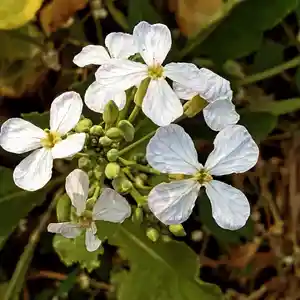
Wild radish (Raphanus raphanistrum)
Also known as: Wild Radish, Jointed Charlock
The wild radish (Raphanus raphanistrum) is a versatile plant with several edible parts, each offering unique flavors and uses. Here’s how you can enjoy them:
1. **Leaves**: Young leaves are tender and can be eaten raw in salads or sandwiches, adding a peppery note. Older leaves are better cooked, similar to how you would prepare spinach or kale.
2. **Flowers**: These can be used fresh in salads to add both color and a mild, radish-like taste.
3. **Seed Pods**: When young and tender, seed pods can be a crunchy, raw snack, or they can be added to salads. They are also delicious when pickled or lightly stir-fried.
4. **Roots**: The roots can be consumed after peeling away the tough outer layer. They can be grated raw into salads for a spicy kick, or cooked by roasting or boiling to soften their texture and mellow their flavor.
Always ensure correct identification and avoid plants exposed to chemicals or pollutants.
Attributes of Wild radish
Images of Wild radish

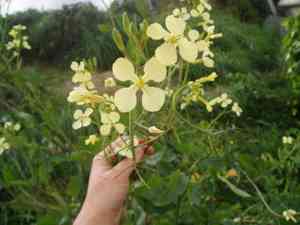
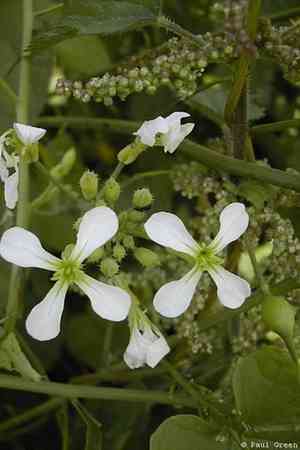

Quickly Identify Wild radish
Scientific Classification of Wild radish
Planting and Growing of Wild radish
 How to Water Wild radish?
 What Are the Sunlight Requirements for Wild radish?
 What Is the Ideal Temperature Range for Wild radish?
 What Soil is Best for Wild radish?
 How to Fertilize Wild radish?
 How to Prune Wild radish?
 How to Propagate Wild radish plant?
 How to Repot Wild radish plant?
Toxicity of Wild radish
Is Wild radish toxic to cat?
Wild radish presents a moderate toxicity hazard to felines. Ingesting significant quantities of wild radish can result in poisoning, as every part of the plant contains toxic components. Pet owners must remain alert for any indications of physical distress, illness, or pain in their cats, which may arise from consuming wild radish. If poisoning is suspected, it is essential to obtain prompt veterinary assistance to safeguard the health and well-being of the affected cat.
Is Wild radish toxic to dog?
Wild radish presents a low-level toxicity threat to dogs. If canines ingest large quantities of this plant, they may suffer poisoning. Every part of the wild radish is deemed toxic and can play a role in the poisoning process. Should a dog consume any portion of wild radish, it might display symptoms characteristic of poisoning, which requires urgent veterinary care for accurate diagnosis and appropriate treatment.



