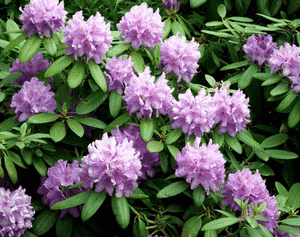
Catawba rosebay(Rhododendron catawbiense)

Catawba rosebay (Rhododendron catawbiense)

Also known as: Mountain rosebay, Purple rhododendron

The Catawba rosebay, or Rhododendron catawbiense, is frequently grown as an ornamental plant in North America and Europe. Typically, it reaches a height of about 3 meters, although it can sometimes grow as tall as 5 meters. In the United States, this species is predominantly found in the Appalachian Mountains.

Attributes of Catawba rosebay

Lifespan
Perennial
Plant Type
Shrub
Plant Height
3 m
Spread
1.8 m to 2.5 m
Leaf Color
Green Yellow Gold
Flower Size
3 cm to 4.5 cm
Flower Color
Pink Purple White Green

PlantJoy - Identify plants with a snap

Identify and diagnose plants, get toxicity alerts, and explore safety guides for all types of fungi.

Try for Free

Images of Catawba rosebay

Catawba rosebay(Rhododendron catawbiense)

Quickly Identify Catawba rosebay

1
Large, leathery leaves in whorls, 4-8 inches (10-20 cm) long.
2
Showy bell-shaped flowers with five lobes, often spotted, in terminal clusters.
3
Upright stems with zigzag branching, yellowish green when young, maturing to brown.
4
Distinctive gray-brown bark exfoliates in fine scales, reaching 10 inches (25 cm) in diameter.
5
Lavender-pink flowers with green to yellow-brown throat markings, 2-3 inches (5-8 cm) wide.

Scientific Classification of Catawba rosebay

Phylum
Vascular plants
Class
Dicotyledons
Order
Ericales
Family
Heath
Genus
Azaleas
Species
Catawba rosebay

Planting and Growing of Catawba rosebay

Care Difficulty
Hard
Watering Schedule
Every 4 days
Sunlight Requirements
Partial sun
Sunshine Duration
4-6 hours
Ideal Temperature
65-75℉
Soil Type
Potting Mix, Peat Mix
Soil pH
4.5-6
Fertilizer Type
Balanced
Pruning Season
Spring, Summer
Pruning Area
Branches, Leaves
Pruning Frequency
2 times a year
Repotting Season
Spring
Pot Type
Terracotta, Plastic

water icon How to Water Catawba rosebay?

The Rhododendron catawbiense requires a moderate watering approach. It is important to ensure the soil is consistently moist but never waterlogged. Ideally, the soil should feel damp to the touch down to a depth of about two inches. Check the soil moisture level with your finger to ensure it’s in optimal condition.
What are the symptoms of an underwatered Catawba rosebay?
What should I do if my Catawba rosebay is not getting enough water?
What are the symptoms of an overwatered Catawba rosebay?
How to save an overwatered Catawba rosebay?
More About Watering Techniques

sunlight icon What Are the Sunlight Requirements for Catawba rosebay?

Sunlight Requirements: Partial sun, Full shade
Duration of light: 1 to 6 hours
Rhododendron catawbiense thrives in partial sun to full shade, ensuring healthy growth and vibrant blooms. This light range helps in preventing heat stress and foliage damage.
What is the ideal light for Rhododendron catawbiense?
How can I achieve ideal light conditions for Rhododendron catawbiense?
What are the benefits of Rhododendron catawbiense receiving ideal light?
More About Sunlight Requirements Techniques

temperature icon What Is the Ideal Temperature Range for Catawba rosebay?

Ideal Temperature: 65 ~ 75℉
For optimal growth of Rhododendron catawbiense, the ideal temperature range is between 65°F and 75°F. This range provides the necessary warmth for the plant's photosynthesis and metabolic processes, contributing to robust growth and vibrant flowering. It mimics the plant's native habitat, ensuring proper nutrient uptake and minimal stress.

soil icon What Soil is Best for Catawba rosebay?

Soil type: Loam, Acidic soil, Peat soil
Soil PH: 4.5 ~ 6
Rhododendron catawbiense thrives in well-draining soil, which prevents waterlogging and root rot, ensuring healthy root development and overall plant vitality. Rich, organic matter-enhanced soil provides the nutrients essential for robust growth, enhances soil structure, and maintains adequate moisture levels, all crucial for flourishing rhododendrons. This plant requires soil that retains consistent moisture without becoming waterlogged, keeping roots hydrated and promoting steady growth, especially during the blooming period. More About Soil

fertilize icon How to Fertilize Catawba rosebay?

Fertilizer type: Balanced
Rhododendron catawbiense benefits from balanced fertilization. Use about ½ ounce (14 grams) of liquid fertilizer per gallon of water during the growing season. For solid fertilizers, apply evenly across the root zone, ensuring not to exceed ½ pound (227 grams) per plant yearly to avoid root burn. More About Fertilizing Techniques

prune icon How to Prune Catawba rosebay?

Pruning Time: Spring, Summer
Begin by removing any dead, damaged, or diseased branches. Cut back to healthy wood to prevent the spread of disease and improve the plant’s overall health. Focus on shaping the Rhododendron by cutting back overgrown areas. Thin out crowded branches to improve air circulation among the foliage, which helps prevent fungal diseases. Trim back elongated stems to just above a leaf node, encouraging bushier, more compact growth. This technique helps you maintain a denser and aesthetically pleasing shape. More About Pruning Techniques

propagate icon How to Propagate Catawba rosebay plant?

Propagate Time: Spring, Early summer, Late winter
1
Choose semi-hardwood cuttings from healthy Rhododendron catawbiense plants. Cuttings should be 6-8 inches long and taken from recent, vigorous growth to ensure a high success rate in rooting.
2
Strip leaves from the lower half of the cutting to reduce water loss. Dip the cut end into rooting hormone to encourage faster root development. This step is crucial for strengthening the cutting's rooting capability.
3
Insert the treated cutting into a well-draining potting mix. Ensure the pot is kept in a humid environment, possibly by covering with plastic, to maintain moisture and provide the right conditions for root growth.
More About Propagating Techniques

repot icon How to Repot Catawba rosebay plant?

Repotting frequency: Every 2-3 years
1
Rhododendron catawbiense should be repotted when you notice roots emerging from the drainage holes, indicating that the pot is crowded. You may also observe water retention issues due to poor soil draining caused by root congestion. Alternatively, if growth appears stunted and foliage loses vigor, these are signs that repotting is necessary to rejuvenate plant health. Typically, repotting is best carried out in spring or summer when growth is active.
2
Select a pot that is 2-3 inches larger in diameter than the current one. Ensure the pot has sufficient drainage holes to prevent waterlogging, which can harm the roots of Rhododendron catawbiense. Larger pots provide room for root expansion, supporting robust growth, but be cautious not to overpot, as excess soil can retain unnecessary moisture, potentially leading to root rot.
3
Opt for an acidic, well-draining soil mix specifically formulated for rhododendrons. This type of soil caters to their preference for an acidic environment, promoting nutrient absorption. Ensure the soil remains loose and airy, preventing compaction that can hinder root growth. These conditions are key to simulating their natural habitat, thereby bolstering overall plant health and blooms.
More About Repotting Techniques

PlantJoy - Identify plants with a snap

Find the best spots for them to optimize their health, simply using your phone.

Try for Free

Toxicity of Catawba rosebay

Is Catawba rosebay toxic to humans?

Similar to other *Rhododendrons* known for their toxicity, the catawba rosebay is a harmful plant, particularly dangerous when consumed in significant quantities. The consequences can be dire, occasionally leading to a coma. Every component of the plant is toxic, which encompasses the flowers, leaves, fruits, bark, roots, stems, and seeds. Ingesting these parts can lead to symptoms such as watery eyes, abdominal pain, fatigue, sadness, vomiting, nausea, and diarrhea. More severe reactions may involve paralysis, breathing difficulties, and a state of coma. Given that these plants are frequently cultivated as ornamental features in gardens, children may be particularly tempted to touch and ingest parts of them.

Is Catawba rosebay toxic to cat?

The Catawba rosebay is a highly toxic plant for cats, presenting a significant health risk if ingested. Should a cat inadvertently consume any part of the catawba rosebay, it may result in poisoning since all portions of the plant are toxic. Pet owners might notice signs of discomfort or illness in their pets, which could suggest possible poisoning. It is vital to seek prompt veterinary assistance to address the effects of exposure to catawba rosebay. Immediate medical care at a veterinary facility is essential for the health and safety of a cat that has consumed catawba rosebay.

Is Catawba rosebay toxic to dog?

The Catawba rosebay is a harmful plant for dogs, representing a significant threat to their well-being. If dogs inadvertently consume any portion of this plant, they can suffer from poisoning, as every part is toxic. Signs of toxicity in dogs may encompass vomiting, diarrhea, excessive salivation, weakness, and even potential heart complications. It is essential for dog owners to restrict access to catawba rosebay and remain vigilant over their pets when they are in proximity to such plants. Should a dog ingest catawba rosebay, it is vital to obtain immediate veterinary assistance to secure the best possible outcome for the affected pet.

Identify toxic plants for your safety

Learn which plants are harmful to you and your pets, and make informed choices for a safer home!

Try for Free
WARNING
The judgment on toxicity and danger is for reference only. We DO NOT GUARANTEE any accuracy of such judgment. Therefore, you SHALL NOT rely on such judgment. It is IMPORTANT TO SEEK PROFESSIONAL ADVICE in advance when necessary.
More About Toxic Techniques

