Evergreen azalea(Rhododendron indicum)

Evergreen azalea (Rhododendron indicum)

Also known as: Tsutsusi azalea

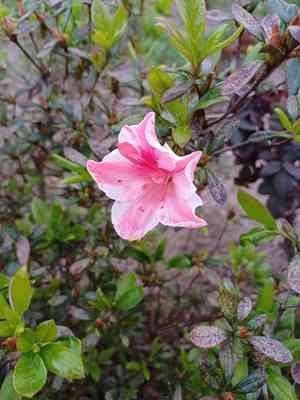
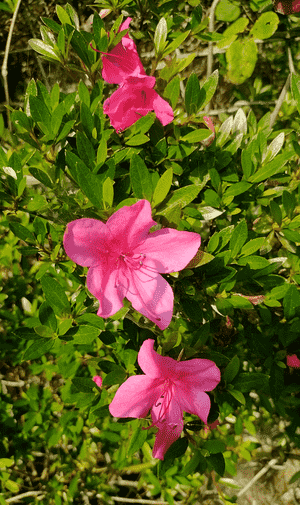
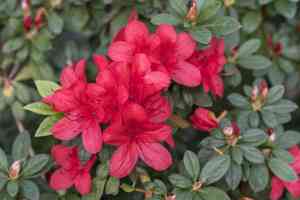
Evergreen azalea is a bushy, sprawling Japanese native semi-evergreen shrub. It features magnificent cerise pink flowers with everlasting foliage. Because it has low tolerance to wet soils, drought, and immoderate fertilizer, this plant prefers well-drained soils in partial shade. The overall components of the plant are ideal for decoration, but it is toxic and should not be used for consumption.

Attributes of Evergreen azalea

Lifespan
Perennial
Plant Type
Shrub
Plant Height
1 m to 2 m
Spread
60 cm to 90 cm
Leaf Color
Green
Flower Size
3.5 cm to 6 cm
Flower Color
Pink Red Purple

PlantJoy - Identify plants with a snap

Identify and diagnose plants, get toxicity alerts, and explore safety guides for all types of fungi.

Try for Free

Images of Evergreen azalea

Evergreen azalea(Rhododendron indicum)

Quickly Identify Evergreen azalea

1
Compact, vertically reaching semi-evergreen shrub, 2-3 feet (60-90 cm) in size.
2
Funnel-shaped flowers with five-lobed calyx and reddish-brown hair-covered twigs.
3
Brightly colored axillary flowers, 1.6 inches (4 cm) long, with conspicuous maculation.
4
Distinctively textured oblong-ovoid fruit with 5-valved capsule mechanism.
5
Alternate, glossy dark green leaves, 1.7-3.8 cm (0.7-1.5 in), with pubescent petiole.

Scientific Classification of Evergreen azalea

Phylum
Vascular plants
Class
Dicotyledons
Order
Ericales
Family
Heath
Genus
Azaleas
Species
Evergreen azalea

Planting and Growing of Evergreen azalea

Care Difficulty
Hard
Watering Schedule
Every 4 days
Sunlight Requirements
Partial sun
Sunshine Duration
6-10 hours
Ideal Temperature
60-75℉
Soil Type
Potting Mix, Peat Mix
Soil pH
4.5-6
Fertilizer Type
Balanced
Pruning Season
Spring, Summer
Pruning Area
Branches, Leaves
Pruning Frequency
2 times a year
Repotting Season
Spring
Pot Type
Plastic, Ceramic

water icon How to Water Evergreen azalea?

Rhododendron indicum requires about 500 ml of water each time. Aim to maintain evenly moist soil without over-watering. The soil should be damp to the touch but not soggy, as excessive moisture can lead to root rot.
What are the symptoms of an underwatered Evergreen azalea?
What should I do if my Evergreen azalea is not getting enough water?
What are the symptoms of an overwatered Evergreen azalea?
How to save an overwatered Evergreen azalea?
More About Watering Techniques

sunlight icon What Are the Sunlight Requirements for Evergreen azalea?

Sunlight Requirements: Partial sun, Full shade
Duration of light: 3 to 6 hours
Partial sun, Full shade allows Rhododendron indicum to flourish without the threat of sunburn or heat stress, encouraging vibrant blooms and healthy foliage.
What is the ideal light exposure for Rhododendron indicum?
How can I ensure my Rhododendron indicum receives suitable lighting?
What are the benefits of providing ideal light for Rhododendron indicum?
More About Sunlight Requirements Techniques

temperature icon What Is the Ideal Temperature Range for Evergreen azalea?

Ideal Temperature: 60 ~ 75℉
Rhododendron indicum thrives best in temperatures ranging from 60°F to 75°F. In this range, the plant can efficiently photosynthesize, resulting in optimal growth and flowering. It is crucial to maintain this temperature range to ensure that the plant can sustain its physiological processes effectively, promote vigorous health, and build resilience against potential pests and diseases.

soil icon What Soil is Best for Evergreen azalea?

Soil type: Loam, Acidic soil, Sandy loam
Soil PH: 4.5 ~ 6
Rhododendron indicum thrives in well-drained soils that prevent waterlogging around its roots. Good drainage ensures the roots have access to oxygen, which is crucial for their health and the plant's overall growth. The plant prefers soils rich in organic matter, which provide essential nutrients and maintain moisture. Organic-rich soils enhance root development and help sustain vibrant flower blooms. Acidic soil conditions with a pH between 4.5 and 6.0 are crucial for this plant. Such conditions facilitate the availability of nutrients like iron and magnesium, which are important for the plant's optimal growth and health. More About Soil

fertilize icon How to Fertilize Evergreen azalea?

Fertilizer type: Balanced
When fertilizing Rhododendron indicum, it's essential to maintain a balance. Use a balanced liquid fertilizer diluted to half its strength to avoid overfeeding. For solid fertilizers, stick to the recommended dose on the package, and apply it lightly around the plant's base. This plant prefers less concentrated applications, preventing nutrient overload. More About Fertilizing Techniques

prune icon How to Prune Evergreen azalea?

Pruning Time: Spring, Autumn
Rhododendron indicum benefits from understanding its natural growth pattern. Focus on cutting away dead or crossing branches and thin out areas that are overly dense to improve sunlight penetration. Start by pruning any dead or diseased branches. Follow by trimming back long branches slightly above a node to encourage a bushier growth. Ensure to step back periodically to assess the plant's overall shape and make adjustments as necessary. More About Pruning Techniques

propagate icon How to Propagate Evergreen azalea plant?

Propagate Time: Spring, Early Spring, Late Spring
1
Choose healthy, semi-hardwood cuttings from the Rhododendron indicum, preferably in the early spring. Ensure that the cuttings are approximately 6 inches long and free of any disease.
2
Prepare a well-draining potting medium using perlite and peat moss. This mix should be moist but not overly wet, providing a conducive environment for root development.
3
Dip the cut end of the cutting into rooting hormone and plant it into the prepared potting mix. Firm the soil around the base of the cutting to secure it in place, ensuring the leaves are above the soil.
More About Propagating Techniques

repot icon How to Repot Evergreen azalea plant?

Repotting frequency: Every 2-3 years
1
The perfect time to repot Rhododendron indicum is during its dormant phase, specifically in spring or autumn. Signs that indicate a need for repotting include roots growing out of the drainage holes, water taking too long to drain, or simply when the plant appears to be outgrowing its pot.
2
Select a pot that is 1-2 inches larger in diameter than the current one. This extra space encourages root growth while preventing water-logging, which can lead to root rot. Opt for pots with drainage holes to ensure excess water can escape, maintaining healthy root conditions.
3
Acidic, well-draining soil is essential for Rhododendron indicum. A mix of peat moss, pine bark, and a bit of perlite ensures a light structure, preventing water stagnation while providing necessary aeration to the roots. This combination is vital for mimicking the plant's natural environment.
More About Repotting Techniques

PlantJoy - Identify plants with a snap

Find the best spots for them to optimize their health, simply using your phone.

Try for Free

Toxicity of Evergreen azalea

Is Evergreen azalea toxic to humans?

Evergreen azaleas belong to the *Rhododendron* genus, all members of which possess differing concentrations of a toxin called Grayanotoxin throughout their tissues. Individuals with sensitivity may develop a rash upon physical contact, while the pollen can provoke irritation in the mucous membranes. Consumption of any part of the plant can lead to nausea, vomiting, irregular heart rhythms, decreased blood pressure, and even hallucinations in humans. Grayanotoxin is remarkably potent, with even the levels found in honey derived from *Rhododendron* pollen potentially causing adverse effects.

Is Evergreen azalea toxic to cat?

The evergreen azalea is regarded as toxic to cats. If these animals accidentally ingest any parts of the plant, especially the leaves, they may experience poisoning. Signs of this condition can include various physical ailments or sickness, which must be treated promptly. Should a cat exhibit negative health effects after coming into contact with evergreen azalea, it is crucial for guardians to obtain prompt veterinary assistance to prevent possible health issues.

Is Evergreen azalea toxic to dog?

The evergreen azalea is regarded as toxic for dogs. Canines might unintentionally consume certain parts of the plant, especially the leaves, which are recognized for their poisonous properties. If a dog ingests any part of the evergreen azalea, it could display symptoms such as upset stomach, lethargy, excessive drooling, or more serious conditions like depression and low blood pressure. It is critical for dog owners to keep a vigilant eye on their pets and to restrict access to evergreen azalea to prevent accidental consumption. Should a dog ingest this plant, seeking prompt veterinary care is essential to effectively address the poisoning.

Identify toxic plants for your safety

Learn which plants are harmful to you and your pets, and make informed choices for a safer home!

Try for Free
WARNING
The judgment on toxicity and danger is for reference only. We DO NOT GUARANTEE any accuracy of such judgment. Therefore, you SHALL NOT rely on such judgment. It is IMPORTANT TO SEEK PROFESSIONAL ADVICE in advance when necessary.
More About Toxic Techniques