Lemonade Berry(Rhus integrifolia)

Lemonade Berry (Rhus integrifolia)

Also known as: Lemonade Berry, Lemonade Sumac

The Lemonade Berry plant (Rhus integrifolia), native to coastal and southwestern California, offers various practical applications:

1. **Culinary**: The tart berries can be soaked to create a lemonade-like beverage.
2. **Traditional Uses**: Indigenous peoples have utilized its parts for medicinal purposes.
3. **Erosion Control**: Its robust root system helps prevent soil erosion.
4. **Wildlife Support**: Provides essential food and habitat for local wildlife.
5. **Crafts**: The tannin-rich oil from the plant can be used to make candles and brown dye.
6. **Firewood**: The wood of mature plants is often used as kindling.

These diverse uses highlight the plant's ecological and practical significance.

Attributes of Lemonade Berry

Lifespan
Perennial
Plant Type
Shrub
Plant Height
91 cm to 3.5 m
Spread
3 m
Leaf Color
Green
Flower Size
2.5 cm
Flower Color
Pink White

PlantJoy - Identify plants with a snap

Identify and diagnose plants, get toxicity alerts, and explore safety guides for all types of fungi.

Try for Free

Images of Lemonade Berry

Lemonade Berry(Rhus integrifolia)

Quickly Identify Lemonade Berry

1
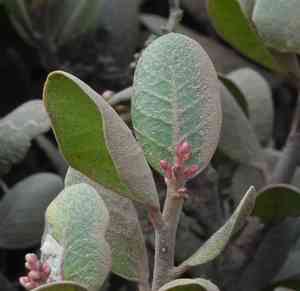
Leaves are mid to dark green, leathery, flat, with slightly curled edges and a finely serrated margin.
2
Petioles and main leaf veins often exhibit maroon to pink hues.
3
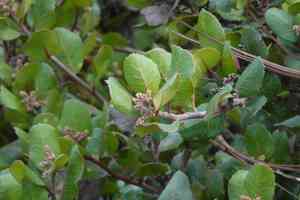
Small, clustered flowers range from white to rose-pink and appear at branch tips from February to May.
4
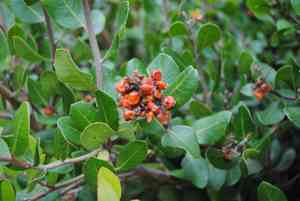
Fruit is a sticky, flat drupe with reddish-brown fuzz, housing a hard seed approximately 1/4 inch (6 mm) in size.
5
Scented evergreen shrub reaching 8 to 10 feet (2.4 to 3 meters) in height with robust trunk and sprawling branches.

Scientific Classification of Lemonade Berry

Phylum
Vascular plants
Class
Dicotyledons
Order
Sapindales
Family
Cashew
Genus
Sumacs
Species
Lemonade Berry

Planting and Growing of Lemonade Berry

Care Difficulty
Easy
Watering Schedule
Every 2 days
Sunlight Requirements
Full sun
Sunshine Duration
6-10 hours
Ideal Temperature
60-75℉
Soil Type
Potting Mix, Peat Mix
Soil pH
6.5-7.5
Fertilizer Type
Balanced
Pruning Season
Spring, Summer
Pruning Area
Branches, Leaves
Pruning Frequency
2 times a year
Repotting Season
Spring
Pot Type
Plastic, Ceramic

water icon How to Water Lemonade Berry?

Rhus integrifolia, commonly known as Lemonade Berry, requires a generous soak of 1000 ml per watering session. This amount ensures that water reaches the deeper roots, promoting a healthy, well-established plant in its native coastal scrubs and warm climates. Water until the top layer of soil is moist but ensures no standing water exists to prevent root rot.
What are the symptoms of an underwatered Lemonade Berry?
What should I do if my Lemonade Berry is not getting enough water?
What are the symptoms of an overwatered Lemonade Berry?
How to save an overwatered Lemonade Berry?

sunlight icon What Are the Sunlight Requirements for Lemonade Berry?

Sunlight Requirements: Full sun, Partial sun
Duration of light: 6 to 8 hours
Rhus integrifolia thrives in conditions ranging from full sun to partial sun. By maintaining this range, the plant benefits from robust foliage, enhanced blooming, and an overall resilient structure.
What is the optimal sunlight exposure for Rhus integrifolia?
How can you ensure ideal light conditions for Rhus integrifolia?
What are the benefits of providing Rhus integrifolia with ideal lighting?
More About Sunlight Requirements Techniques

temperature icon What Is the Ideal Temperature Range for Lemonade Berry?

Ideal Temperature: 60 ~ 75℉
The ideal temperature range for Rhus integrifolia, commonly known as Lemonade Berry, is between 60°F and 75°F. Within this range, the plant is capable of optimal growth and development. These temperatures are typically found in mild coastal environments where this plant thrives. Ensuring temperatures remain within this range helps maintain the plant's overall health, vigor, and aesthetic appeal.

soil icon What Soil is Best for Lemonade Berry?

Soil type: Sandy soil, Loam, Clay soil
Soil PH: 6.5 ~ 7.5
Rhus integrifolia thrives in well-draining soil. This characteristic ensures that there is no waterlogging, which could lead to root rot. Well-draining soil also promotes healthy root development, essential for the bush's overall health and growth. This plant prefers soil with moderate fertility. It doesn't require overly nutrient-rich soil, which might lead to excessive, weak growth. Moderate fertility provides enough nutrients for healthy foliage development without compromising structural integrity. Aeration in the soil enables proper air circulation around the roots. For Rhus integrifolia, the presence of air pockets ensures that oxygen reaches the roots efficiently, supporting vital metabolic processes and healthy plant physiology. More About Soil

fertilize icon How to Fertilize Lemonade Berry?

Fertilizer type: Balanced
For Rhus integrifolia, a balanced fertilizer with an N-P-K ratio of 10-10-10 is generally recommended. When using liquid fertilizer, dilute it to half the prescribed strength to ensure the plant receives nutrients without the risk of root damage. Apply approximately 1/4 to 1/2 cup for each plant, evenly distributing it around the root zone. More About Fertilizing Techniques

prune icon How to Prune Lemonade Berry?

Pruning Time: Spring, Summer
Start by removing any dead, damaged, or diseased branches to ensure the health of the plant. Shorten overly long branches to maintain the shrub's natural shape. Make cuts just above a node to encourage new growth from that point. Use sharp, clean pruning shears to get precise cuts and avoid infection. Rhus integrifolia responds well to shaping; focus on keeping a balanced form. Trim any branches that disrupt the desired symmetry to promote uniformity. Constant maintenance pruning helps control its size, especially in small garden spaces. More About Pruning Techniques

propagate icon How to Propagate Lemonade Berry plant?

Propagate Time: Spring,Summer,Early Spring
1
Use a well-draining potting mix or a mix of sand and peat moss to create the ideal growing medium. Ensure the soil is moist but not waterlogged before planting your seeds or cuttings.
2
Select healthy, non-flowering stems. Cut about 6 inches long and remove the leaves from the bottom half. Dip the cut end in rooting hormone before planting in the prepared soil.
3
If propagating from seeds, plant them about 0.5 inches deep in the soil. Cover them lightly and water the soil gently to keep it consistently moist during the germination period.
More About Propagating Techniques

repot icon How to Repot Lemonade Berry plant?

Repotting frequency: Every 2-3 years
1
Signs that Rhus integrifolia needs repotting include roots emerging from drainage holes, water sitting on the soil surface, or visibly cramped roots circling inside the pot. The ideal time to repot this plant is during its growing seasons—spring or autumn—when it can best recover from the disturbance.
2
Select a pot that's one size larger than the current one. Ensure it has ample drainage holes to prevent waterlogging, which could lead to root rot. A slightly larger pot supports healthy root growth, without overwhelming the plant with too much extra soil, thereby ensuring quick acclimatization.
3
Opt for a well-draining sandy soil mix, as this mimics its natural habitat and prevents root rot by allowing excess water to flow through easily. The right soil mix supports the plant's health by providing a balance of moisture retention and aeration, promoting vigorous growth post-repotting.

PlantJoy - Identify plants with a snap

Find the best spots for them to optimize their health, simply using your phone.

Try for Free

Toxicity of Lemonade Berry

Is Lemonade Berry toxic to humans?

While the lemonade Berry is not officially categorized as poisonous, some sources indicate that its sap possesses slight toxicity. Contact with the sap may result in allergic reactions ranging from mild to severe, including skin irritation, which manifests as redness, itching, burning, and blisters in certain individuals. The plant is also covered in fine yet coarse and dense hairs that could contribute to skin irritation upon contact. Additionally, other sources speculate that the plant might exhibit toxic effects if ingested, even though there have been no confirmed instances of internal poisoning. Nevertheless, due to its skin-irritating properties, ingestion could potentially prove harmful.

Identify toxic plants for your safety

Learn which plants are harmful to you and your pets, and make informed choices for a safer home!

Try for Free
WARNING
The judgment on toxicity and danger is for reference only. We DO NOT GUARANTEE any accuracy of such judgment. Therefore, you SHALL NOT rely on such judgment. It is IMPORTANT TO SEEK PROFESSIONAL ADVICE in advance when necessary.
More About Toxic Techniques