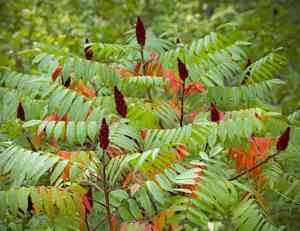
Staghorn sumac (Rhus typhina)
Also known as: Red sumac, Vinegar tree
The staghorn sumac (Rhus typhina) offers several parts that can be utilized for making dyes and mordants:
1. **Berries**: These can be used to produce red or brown dyes.
2. **Leaves**: Capable of yielding a yellow dye.
3. **Bark**: The inner bark is rich in tannins, making it effective as a mordant to fix dyes.
It’s noteworthy that almost every part of the plant, except the roots, can be used for dyeing purposes due to the tannin content, which helps in maintaining the colorfastness of the dyes. Additionally, the plant serves ecological roles, with luna moth caterpillars feeding on its leaves and birds such as pheasants and wild turkeys consuming its fruits.
Attributes of Staghorn sumac
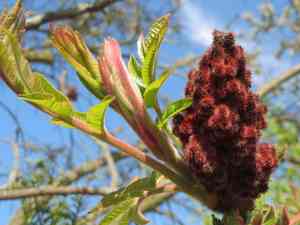
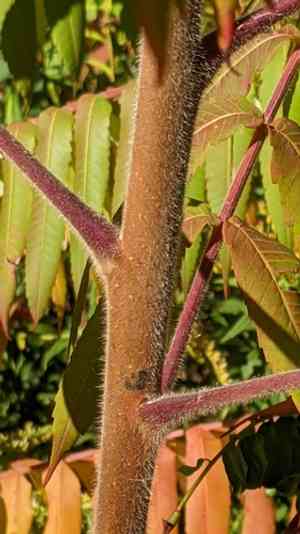
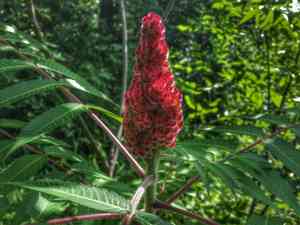
Images of Staghorn sumac
Quickly Identify Staghorn sumac
Scientific Classification of Staghorn sumac
Planting and Growing of Staghorn sumac
 How to Water Staghorn sumac?
 What Are the Sunlight Requirements for Staghorn sumac?
 What Is the Ideal Temperature Range for Staghorn sumac?
 What Soil is Best for Staghorn sumac?
 How to Fertilize Staghorn sumac?
 How to Prune Staghorn sumac?
 How to Propagate Staghorn sumac plant?
 How to Repot Staghorn sumac plant?
Toxicity of Staghorn sumac
Is Staghorn sumac toxic to humans?
Limited studies indicate that the sap of staghorn sumac may lead to skin rashes in individuals who are sensitive; however, more extensive research is necessary. Numerous species within the Rhus genus are known to be toxic and can provoke severe skin irritation, yet staghorn sumac lacks the hairy particles and smooth fruits characteristic of those species. Nonetheless, it is prudent to exercise caution when handling this plant.



