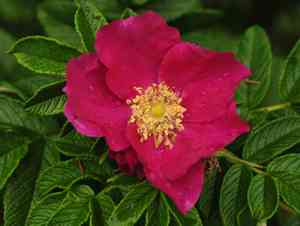
Rugosa rose (Rosa rugosa)
Also known as: Beach rose, Letchberry
This robust shrub thrives in diverse climates and poor soils. It blooms with large flowers from summer to winter, and its hips are both bird-attracting and edible for humans. Despite its attractive appearance, the Rugosa Rose is regarded as invasive in certain areas.
In This Article
Attributes of Rugosa rose
Lifespan
Perennial
Plant Type
Shrub
Plant Height
1 m to 1.5 m
Spread
1.2 m to 1.8 m
Leaf Color
Green Yellow
Flower Size
6 cm to 9 cm
Flower Color
Pink Red White Purple Yellow
Images of Rugosa rose
Quickly Identify Rugosa rose
1
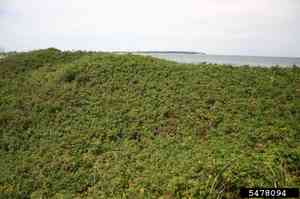
Robust shrub, 4-6 feet (1.2-1.8 meters) tall with arching stems and mound-like shape.
2
Dark green, pinnately compound leaves with 5-9 elliptic leaflets, serrate margins, and wrinkled texture.
3
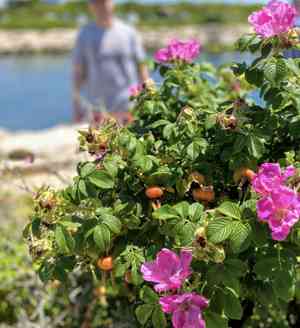
Pink to white, fragrant flowers, 2-3 inches (5-7.5 cm) wide with 5 petals and yellow stamens.
4
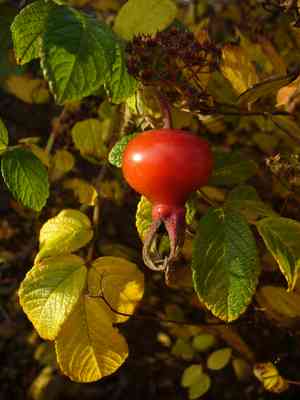
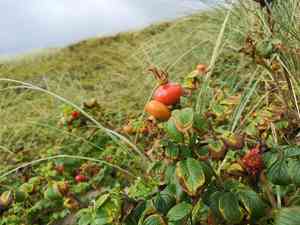
Bright red to orange, 1-inch (2.5 cm) fruits resembling large cherries.
5
Stout, arching stems with 0.25-inch (6 mm) needle-like prickles.
Scientific Classification of Rugosa rose
Phylum
Vascular plants
Class
Dicotyledons
Order
Roses, elms, figs, and allies
Family
Rose
Genus
Roses
Species
Rugosa rose
Planting and Growing of Rugosa rose
Care Difficulty
Easy
Watering Schedule
Every 4 days
Sunlight Requirements
Full sun
Sunshine Duration
6-10 hours
Ideal Temperature
60-75℉
Soil Type
Potting Mix, Peat Mix
Soil pH
6-7.5
Fertilizer Type
Balanced
Pruning Season
Spring, Summer
Pruning Area
Branches, Leaves
Pruning Frequency
2 times a year
Repotting Season
Spring
Pot Type
Plastic, Ceramic
 How to Water Rugosa rose?
Rosa rugosa, commonly known as rugosa rose, prefers deep watering sessions to mimic natural rainfall. Ensure the water reaches deep into the soil to encourage the roots to grow downward. You should aim for about 1000 milliliters each time, ensuring the soil is moist but not waterlogged.
More About Watering Techniques→
What are the symptoms of an underwatered Rugosa rose?
›
What should I do if my Rugosa rose is not getting enough water?
›
What are the symptoms of an overwatered Rugosa rose?
›
How to save an overwatered Rugosa rose?
›
 What Are the Sunlight Requirements for Rugosa rose?
Rosa rugosa prefers full sun, thriving under prolonged sunlight exposure. Ideal light aids in robust blooming and enhanced pest resistance, contributing significantly to its health and aesthetic appeal.
More About Sunlight Requirements Techniques→
Optimal Sun Exposure
›
Ensuring Proper Plant Placement
›
Benefits of Adequate Light
›
 What Is the Ideal Temperature Range for Rugosa rose?
The ideal temperature range for Rosa rugosa is between 60°F and 75°F. These temperatures support optimal physiological and metabolic processes, ensuring robust growth and vibrant blooms. This range provides a conducive environment for nutrient uptake and photosynthesis, crucial for maintaining healthy foliage and flower production.
 What Soil is Best for Rugosa rose?
Rosa rugosa thrives in well-drained soil that prevents waterlogging and root rot. Good drainage allows oxygen to reach the roots, promoting healthy growth and vibrant blooms. The plant benefits from soil enriched with organic matter, providing essential nutrients and improving soil texture. This supports vigorous growth and abundant flowers. While Rosa rugosa is drought-tolerant, maintaining moderately moist soil helps sustain its lush foliage and floral display, ensuring resilience during dry spells.
More About Soil→
 How to Fertilize Rugosa rose?
For Rosa rugosa, it's important to use a balanced approach. When using liquid fertilizer, dilute it to half its strength to avoid over-fertilization. With slow-release fertilizers, follow the instructions but aim for a moderate amount, about 50 grams per square meter, to ensure steady nutrient release.
More About Fertilizing Techniques→
 How to Prune Rugosa rose?
In early spring, prune Rosa rugosa by cutting back to the desired height, usually around one-third of the plant. Remove any dead, damaged, or crossing stems. This encourages healthy growth and allows for better air circulation. After the first flush of flowers in summer, perform a light pruning to remove spent blooms and any straggly growth. This encourages a second flush of blooms and keeps the shrub looking tidy. In autumn, remove any dead or diseased wood and tidy the plant by cutting back excessively long or unbalanced stems. This prepares the plant for winter and sets the stage for vigorous spring growth.
More About Pruning Techniques→
 How to Propagate Rugosa rose plant?
1
To propagate Rosa rugosa from seeds, collect the hips from mature plants in late autumn. Extract the seeds and dry them before storing them in a cool, dry place until early spring.
2
Select healthy, non-flowering stems from the parent plant for cuttings. Cut a section that is 6-8 inches long, ensuring it's free from disease and pests.
3
In early spring, dig up the plant and carefully divide its roots. Each divided section should have enough roots to support new growth once replanted.
 How to Repot Rugosa rose plant?
1
Signs that Rosa rugosa needs repotting include roots growing out of the drainage holes, slowed growth, and less frequent blooming. The best time to repot is early spring or early autumn when the plant is not in active growth, ensuring minimal stress.
2
Choose a pot that is 2-3 inches larger in diameter than the current one. A suitable pot ensures sufficient room for root expansion and proper drainage holes, crucial for preventing waterlogging and root rot.
3
Opt for well-draining, loamy soil with a mix of sand, silt, and organic matter. This choice supports healthy root development and keeps the plant well-nourished, aiding in robust growth and abundant flower production.
Learn More About Rugosa rose Diseases
Anthracnose
Bacterial Leaf Spot
Black Spot
Chemical Injury
Crown Gall
Damping-off
Downy Mildew
Drought Stress
Fusarium Wilt
Gray Mold
Leaf Curl
Leaf Spot
Mosaic
Nutrient Deficiency
Nutrient Toxicity
Powdery Mildew
Root Rot
Root-knot Nematode
Rusts
Sooty Mold
Spider Mites
Temperature Stress
Thrips Damage
White Mold



