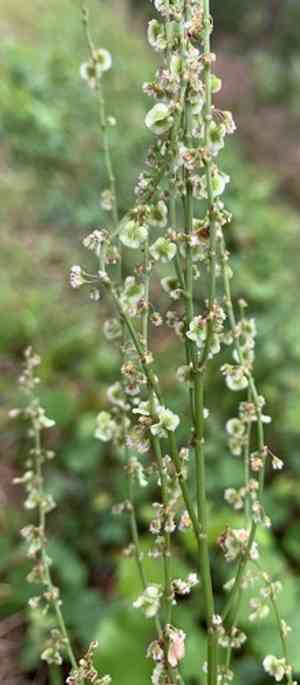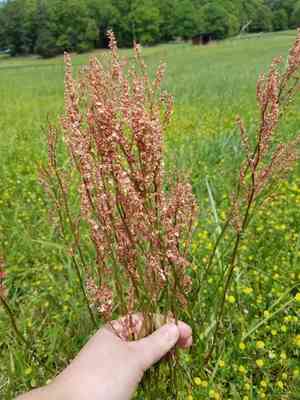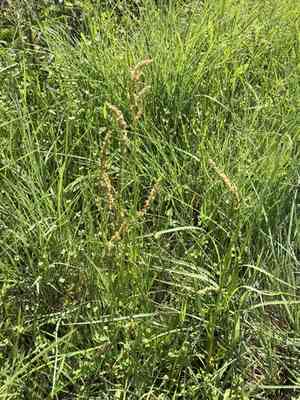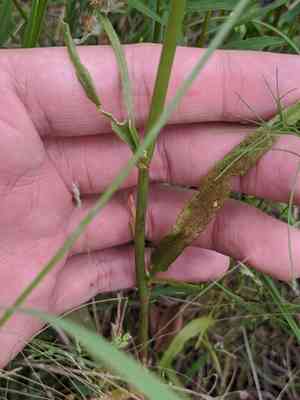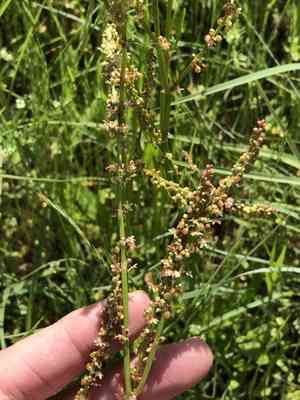
Heartwing Sorrel(Rumex hastatulus)

Heartwing Sorrel (Rumex hastatulus)

Also known as: Hastate-leaved Dock

**Heartwing Sorrel (Rumex hastatulus)**, related to buckwheat, is native to the eastern and southern United States. It typically grows in river valleys, meadows, and waste areas and is known for its poisonous properties.

Attributes of Heartwing Sorrel

Lifespan
Perennial, Annual
Plant Type
Herb
Plant Height
20 cm to 1 m
Spread
N/A
Leaf Color
Green
Flower Size
2.5 mm to 3 mm
Flower Color
Red White Green Burgundy

PlantJoy - Identify plants with a snap

Identify and diagnose plants, get toxicity alerts, and explore safety guides for all types of fungi.

Try for Free

Images of Heartwing Sorrel

Heartwing Sorrel(Rumex hastatulus)

Quickly Identify Heartwing Sorrel

1
Distinctive hastate (arrowhead-shaped) leaf base
2
Raceme or spike-like flower clusters with 3-6 sepals
3
Triangular to lens-shaped achene fruit measuring 2-3 mm
4
Smooth, sagittate (arrowhead-shaped) leaves with wavy margins
5
Membranous sheath above the stem's node aids identification

Scientific Classification of Heartwing Sorrel

Phylum
Vascular plants
Class
Dicotyledons
Order
Caryophyllales
Family
Buckwheat
Genus
Docks
Species
Heartwing Sorrel

Planting and Growing of Heartwing Sorrel

Care Difficulty
Easy
Watering Schedule
Every 4 days
Sunlight Requirements
Full sun
Sunshine Duration
4-8 hours
Ideal Temperature
68-77℉
Soil Type
Potting Mix, Peat Mix
Soil pH
5.5-7.5
Fertilizer Type
Balanced
Pruning Season
Spring, Summer
Pruning Area
Branches, Leaves
Pruning Frequency
2 times a year
Repotting Season
Spring
Pot Type
Plastic, Ceramic

water icon How to Water Heartwing Sorrel?

For Rumex hastatulus, aim to water thoroughly such that the soil is evenly moist but not waterlogged, allowing excess water to drain away. Avoid water accumulation at the base.
What are the symptoms of an underwatered Heartwing Sorrel?
What should I do if my Heartwing Sorrel is not getting enough water?
What are the symptoms of an overwatered Heartwing Sorrel?
How to save an overwatered Heartwing Sorrel?

sunlight icon What Are the Sunlight Requirements for Heartwing Sorrel?

Sunlight Requirements: Full sun, Partial sun
Duration of light: 4 to 6 hours
Partial sun to full sun is ideal. Adequate lighting ensures robust growth and vibrant leaf color while preventing stress-induced complications.
Ideal Location
Achieving Optimal Conditions
Benefits of Optimal Lighting
More About Sunlight Requirements Techniques

temperature icon What Is the Ideal Temperature Range for Heartwing Sorrel?

Ideal Temperature: 68 ~ 77℉
Rumex hastatulus thrives best in a moderate climate where temperatures are consistently between 68°F and 77°F. This range ensures optimal metabolic activity, leading to healthy growth and development.

soil icon What Soil is Best for Heartwing Sorrel?

Soil type: Sandy loam, Loam
Soil PH: 5.5 ~ 7.5
Rumex hastatulus thrives in well-drained soil, preventing waterlogging. Good drainage allows roots to breathe and prevents root rot, promoting healthier growth and vibrant foliage. This plant benefits from nutrient-rich soil, which provides essential minerals for robust growth and flowering. Incorporating organic matter boosts fertility, leading to more vigorous development. While good drainage is crucial, Rumex hastatulus also requires soil capable of retaining some moisture. This balance ensures plants are not stressed by drought conditions, maintaining their vitality.

fertilize icon How to Fertilize Heartwing Sorrel?

Fertilizer type: Balanced
Rumex hastatulus benefits from a moderate amount of fertilizer. Use a balanced formula; apply about half a teaspoon of granular fertilizer per plant if using slow-release types. When using liquid fertilizers, dilute them to half strength, ensuring you don't overdo it.

prune icon How to Prune Heartwing Sorrel?

Pruning Time: Spring, Summer
Start by removing any dead or diseased stems. This prevents the spread of plant diseases and encourages healthier growth. Cut these stems back to the base, making sure to cut at an angle. Trim back any leggy or excessively long shoots to maintain a compact and attractive shape. This should be done conservatively to avoid stressing the plant. To promote a bushier appearance, prune just above a leaf node. This will stimulate the plant to send out more lateral growth rather than growing taller.

propagate icon How to Propagate Heartwing Sorrel plant?

Propagate Time: Spring, Early spring
1
Fill the seed tray with potting mix up to about 1cm from the rim. Moisten the mix slightly ensuring it's not waterlogged, as excessive moisture can hinder seed germination.
2
Scatter the Rumex hastatulus seeds evenly across the potting mix surface. Press them down gently, ensuring they make contact with the soil, but do not bury them too deeply.
3
Place the tray in a location with indirect sunlight and maintain consistent moisture. Check daily, watering lightly to prevent the mix from drying out, promoting optimal germination conditions.

repot icon How to Repot Heartwing Sorrel plant?

Repotting frequency: Every 1-2 years
1
Rumex hastatulus should be repotted when you notice roots emerging from the drainage holes or when growth appears stunted. Spring or early summer are the best months for repotting to ensure the plant has ample time to adjust and flourish.
2
Choose a pot that is one size larger than the current one to give the roots space to expand. It's important to select pots with adequate drainage holes to prevent waterlogging, ensuring root health and strong growth.
3
Opt for a well-drained sandy loam to mimic the plant’s natural habitat. This soil type allows excess moisture to evaporate, reducing the risk of root rot while retaining enough water for the plant's needs.

PlantJoy - Identify plants with a snap

Find the best spots for them to optimize their health, simply using your phone.

Try for Free

Toxicity of Heartwing Sorrel

Is Heartwing Sorrel toxic to humans?

Heartwing Sorrel presents a low-level toxicity hazard to humans, with the entire plant being able to induce negative effects. Physical contact with this plant may result in skin reactions, while consuming even minimal quantities can lead to poisoning as a result of oxalic acid. Symptoms of such poisoning can include discomfort in the mouth and throat, challenges with swallowing, nausea, vomiting, and diarrhea. In more severe circumstances, the presence of oxalates could lead to kidney stones or renal issues. It is advised that individuals take precautions to prevent accidental ingestion or extended skin exposure to heartwing Sorrel.

Is Heartwing Sorrel toxic to cat?

Heartwing Sorrel carries a low toxicity risk for cats, with the entire plant being potentially harmful. Cats may suffer from poisoning through skin contact or by inadvertently consuming any part of the plant. Upon exposure, they may exhibit general symptoms of physical distress or illness. The toxic agent responsible for these negative effects is oxalic acid. If there is any concern regarding potential poisoning from heartwing Sorrel, it is crucial to seek veterinary care promptly, as swift intervention can be vital for a cat's health and wellbeing.

Is Heartwing Sorrel toxic to dog?

Heartwing Sorrel presents a minor toxicity threat to dogs. Canines can be poisoned by this plant either through skin exposure or accidental consumption. The entire plant is toxic, and if a dog interacts with or ingests any part of it, they may show symptoms like gastrointestinal distress, weakness, or tremors, which result from the presence of oxalic acid. It is essential for dog owners to closely supervise their pets and restrict access to heartwing Sorrel. If a dog exhibits symptoms of poisoning, prompt veterinary attention is vital.

Identify toxic plants for your safety

Learn which plants are harmful to you and your pets, and make informed choices for a safer home!

Try for Free
WARNING
The judgment on toxicity and danger is for reference only. We DO NOT GUARANTEE any accuracy of such judgment. Therefore, you SHALL NOT rely on such judgment. It is IMPORTANT TO SEEK PROFESSIONAL ADVICE in advance when necessary.
More About Toxic Techniques