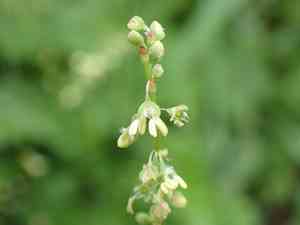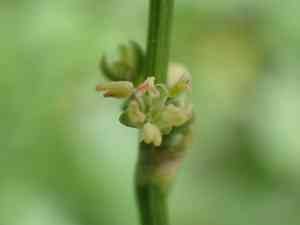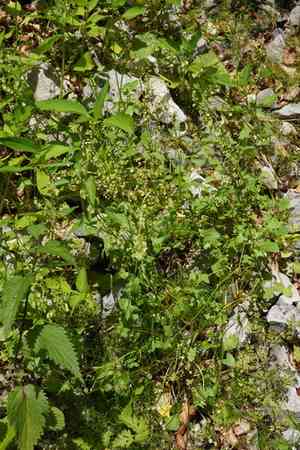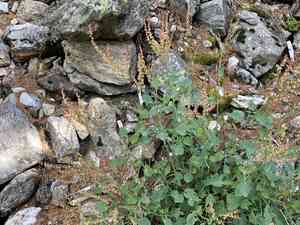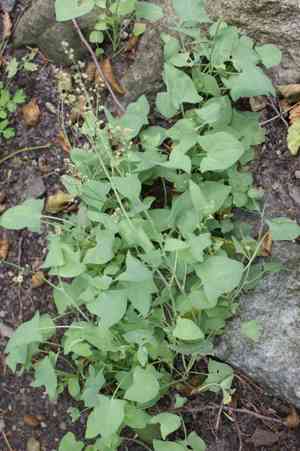
Buckler-leaved sorrel(Rumex scutatus)

Buckler-leaved sorrel (Rumex scutatus)

Also known as: Buckler's sorrel, Bucklers sorrel, Narrow-leaved dock, Garden sorrel

Rumex scutatus, often referred to as French sorrel, buckler-leaved sorrel, or shield-leaf sorrel, is a notable herb in the culinary world. It is prized for its tangy, lemon-like flavor, which is attributed to its oxalic acid content. While it is often used in a variety of dishes, including soups, sauces, and salads, its distinctive sharp taste makes it a favorite for enhancing the flavor of fish and poultry. This hardy plant can withstand frost and short dry periods, growing quickly into a sizable clump with broad leaves that can reach up to 10 centimeters (4 inches) in width. French sorrel is sometimes preferred over garden sorrel (Rumex acetosa) for its culinary applications.

Attributes of Buckler-leaved sorrel

Lifespan
Perennial
Plant Type
Herb
Plant Height
30 cm
Spread
60 cm
Leaf Color
Green
Flower Size
Less than 1 cm (0.4 inches)
Flower Color
White Green

PlantJoy - Identify plants with a snap

Identify and diagnose plants, get toxicity alerts, and explore safety guides for all types of fungi.

Try for Free

Images of Buckler-leaved sorrel

Buckler-leaved sorrel(Rumex scutatus)

Quickly Identify Buckler-leaved sorrel

1
Silver-gray lance-shaped leaves up to 6 inches (15 cm) long.
2
Distinct rosette growth pattern close to the ground.
3
Fleshy leaves with smooth to slightly wrinkled texture.
4
Inconspicuous greenish flowers on slender stalks above foliage.
5
Maximum height of 12 inches (30 cm) during growth.

Scientific Classification of Buckler-leaved sorrel

Phylum
Vascular plants
Class
Dicotyledons
Order
Caryophyllales
Family
Buckwheat
Genus
Docks
Species
Buckler-leaved sorrel

Planting and Growing of Buckler-leaved sorrel

Care Difficulty
Easy
Watering Schedule
Every 3 days
Sunlight Requirements
Partial sun
Sunshine Duration
4-8 hours
Ideal Temperature
60-70℉
Soil Type
Potting Mix, Peat Mix
Soil pH
6.5-7.5
Fertilizer Type
Balanced
Pruning Season
Spring, Summer
Pruning Area
Branches, Leaves
Pruning Frequency
2 times a year
Repotting Season
Spring
Pot Type
Plastic, Ceramic

water icon How to Water Buckler-leaved sorrel?

For Rumex scutatus, the watering amount should be sufficient to moisten the soil without waterlogging it. Each watering session should provide approximately 250 milliliters of water. This quantity is enough to reach the roots but ensure the pot's drainage system prevents any standing water.
What are the symptoms of an underwatered Buckler-leaved sorrel?
What should I do if my Buckler-leaved sorrel is not getting enough water?
What are the symptoms of an overwatered Buckler-leaved sorrel?
How to save an overwatered Buckler-leaved sorrel?

sunlight icon What Are the Sunlight Requirements for Buckler-leaved sorrel?

Sunlight Requirements: Partial sun
Duration of light: 4 to 6 hours
Rumex scutatus prefers partial sun, where it can access moderate sunlight for at least 4-6 hours. This light level supports balanced photosynthesis and maintains vibrant foliage, enhancing both its aesthetic and health.
How much sunlight does Rumex scutatus need?
What is the ideal spot to place Rumex scutatus for sunlight?
How can you ensure Rumex scutatus gets the best light exposure?
More About Sunlight Requirements Techniques

temperature icon What Is the Ideal Temperature Range for Buckler-leaved sorrel?

Ideal Temperature: 60 ~ 70℉
Rumex scutatus thrives best in temperatures ranging from 60 to 70°F. This range ensures optimal metabolic rates and cellular functions, facilitating robust growth and vibrant foliage. Such conditions are typically found in temperate climates where temperature fluctuations are moderate.

soil icon What Soil is Best for Buckler-leaved sorrel?

Soil type: Loam, Calcareous soil, Sandy loam
Soil PH: 6.5 ~ 7.5
Rumex scutatus thrives in well-drained soil, which prevents waterlogging and root rot. Good drainage improves aeration, allowing roots to breathe and promoting healthy growth. This plant benefits from a nutrient-rich substrate, which supplies essential minerals and nutrients for vigorous leaf production, increasing its culinary value. Maintaining moderate moisture levels is crucial, as it helps the plant absorb nutrients effectively without causing stress from over- or under-watering.

fertilize icon How to Fertilize Buckler-leaved sorrel?

Fertilizer type: Balanced
For Rumex scutatus, apply a balanced fertilizer with a concentration of 5-5-5 or 10-10-10. Use approximately 1 tablespoon (15 ml) per gallon of water for a liquid solution. If using granular fertilizer, sprinkle about 1/4 cup (approximately 60 ml) around the base of each plant.

prune icon How to Prune Buckler-leaved sorrel?

Pruning Time: Spring, Summer, Autumn
Begin by using sharp and clean pruning shears to remove any damaged or diseased leaves. Cut back any overgrown stems to maintain the desired shape and size. Focus on promoting bushier growth by trimming just above a leaf node, since this encourages the plant to produce new side shoots. Remember not to cut more than one-third of the plant at any time, as it could stress the plant. When pruning Rumex scutatus, focus on removing the older and larger outer leaves to encourage fresh growth from the center. This not only revitalizes the plant but also provides the perfect opportunity for a tidier appearance. Cut just above the node to ensure the new growth emerges robust and healthy. Additionally, regularly harvested leaves can be used as a culinary herb. More About Pruning Techniques

propagate icon How to Propagate Buckler-leaved sorrel plant?

Propagate Time: Spring, Early Spring, Late Spring
1
Begin by filling seed trays with a well-draining seed-starting mix. Sow Rumex scutatus seeds thinly and cover them lightly with soil. Keep the soil moist and place the trays in a warm location with indirect sunlight.
2
Once seedlings have developed their second set of true leaves, carefully transplant them to individual pots or a prepared garden bed, ensuring that the plant is at the same soil depth as it was in the tray.
3
To divide Rumex scutatus, use a spade to carefully dig around the plant. Lift the plant from the soil, shake off excess dirt, and divide the root clump into sections, ensuring each has several stems and a healthy root system.
More About Propagating Techniques

repot icon How to Repot Buckler-leaved sorrel plant?

Repotting frequency: Every 1-2 years
1
Rumex scutatus needs repotting when you notice roots coming out of the drainage holes, the soil becomes compacted, or growth slows despite proper care. These are clear signs that the plant's current environment is cramped, and it needs more space to flourish.
2
Select a pot that is one size larger than the current one and has drainage holes to prevent waterlogging. A slightly bigger pot allows ample room for root expansion, promoting healthier growth and avoiding stagnant water, which can cause root rot.
3
Opt for a well-draining potting mix with a balanced pH. This type of soil ensures the plant's roots receive adequate moisture without getting waterlogged, allowing nutrients to reach the plant efficiently and promoting overall plant health.

PlantJoy - Identify plants with a snap

Find the best spots for them to optimize their health, simply using your phone.

Try for Free

Toxicity of Buckler-leaved sorrel

Is Buckler-leaved sorrel toxic to cat?

The buckler-leaved sorrel poses a moderate to severe toxicity risk to cats due to the presence of minute, sharp calcium oxalate crystals. These crystals are distributed throughout the entire plant, meaning that consuming any part can lead to a negative reaction in your feline. The crystals can become lodged in your cat's throat and digestive system for as long as two weeks. Signs of poisoning include vomiting, diarrhea, difficulty breathing, and seizures. If you suspect your cat has ingested any portion of this plant, it's crucial to reach out to your veterinarian immediately.

Is Buckler-leaved sorrel toxic to dog?

Buckler-leaved sorrel possesses mild toxicity for dogs, although severe reactions are infrequent, as considerable amounts need to be consumed for such effects to manifest. Every part of the plant contains minor quantities of soluble oxalates, which can lead to a burning feeling in and around the mouth and throat, in addition to stomach upset that may result in vomiting and diarrhea. Dogs might inadvertently consume this plant if they receive leftovers from a meal that included it.

Identify toxic plants for your safety

Learn which plants are harmful to you and your pets, and make informed choices for a safer home!

Try for Free
WARNING
The judgment on toxicity and danger is for reference only. We DO NOT GUARANTEE any accuracy of such judgment. Therefore, you SHALL NOT rely on such judgment. It is IMPORTANT TO SEEK PROFESSIONAL ADVICE in advance when necessary.
More About Toxic Techniques