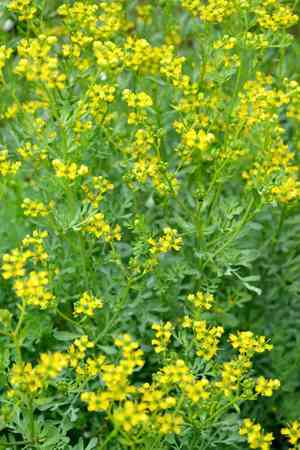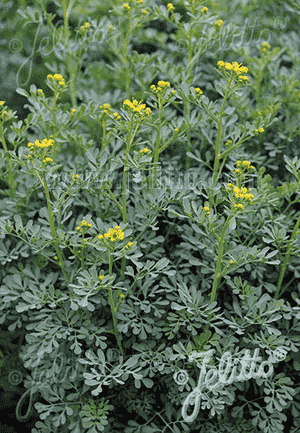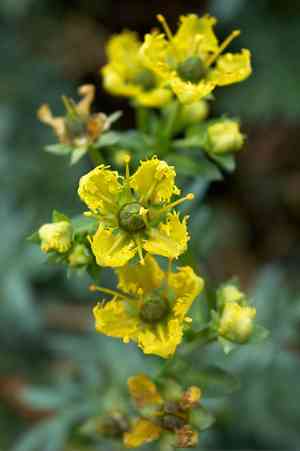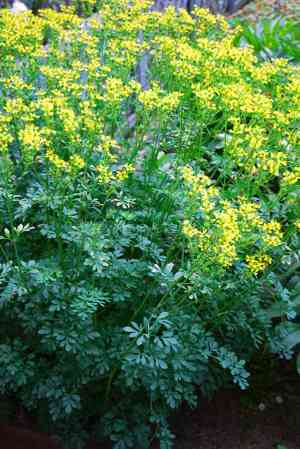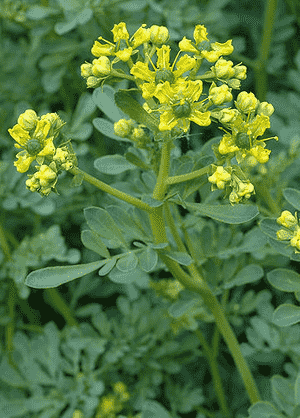
Rue(Ruta graveolens)

Rue (Ruta graveolens)

Also known as: Herb-of-grace

Rue has a notable presence in history, both in literature and for its aromatic qualities. It is mentioned in various historic literary works, such as the Bible, and the writings of William Shakespeare and John Milton, among others. In these texts, rue is often highlighted for its symbolic significance or its distinct fragrance. While it has been used in cooking, its strong bitter flavor makes it uncommon in culinary practices.

Attributes of Rue

Lifespan
Perennial
Plant Type
Herb
Plant Height
61 cm to 91 cm
Spread
60 cm to 90 cm
Leaf Color
Green Blue Gray
Flower Size
2 cm
Flower Color
Yellow Gold

PlantJoy - Identify plants with a snap

Identify and diagnose plants, get toxicity alerts, and explore safety guides for all types of fungi.

Try for Free

Images of Rue

Rue(Ruta graveolens)

Quickly Identify Rue

1
Compact, evergreen subshrub reaching 2-3 feet (60-90 cm) in height and width.
2
Distinctive fern-like, aromatic leaves with soft blue-green color and gland dots.
3
Small, dull yellow flowers in terminal clusters with spoon-shaped petals, emitting herbal scent.
4
Brown, round fruit splitting into five parts, revealing numerous small dark seeds.
5
Soft green stems maturing into woody texture, sparse branching with alternating leaves.

Scientific Classification of Rue

Phylum
Vascular plants
Class
Dicotyledons
Order
Maples, mangos, mahogany, citrus, and allies
Family
Rue
Genus
Rues
Species
Rue

Planting and Growing of Rue

Care Difficulty
Easy
Watering Schedule
Every 2 days
Sunlight Requirements
Full sun
Sunshine Duration
4-8 hours
Ideal Temperature
65-75℉
Soil Type
Potting Mix, Peat Mix
Soil pH
6.5-7.5
Fertilizer Type
Balanced
Pruning Season
Spring, Summer
Pruning Area
Branches, Leaves
Pruning Frequency
2 times a year
Repotting Season
Spring
Pot Type
Plastic, Ceramic

water icon How to Water Rue?

Ruta graveolens thrived best when watered deeply but infrequently. Aim for about 200 ml of water per session, ensuring thorough soaking without waterlogging. The soil should feel moist but not overly saturated, reflecting the plant's preference for drier conditions.
What are the symptoms of an underwatered Rue?
What should I do if my Rue is not getting enough water?
What are the symptoms of an overwatered Rue?
How to save an overwatered Rue?
More About Watering Techniques

sunlight icon What Are the Sunlight Requirements for Rue?

Sunlight Requirements: Full sun, Partial sun
Duration of light: 6 to 8 hours daily.
Ruta graveolens excels in both full and partial sun. The plant benefits from these conditions through enhanced photosynthesis, producing better aromatic oils and robust, vigorous growth.
Optimal Daily Sunlight Hours
Dealing with Mixed Sunlight Environments
Benefits of Proper Sunlight Exposure
More About Sunlight Requirements Techniques

temperature icon What Is the Ideal Temperature Range for Rue?

Ideal Temperature: 65 ~ 75℉
Ideal temperatures for Ruta graveolens, commonly known as rue, are typically between 65°F and 75°F. These conditions mimic the warm climates of its native Mediterranean habitat. Such temperatures facilitate optimal photosynthesis and metabolic processes, essential for robust growth and foliage development. Maintaining this range helps prevent stress and keeps the plant healthy.

soil icon What Soil is Best for Rue?

Soil type: Loam, Sandy loam, Calcareous soil
Soil PH: 6.5 ~ 7.5
Ruta graveolens thrives in well-draining soil that prevents waterlogging, which can lead to root rot. This requirement ensures that the plant's roots receive adequate oxygen and nutrients without becoming overly saturated. The plant prefers soil with moderate nutrient content, which helps maintain optimal growth without causing nutrient burn or deficiency. Balanced nutrients ensure healthy foliage and promote flowering. A neutral to slightly alkaline pH range of 6.5 to 7.5 is ideal for Ruta graveolens. This ensures that essential nutrients are readily available, fostering strong and healthy root development. More About Soil

fertilize icon How to Fertilize Rue?

Fertilizer type: Balanced
Ruta graveolens, commonly known as rue, generally doesn't need heavy fertilization. A balanced fertilizer diluted to half strength is ideal, as excessive nutrients can harm the plant. For liquid fertilizers, use about 100 ml of diluted solution per plant to ensure they receive just the right amount of nutrients. More About Fertilizing Techniques

prune icon How to Prune Rue?

Pruning Time: Spring, Summer
Begin by gathering a clean, sharp pair of pruning shears. Identify and remove any dead or damaged stems by cutting them back to the base. Make sure to sterilize your tools before use to prevent disease. To maintain an appealing shape, prune Ruta graveolens by cutting back no more than one-third of the plant. Focus on creating a rounded profile by cutting just above a node to encourage new growth. After pruning, water the plant thoroughly and apply a balanced fertilizer to aid recovery. Avoid overwatering as Ruta graveolens prefers well-drained soil. Mulch around the base to retain moisture. More About Pruning Techniques

propagate icon How to Propagate Rue plant?

Propagate Time: Spring, Summer
1
Begin by filling a seed tray with a well-draining potting mix. Sow the seeds sparingly on the surface and lightly cover them with a thin layer of soil.
2
For cutting propagation, cut a healthy, non-flowering stem about 5 inches long. Remove the lower leaves and dip the cut end in rooting hormone before planting in a potting mix.
3
Carefully dig up a mature plant and separate the root mass into sections using a sharp knife. Ensure each section has healthy roots and shoots, then replant immediately.
More About Propagating Techniques

repot icon How to Repot Rue plant?

Repotting frequency: Every 2-3 years
1
Ruta graveolens should be repotted when it shows signs of being root-bound, which means roots are growing out of the drainage holes or circling on the topsoil. A slowdown in plant growth can also signal it's time for a new pot. Early spring, with its mild temperatures, is an ideal time to undertake this gardening task.
2
Select a pot with good drainage and that’s one size larger than the current container. Good drainage prevents waterlogging, which can lead to root rot. A slightly larger pot provides the roots enough room to expand, promoting healthier growth and ensuring your Rue stays happy.
3
Opt for a well-draining potting mix rich in organic matter, like a cactus or succulent mix. This type of soil allows excess water to escape quickly, preventing water from sitting in the pot. A rich organic mix offers nutrients essential for the vibrant growth of Ruta graveolens.

PlantJoy - Identify plants with a snap

Find the best spots for them to optimize their health, simply using your phone.

Try for Free

Toxicity of Rue

Is Rue toxic to humans?

Rue is an extremely toxic plant when ingested in significant quantities. It acts as a skin irritant, leading to phytophotodermatitis, which results in painful blisters appearing upon exposure to sunlight. Less severe reactions include inflammation and redness of the affected area. Consuming large quantities of this weed may lead to intense abdominal discomfort. Nausea, vomiting, and diarrhea are prevalent and can escalate to severe conditions. In worst-case scenarios, systemic organ failure can arise, potentially resulting in death.

Is Rue toxic to cat?

Rue is recognized as a toxic plant for cats. The hazards it poses to feline health can arise from any ingestion of its parts—such as leaves and stems—or from contact with its sap. Poisoning symptoms in cats can range from gastrointestinal upset and skin irritation to more serious reactions, which vary based on the degree of exposure and the individual cat's sensitivity. If a cat consumes rue or shows any signs of distress indicative of potential poisoning, it is crucial to obtain prompt veterinary attention to provide appropriate treatment and minimize risks to the cat's health.

Is Rue toxic to dog?

Rue is recognized as toxic to dogs. If a dog accidentally ingests this plant, it can lead to poisoning. All parts of the rue plant are considered toxic, especially the leaves and the sap or juice. Symptoms that may arise if a dog consumes any part of rue include gastrointestinal disturbances, vomiting, diarrhea, excessive salivation, and potentially more serious reactions based on the quantity ingested. Given the possible severity of rue poisoning, it is vital for dog owners to restrict their pets' access to this plant and to seek prompt veterinary assistance if their pet displays any symptoms of poisoning.

Identify toxic plants for your safety

Learn which plants are harmful to you and your pets, and make informed choices for a safer home!

Try for Free
WARNING
The judgment on toxicity and danger is for reference only. We DO NOT GUARANTEE any accuracy of such judgment. Therefore, you SHALL NOT rely on such judgment. It is IMPORTANT TO SEEK PROFESSIONAL ADVICE in advance when necessary.
More About Toxic Techniques