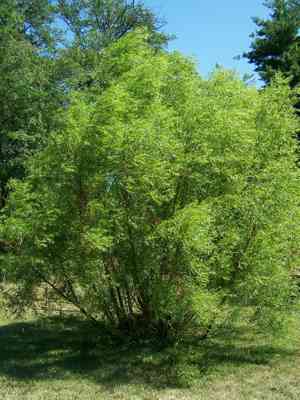
Black willow(Salix nigra)

Black willow (Salix nigra)

Also known as: Swamp willow

The black willow tree (Salix nigra) is a rapidly growing tree that can attain heights up to 43 meters. Its benefits and uses include:

1. **Medicinal Applications**: The bark contains salicin, which is similar to aspirin and helps alleviate pain and reduce fever and inflammation.

2. **Erosion Prevention**: Its extensive root system is effective in stabilizing soil, making it ideal for controlling erosion along riverbanks and wetlands.

3. **Wildlife Support**: Serves as an essential early spring food source for various wildlife, including birds and insects.

4. **Timber and Wood Products**: The lightweight wood is often used for making crates, furniture, and light construction items.

5. **Ornamental Uses**: Frequently planted in landscapes for its aesthetic appeal and its ability to thrive in wet soils, providing both beauty and shade.

These attributes make the black willow a valuable tree for ecological, medicinal, and practical purposes.

Attributes of Black willow

Lifespan
Perennial
Plant Type
Tree
Plant Height
21 m to 24 m
Spread
9 m to 18 m
Leaf Color
Green
Flower Size
2.5 cm to 8 cm
Flower Color
Yellow Green Gold

PlantJoy - Identify plants with a snap

Identify and diagnose plants, get toxicity alerts, and explore safety guides for all types of fungi.

Try for Free

Images of Black willow

Black willow(Salix nigra)

Quickly Identify Black willow

1
Yellowish-green, non-showy flowers in catkins during early spring.
2
Reddish-brown capsules with fluffy appearance, wind-dispersed seeds.
3
Narrow lanceolate leaves, toothed edges, green to yellow in fall.
4
Slender stem, brittle twigs, irregular branching pattern.
5
Bark variation from light to dark, deep furrows, shaggy scales.

Scientific Classification of Black willow

Phylum
Vascular plants
Class
Dicotyledons
Order
Malpighiales
Family
Willow
Genus
Willows
Species
Black willow

Planting and Growing of Black willow

Care Difficulty
Easy
Watering Schedule
Every 12 days
Sunlight Requirements
Full sun
Sunshine Duration
4-6 hours
Ideal Temperature
68-77℉
Soil Type
Potting Mix, Peat Mix
Soil pH
5.5-8
Fertilizer Type
Balanced
Pruning Season
Spring, Summer
Pruning Area
Branches, Leaves
Pruning Frequency
2 times a year
Repotting Season
Spring
Pot Type
Plastic, Ceramic

water icon How to Water Black willow?

When watering Salix nigra, aim to provide about 500 ml of water per session. This ensures that the soil is moist but not soggy, supporting the plant's resilience. The goal is to mimic the plant's natural wetland environment without creating conditions that lead to root rot.
What are the symptoms of an underwatered Black willow?
What should I do if my Black willow is not getting enough water?
What are the symptoms of an overwatered Black willow?
How to save an overwatered Black willow?
More About Watering Techniques

sunlight icon What Are the Sunlight Requirements for Black willow?

Sunlight Requirements: Full sun, Partial sun
Duration of light: 6 to 10 hours
The ideal light range for Salix nigra is full to partial sun, aiding in energy optimization for processes like photosynthesis, which supports vigorous growth and disease resistance.
Optimal Sunlight Exposure
Problem Identification
Benefits of Ideal Light
More About Sunlight Requirements Techniques

temperature icon What Is the Ideal Temperature Range for Black willow?

Ideal Temperature: 68 ~ 77℉
The ideal temperature range for Salix nigra, commonly known as Black Willow, is between 68°F and 77°F. This range supports optimal growth, promoting healthy green leaves and efficient photosynthesis. By maintaining these temperatures, you prevent stress on the plant and facilitate robust root development, ensuring a sturdy structure for this water-loving species.

soil icon What Soil is Best for Black willow?

Soil type: Loam, Sandy loam, Sandy soil
Soil PH: 5.5 ~ 8
For Salix nigra, the presence of a nutrient-rich soil is paramount. This ensures that the plant obtains essential nutrients vital for its growth and development, leading to lush foliage and sturdy structure. Good drainage is key for preventing root rot in Salix nigra. Well-drained soils help maintain the right moisture levels, preventing waterlogging, which can harm the plant's roots. Salix nigra thrives in soils that retain moisture well without becoming waterlogged. This balance ensures the plant receives ample water for robust growth, especially during dry spells. More About Soil

fertilize icon How to Fertilize Black willow?

Fertilizer type: Balanced
For Salix nigra, fertilizing should be done with care. In spring, around 1 pound of balanced fertilizer (e.g., 10-10-10) per inch of trunk diameter can be applied. This ensures the nutrients are adequate for vigorous growth without overloading the plant. More About Fertilizing Techniques

prune icon How to Prune Black willow?

Pruning Time: Spring, Summer, Autumn, Winter
When pruning Salix nigra, begin by removing dead or diseased branches as these can spread illness to the rest of the plant. Thin out crowded branches to improve air circulation and light penetration throughout the tree. Cut back about one-third of the oldest stems to ground level to encourage new growth from the base. To maintain a desired shape or size, cut back the longest branches to just above a bud pointing in the desired direction. This not only helps control the size but also prevents the plant from looking wild and unruly. Regular shaping enhances the tree's aesthetic appeal. More About Pruning Techniques

propagate icon How to Propagate Black willow plant?

Propagate Time: Late spring,Early summer
1
For seed propagation, collect mature seeds from the plant in late spring. For cuttings, select a healthy, disease-free stem, ideally about 10-15 cm long, and cut it using sanitized pruning shears.
2
Use a well-draining, sandy soil mix for both seeds and cuttings. This ensures that excess water can easily drain away, reducing the chances of root rot while still keeping adequate moisture.
3
Place seeds about 1 cm deep and cuttings slightly buried in the planting medium. Water thoroughly but gently. Ensure the medium remains consistently moist but not waterlogged during the initial rooting stages.
More About Propagating Techniques

repot icon How to Repot Black willow plant?

Repotting frequency: Every 2-3 years
1
Observe your Salix nigra for signs it needs repotting, such as roots emerging from drainage holes or slowed growth. Spring is the optimal time as the plant is ready to undertake new growth after winter dormancy.
2
Select a pot that is at least 2 inches wider in diameter than the current pot. This provides ample room for root growth without overwhelming the plant. Terracotta is a great option as it allows the soil to breathe.
3
Opt for a loamy, well-draining soil to prevent waterlogging while providing nutrients. A balanced mix ensures good root health, vital for a plant often growing near moisture, like the Salix nigra.

PlantJoy - Identify plants with a snap

Find the best spots for them to optimize their health, simply using your phone.

Try for Free