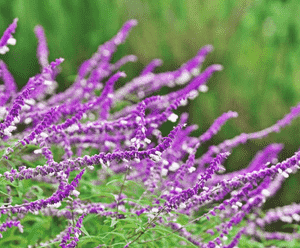
Mexican Bush Sage (Salvia leucantha)
Also known as: Mexican bush sage, Mexican sage
Pineapple Sage (Salvia elegans) is a plant species indigenous to central and eastern Mexico. It thrives in subtropical and tropical conifer forests. Known for its vibrant red flowers and pineapple-scented leaves, Pineapple Sage is particularly attractive to butterflies, bees, and hummingbirds.
In This Article
Attributes of Mexican Bush Sage
Lifespan
Perennial, Annual
Plant Type
Herb
Plant Height
1.2 m
Spread
45 cm
Leaf Color
Green Gray Silver
Flower Size
2 cm
Flower Color
White Purple
Images of Mexican Bush Sage
Quickly Identify Mexican Bush Sage
1
Upright stems with woolly white hairs.
2
Distinctive velvety purple calyces with white petals.
3
Gray-green leaves with whitish undersides due to dense hairs.
4
Long tubular flowers with pure white corollas.
5
Linear lance-shaped leaves with velvet-like texture.
Scientific Classification of Mexican Bush Sage
Phylum
Vascular plants
Class
Dicotyledons
Order
Lamiales
Family
Mint
Genus
Sages
Species
Mexican Bush Sage
Planting and Growing of Mexican Bush Sage
Care Difficulty
Easy
Watering Schedule
Every 4 days
Sunlight Requirements
Full sun
Sunshine Duration
6-10 hours
Ideal Temperature
65-75℉
Soil Type
Potting Mix, Peat Mix
Soil pH
6.5-7.5
Fertilizer Type
Balanced
Pruning Season
Spring, Summer
Pruning Area
Branches, Leaves
Pruning Frequency
2 times a year
Repotting Season
Spring
Pot Type
Plastic, Ceramic
 How to Water Mexican Bush Sage?
For Salvia leucantha, also known as Mexican Bush Sage, watering practices should cater to its preference for well-drained soil. Apply approximately 500 ml of water each session, ensuring the root zone is thoroughly saturated. Aim to water until the soil feels damp but not soggy, avoiding excess moisture that can lead to root rot.
More About Watering Techniques→
What are the symptoms of an underwatered Mexican Bush Sage?
›
What should I do if my Mexican Bush Sage is not getting enough water?
›
What are the symptoms of an overwatered Mexican Bush Sage?
›
How to save an overwatered Mexican Bush Sage?
›
 What Are the Sunlight Requirements for Mexican Bush Sage?
Salvia leucantha prefers a light range of full sun to partial sun, enjoying up to 8 hours of light. Ideal lighting allows the plant to thrive with rich blooms and resilient foliage, significantly enhancing its natural beauty and stress resistance.
More About Sunlight Requirements Techniques→
What is the ideal lighting condition for Salvia leucantha?
›
How can I provide the best lighting for Salvia leucantha?
›
What benefits does optimal lighting provide to Salvia leucantha?
›
 What Is the Ideal Temperature Range for Mexican Bush Sage?
The ideal temperature range for Salvia leucantha is between 65°F and 75°F. This range supports optimal growth, flowering, and robust plant health. Maintaining temperatures within this range ensures that the plant can efficiently carry out its physiological processes.
 What Soil is Best for Mexican Bush Sage?
Salvia leucantha thrives in well-drained soil, which helps prevent root rot by allowing excess water to escape. This is beneficial for healthy root development and ensures the plant can take advantage of rainwater and irrigation without drowning. A nutrient-rich medium supports the robust growth of Salvia leucantha, providing essential elements that enhance flowering and foliage. Incorporating organic matter can build such a medium, offering natural growth boosters without the need for chemical fertilizers. While well-drained, the soil should retain some moisture to support Salvia leucantha during dry spells. Adding materials like compost or peat humus can increase moisture retention, ensuring the plant remains hydrated during hotter periods.
More About Soil→
 How to Fertilize Mexican Bush Sage?
Salvia leucantha prefers a moderate amount of fertilizer. Liquid fertilizers should be diluted to half strength to avoid over-fertilizing, typically aiming for about 1/4 cup per gallon of water.
More About Fertilizing Techniques→
 How to Prune Mexican Bush Sage?
To prune Salvia leucantha, start by using clean, sharp pruning shears. Cut back dead or damaged stems to encourage fresh growth. Aim to remove about one-third of the plant, focusing on older or flower-spent stems. This practice stimulates new foliage and healthier flower production. In early spring, perform rejuvenation pruning by cutting the plant back to 6-12 inches above the ground. This may seem drastic, but it revitalizes the plant, encouraging vibrant growth and a more robust plant structure when the growing season resumes.
More About Pruning Techniques→
 How to Propagate Mexican Bush Sage plant?
1
Collect ripe seeds from the plant and sow them in seed trays filled with a well-draining potting mix. Cover the seeds lightly with soil and keep the trays in a warm, partly shaded area. Ensure the soil remains moist, and seedlings should appear within two to three weeks.
2
Select healthy, non-flowering stems for cuttings, making sure each cutting is about 4-6 inches long. Remove the lower leaves and dip the cut end in rooting hormone to enhance root development. Plant the cuttings in moist perlite or sand.
3
Divide Salvia leucantha in spring or early autumn when the plant is not in bloom. Carefully dig up the entire plant and gently separate the root ball into smaller sections, each with healthy roots and foliage. Replant immediately into suitable soil.
 How to Repot Mexican Bush Sage plant?
1
Repot Salvia leucantha when you notice it has outgrown its current pot, with roots emerging from drainage holes or the soil drying out rapidly after watering. Typically, this occurs every 2 to 3 years, signaling that it's time to offer the plant more room to grow.
2
Select a pot that is 1 to 2 inches larger in diameter than the current one. Opt for pots with ample drainage holes to ensure excess water can escape, preventing root rot. A terracotta pot is ideal as it allows the soil to breathe and helps regulate moisture levels, promoting healthy root development.
3
Choose a well-draining soil mix rich in organic matter. A blend of potting soil, perlite, and coarse sand works well, ensuring good aeration and preventing water retention. This type of soil keeps roots healthy by allowing excess water to drain while still retaining necessary nutrients and moisture.
Learn More About Mexican Bush Sage Diseases
Anthracnose
Bacterial Leaf Spot
Bacterial Soft Rot
Chemical Injury
Crown Gall
Damping-off
Downy Mildew
Drought Stress
Fusarium Wilt
Gray Mold
Leaf Curl
Leaf Spot
Mosaic
Nutrient Deficiency
Nutrient Toxicity
Powdery Mildew
Root Rot
Root-knot Nematode
Rusts
Sooty Mold
Spider Mites
Temperature Stress
Thrips Damage
White Mold



