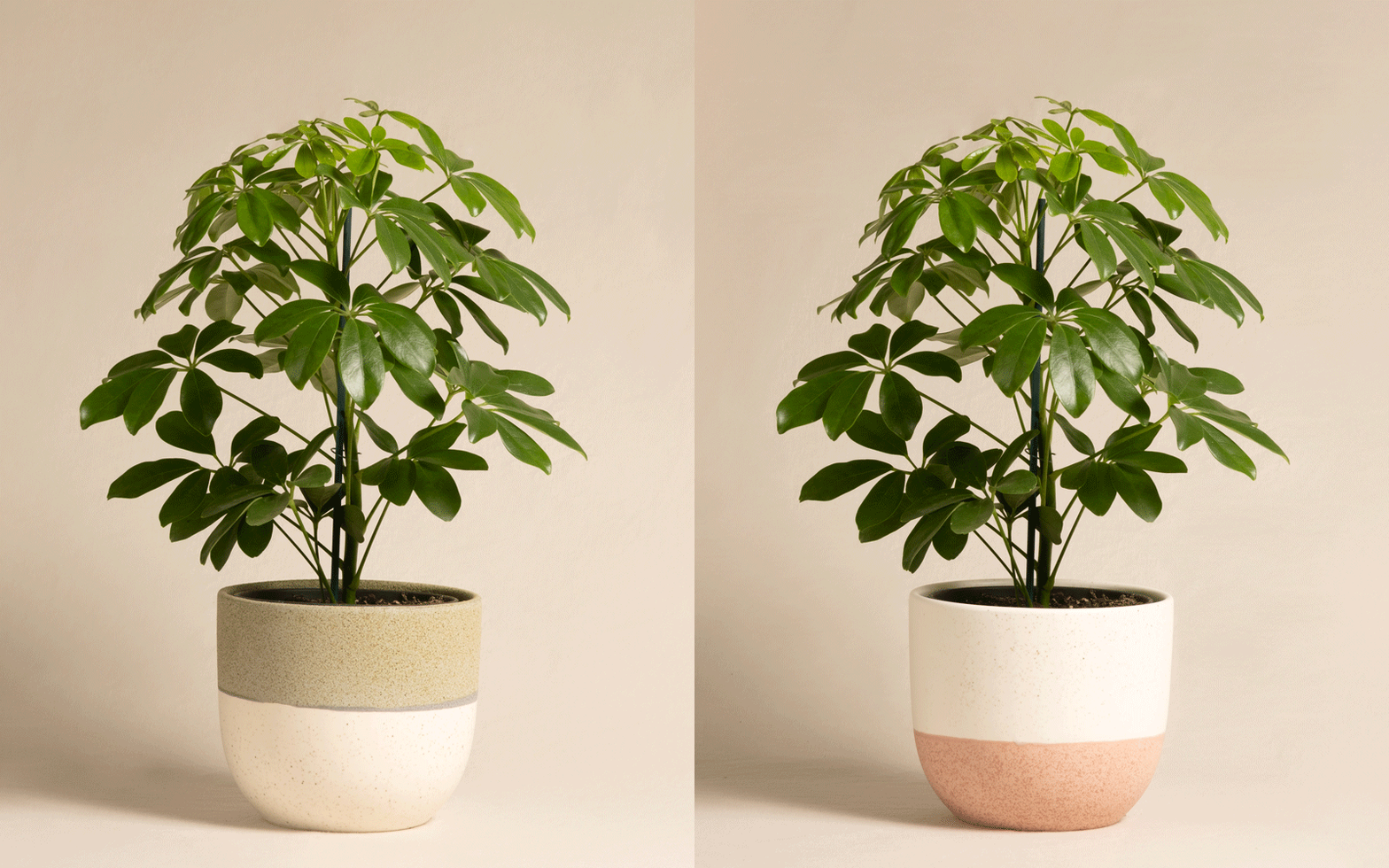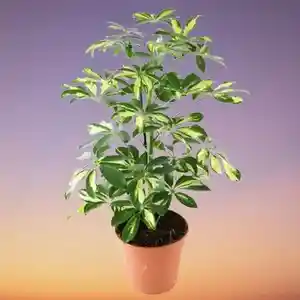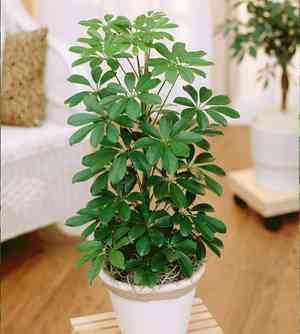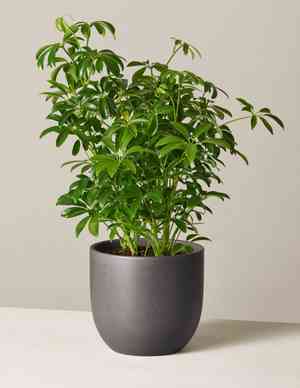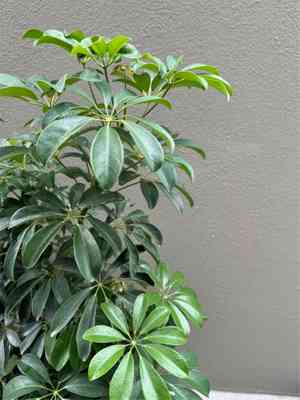
Dwarf umbrella tree(Schefflera arboricola)

Dwarf umbrella tree (Schefflera arboricola)

Also known as: Umbrella tree

The Dwarf umbrella tree (*Schefflera arboricola*) is an evergreen shrub originating from China, often cultivated as a houseplant or in gardens in temperate regions. It is appreciated for its attractive, glossy, palmate compound leaves. While it enhances indoor spaces, it's important to note that the plant contains calcium oxalates, which are toxic if ingested and can cause harm to internal organs. This plant should not be mistaken for the Australian umbrella tree (*Schefflera actinophylla*).

Attributes of Dwarf umbrella tree

Lifespan
Perennial
Plant Type
Shrub
Plant Height
2 m to 9 m
Spread
1.2 m to 2.5 m
Leaf Color
Green
Flower Size
5 mm to 1 cm
Flower Color
Yellow White Red Green

PlantJoy - Identify plants with a snap

Identify and diagnose plants, get toxicity alerts, and explore safety guides for all types of fungi.

Try for Free

Images of Dwarf umbrella tree

Dwarf umbrella tree(Schefflera arboricola)

Quickly Identify Dwarf umbrella tree

1
Palmate leaves with 7-9 leaflets, ovate shape, glossy texture.
2
Small red flowers in compound panicles, subtle scent.
3
Orange-red drupes maturing to glossy black, visible and ornamental.
4
Initial green stem turning woody, smooth surface, orderly branching.
5
Upright habit reaching 4 feet (1.2 meters), with a bushy growth.

Scientific Classification of Dwarf umbrella tree

Phylum
Vascular plants
Class
Dicotyledons
Order
Carrots, ivies and allies
Family
Ivy
Genus
Schefflera
Species
Dwarf umbrella tree

Planting and Growing of Dwarf umbrella tree

Care Difficulty
Easy
Watering Schedule
Every 3 days
Sunlight Requirements
Partial sun
Sunshine Duration
4-8 hours
Ideal Temperature
65-75℉
Soil Type
Potting Mix, Peat Mix
Soil pH
6-7.5
Fertilizer Type
Balanced
Pruning Season
Spring, Summer
Pruning Area
Branches, Leaves
Pruning Frequency
2 times a year
Repotting Season
Spring
Pot Type
Plastic, Ceramic

water icon How to Water Dwarf umbrella tree?

Schefflera arboricola requires a moderate watering amount that ensures the soil is moist but not waterlogged. The ideal approach is to water until 500ml of water has been absorbed, ensuring excess water drains out to avoid root rot.
What are the symptoms of an underwatered Dwarf umbrella tree?
What should I do if my Dwarf umbrella tree is not getting enough water?
What are the symptoms of an overwatered Dwarf umbrella tree?
How to save an overwatered Dwarf umbrella tree?
More About Watering Techniques Group

sunlight icon What Are the Sunlight Requirements for Dwarf umbrella tree?

Sunlight Requirements: Partial sun, Full shade
Duration of light: 2 to 3 hours
The ideal light range for Schefflera arboricola includes partial sun to full shade. This lighting condition encourages steady growth, robust leaves, and a healthier overall plant, contributing to strong and vibrant development.
What is the best type of light for Schefflera arboricola?
How can you ensure Schefflera arboricola gets ideal light?
What are the benefits of ideal lighting for Schefflera arboricola?
More About Sunlight Requirements Techniques Group

temperature icon What Is the Ideal Temperature Range for Dwarf umbrella tree?

Ideal Temperature: 65 ~ 75℉
Schefflera arboricola thrives best in temperatures ranging between 65°F and 75°F. This temperature range supports optimal growth and development, allowing the plant to photosynthesize efficiently and maintain healthy foliage. Maintaining this temperature ensures the plant's metabolism and processes operate in ideal conditions, which is essential for robust growth.

soil icon What Soil is Best for Dwarf umbrella tree?

Soil type: Loam, Sandy loam
Soil PH: 6 ~ 7.5
Schefflera arboricola thrives in well-draining soil that prevents water stagnation around the roots. This type of soil ensures the right balance of moisture and aeration, aiding in the prevention of root rot while ensuring the plant's roots have access to necessary air. For optimal growth, this plant requires soil that is rich in essential nutrients. Nutrient-rich soil supports healthy foliage and growth, providing the elements necessary for photosynthesis and overall health. Soil that retains moderate moisture is ideal for Schefflera arboricola. It ensures that the plant stays hydrated between waterings without becoming waterlogged, fostering a healthy root system and vibrant leaves. More About Soil Group

fertilize icon How to Fertilize Dwarf umbrella tree?

Fertilizer type: Balanced
For Schefflera arboricola, the amount of fertilizer should be moderate. When using liquid fertilizers, dilute it to half the strength recommended on the label to prevent over-fertilization. For slow-release fertilizers, follow the manufacturer's instructions, typically using a few tablespoons depending on the pot size. More About Fertilizing Techniques Group

prune icon How to Prune Dwarf umbrella tree?

Pruning Time: Spring, Summer, Autumn
Start by inspecting the plant for any dead, damaged, or diseased leaves and stems. Use a clean, sharp pair of pruning shears to make precise cuts. Focus on cutting back to the next healthy bud to encourage new growth. To maintain the plant’s shape, trim back any overly long or leggy growth, focusing on keeping the plant compact and balanced. Remember to remove any crossing branches that might impede light penetration or air circulation. Always make cuts at a 45-degree angle to allow moisture to run off smoothly, preventing rot or disease.

propagate icon How to Propagate Dwarf umbrella tree plant?

Propagate Time: Early spring, Late spring, Early summer
1
Choose a healthy, non-flowering stem from the mother plant. Ensure the stem is around 4-6 inches long with at least two or three leaves attached. This will optimize the cutting's ability to develop roots.
2
Remove the lower leaves from the stem, leaving one or two leaves at the top. Dip the cut end of the stem into the rooting hormone to promote root growth. This step is crucial for preparing the cutting for successful rooting.
3
Place the prepared cutting into a pot filled with moist, well-draining potting mix. Ensure the cutting is stable and upright, and water it gently to settle the soil around it. Maintaining the right moisture level is critical at this stage.

repot icon How to Repot Dwarf umbrella tree plant?

Repotting frequency: Every 2-3 years
1
Schefflera arboricola shows it's ready for repotting when roots outgrow the drainage holes or circle the pot surface, growth slows noticeably, or water runs right through the pot. Spring or summer is ideal as the plant is actively growing.
2
Select a pot that's 2-3 inches larger in diameter than the current one. Ensure it has good drainage holes to prevent waterlogging. A slightly heavier pot can also provide stability to balance the plant's top growth.
3
Use a well-draining mix composed of peat, perlite, and pine bark in equal parts. This soil blend ensures aeration and prevents root rot, offering a perfect balance of moisture retention and drainage.
More About Repotting Techniques Group

PlantJoy - Identify plants with a snap

Find the best spots for them to optimize their health, simply using your phone.

Try for Free

Toxicity of Dwarf umbrella tree

Is Dwarf umbrella tree toxic to humans?

Consuming or coming into contact with the dwarf umbrella tree can trigger adverse reactions due to the toxic compounds present in the plant. The symptoms are generally classified as mild to moderate in severity. The sap poses a risk upon contact, while the stems and leaves are poisonous if ingested due to the presence of calcium oxalate crystals. Touching the sap may lead to a rash, discomfort, and swelling, whereas consuming the plant parts can result in sensations of burning in the mouth, numbness, choking, and even vomiting. Being a decorative houseplant, it is often within reach of children, who may be at greater risk of experiencing effects if they touch or ingest any portion of it.

Is Dwarf umbrella tree toxic to cat?

The dwarf umbrella tree poses a toxicity risk to cats, creating a significant health hazard if any part of the plant is ingested. Cats may experience poisoning from accidentally consuming portions of this plant, which can result in various symptoms indicative of physical distress or illness. Immediate medical attention at a veterinary facility is essential if a cat exhibits symptoms of poisoning from the dwarf umbrella tree. Cat owners should exercise caution and ideally place these plants out of reach to avert accidental consumption.

Is Dwarf umbrella tree toxic to dog?

The dwarf umbrella tree is recognized as toxic to dogs. If dogs consume any portion of this plant, whether unintentionally or out of curiosity, poisoning can occur. Every part of the plant is dangerous, indicating that they all present a threat if ingested by a canine companion. Signs of poisoning may manifest as vomiting, diarrhea, lethargy, excessive drooling, and in severe instances, breathing or swallowing difficulties. Therefore, it is essential for dog owners to remain alert and deter their pets from accessing the dwarf umbrella tree. If there is any suspicion that a dog has ingested any part of the dwarf umbrella tree, it is crucial to obtain immediate veterinary assistance to secure the best possible outcome for the animal.

Identify toxic plants for your safety

Learn which plants are harmful to you and your pets, and make informed choices for a safer home!

Try for Free
WARNING
The judgment on toxicity and danger is for reference only. We DO NOT GUARANTEE any accuracy of such judgment. Therefore, you SHALL NOT rely on such judgment. It is IMPORTANT TO SEEK PROFESSIONAL ADVICE in advance when necessary.
More About Toxic Techniques Group